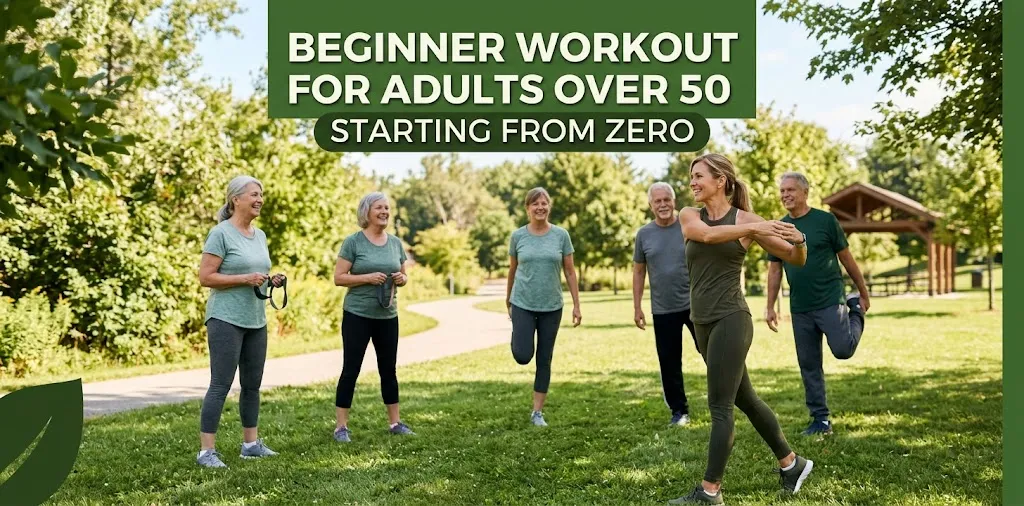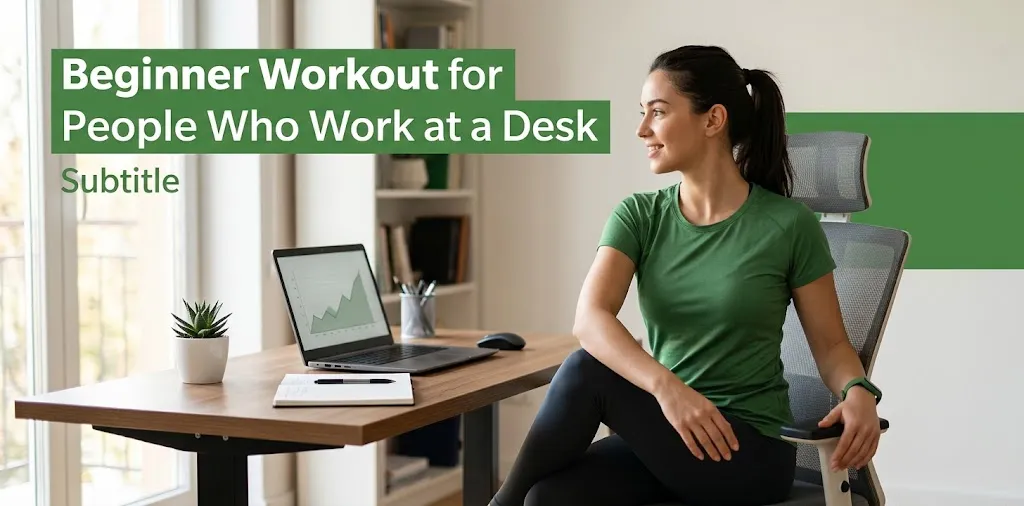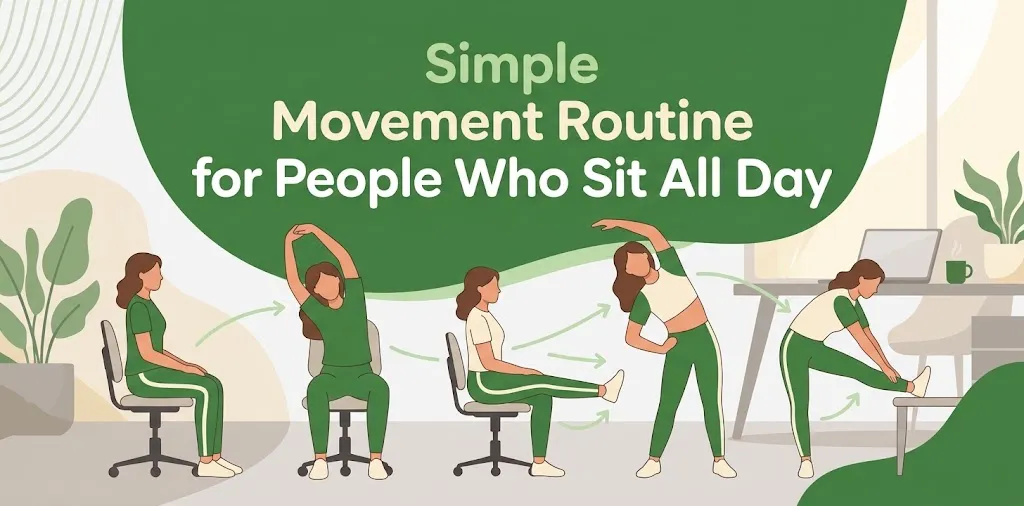
If you want to get fit but have no idea where to start, keep it simple. Begin with activities you can do consistently, such as walking, basic strength exercises, or cycling. Start with short sessions rather than trying to follow an advanced workout plan. Over time, gradually increase how often, how long, or how hard you exercise.
The hardest part of starting fitness is often not the exercise itself. It is knowing what to do first.
You may wonder whether you need a gym, a personal trainer, expensive equipment, a strict diet, or a detailed workout plan. You do not.
A good beginner fitness routine can start with a pair of comfortable shoes, a little open space, and a plan you can actually follow.
Start With One Simple Goal
Before choosing exercises, decide what you want fitness to help you do.
Your goal could be:
- Build strength
- Improve stamina
- Lose body fat
- Have more energy
- Move more easily
- Improve your general health
- Prepare for a sport or activity
- Build a regular exercise habit
You do not need to choose the perfect goal. Pick one main reason that matters to you right now.
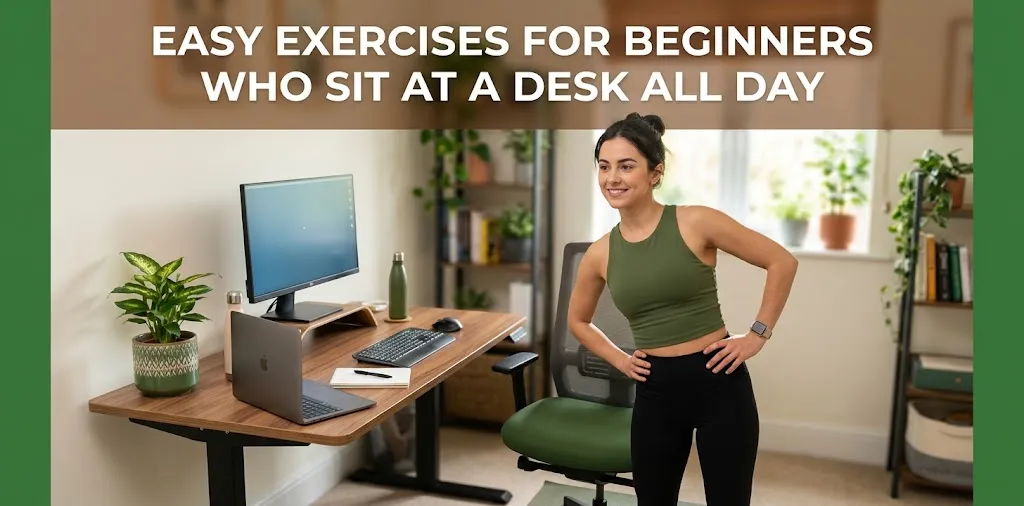
For example, someone who sits at a desk all day may benefit from starting with regular walks and basic strength work. Someone who wants to become stronger may put more focus on resistance exercises.
Your goal helps you decide what to prioritize without making your first month unnecessarily complicated.
Do Not Try to Get Fit All at Once
One common beginner mistake is trying to change everything in the same week.
Someone may start running five days a week, lift weights, completely change their diet, stop eating favorite foods, and set a large weight-loss goal at the same time.
That approach can feel exciting for a few days. It can also be difficult to maintain.
Instead, build your routine one piece at a time.
The long-term goal for adults is to work toward 150 to 300 minutes of moderate-intensity aerobic activity each week, along with muscle-strengthening activity on at least two days. But people who are inactive should start with small amounts and build up gradually.
Your first goal is not to complete a perfect fitness program.
Your first goal is to become someone who exercises regularly.
Choose the Easiest Form of Exercise You Will Actually Do
You have many options. You do not need to choose the exercise that looks hardest or burns the most calories.
For beginners, useful choices include:
- Walking
- Cycling
- Swimming
- Dancing
- Hiking
- Light jogging
- Bodyweight exercises
- Resistance-band exercises
- Weight training
- Fitness classes
Enjoyment matters because the best exercise routine is one you can repeat.
If you dislike running, you do not have to run. If you prefer walking outside, start there. If you enjoy working out at home, there is no requirement to join a gym.
Physical activity can also come from normal daily movement. Moving more and sitting less can help you become more active, and even small amounts of activity can provide benefits.
Start With Walking if You Feel Completely Lost
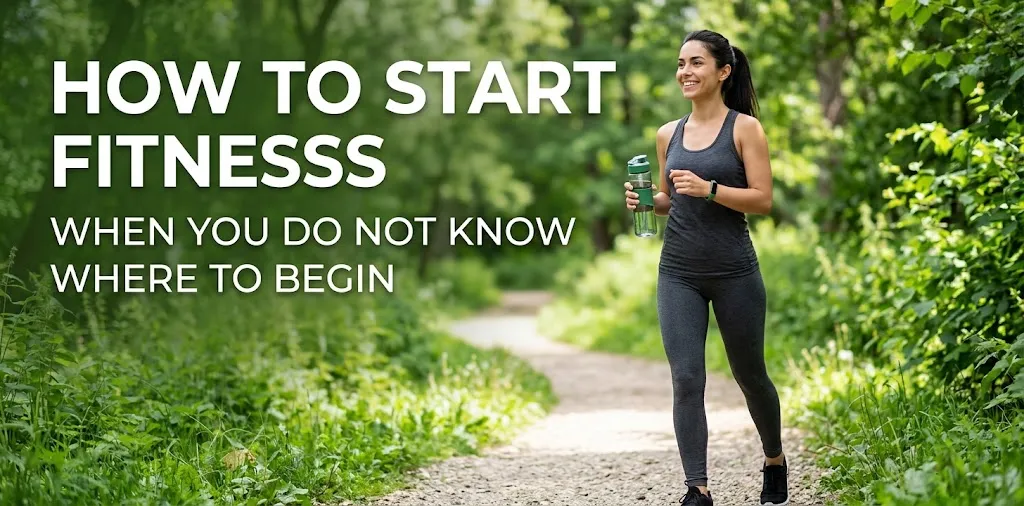
Walking is one of the simplest ways to begin because it requires very little equipment or technical knowledge.
You could start with:
Week 1: Walk for 10–15 minutes on 3 days.
Week 2: Walk for 15–20 minutes on 3–4 days.
Week 3: Walk for 20–25 minutes on 4 days.
Week 4: Walk for 25–30 minutes on 4–5 days.
This is only an example, not a required progression. If 10 minutes feels difficult, start with less. If 20 minutes feels easy, you can gradually do more.
The goal is to create a starting point that feels manageable.
Add Basic Strength Training
Cardio is only one part of fitness. Strength training helps you develop stronger muscles and supports everyday movements such as lifting, carrying, standing, and climbing stairs.
You can begin without a gym.
A simple beginner session might include:
- Chair squats: 8–12 repetitions
- Wall push-ups: 8–12 repetitions
- Glute bridges: 8–12 repetitions
- Bird dogs: 6–10 per side
- Standing calf raises: 10–15 repetitions
Rest between exercises as needed.
At first, focus on learning controlled movement rather than doing as many repetitions as possible.
As the exercises become easier, you can gradually increase repetitions, add another set, or move to a slightly harder variation.
A Simple Beginner Fitness Schedule
You do not need to exercise every day.
A basic weekly schedule could look like this:
| Day | Beginner Activity |
|---|---|
| Monday | 15–20 minute walk |
| Tuesday | Basic strength workout |
| Wednesday | Rest or easy movement |
| Thursday | 20-minute walk |
| Friday | Basic strength workout |
| Saturday | Optional walk, bike ride, or enjoyable activity |
| Sunday | Rest |
This gives you structure without making fitness your entire week.
If this schedule feels like too much, reduce it.
For example, two short walks and one strength workout can still give you a starting point.
Learn the Difference Between Easy, Moderate, and Hard
You do not need a heart-rate monitor to understand exercise intensity.
A useful general guide is the talk test.
During moderate-intensity activity, you can talk but would have trouble singing. During vigorous activity, you may only be able to say a few words before needing another breath.
For a beginner, most workouts do not need to feel extremely hard.
If you finish every workout exhausted, sore, and unable to recover comfortably, you may be doing too much too soon.
How Long Should a Beginner Workout?
There is no single perfect workout length.
A beginner session might be only 10 to 20 minutes. As your fitness improves, you can gradually make sessions longer.
For someone who has been inactive, even five minutes of physical activity can be a useful starting point.
Think about your current ability rather than the workout you think you should be able to do.
If you can comfortably walk for 15 minutes today, that is your starting point.
What to Do When You Are Too Out of Shape
If normal exercise feels difficult, do not treat that as proof that you cannot get fit.
It simply tells you where to begin.
Start with lower-intensity movement and shorter sessions.
For example:
- Walk around your home for a few minutes.
- Take a short outdoor walk.
- Practice sitting down and standing up from a chair.
- Add a few wall push-ups.
- Increase your activity gradually.
You can also break movement into smaller periods during the day. Short periods of activity can still contribute to your overall movement.
What to Do if You Do Not Have a Gym
A gym is optional.
You can build a useful beginner routine at home using bodyweight exercises and simple activities such as walking.
A basic home setup might eventually include:
- Comfortable exercise shoes
- Exercise mat
- Resistance bands
- Adjustable dumbbells
But you do not need to buy all of these before starting.
Start with what you already have.
For example, a beginner could walk outside three times per week and perform a short bodyweight workout twice per week without paying for a gym membership.
How to Progress Without Overdoing It
Once your routine starts feeling easy, increase one thing at a time.
You can gradually increase:
- Frequency: Exercise on another day.
- Duration: Add a few minutes.
- Intensity: Walk faster or use more resistance.
- Volume: Add another set or a few repetitions.
- Difficulty: Move to a harder exercise variation.
You do not need to increase everything together.
For example, if you currently walk for 20 minutes three times a week, you might first increase one walk to 25 minutes. Later, you could add another walking day.
Gradual progression gives your body time to adapt.
Two Realistic Ways to Begin
Example 1: The Busy Office Worker
Imagine a hypothetical person who works at a desk and has not exercised regularly for several years.
Instead of trying to spend an hour at the gym every morning, they could start with a 15-minute walk after work three days a week.
After a few weeks, they could add two short strength sessions at home.
The routine is simple enough to fit around work and does not require a major schedule change.
Example 2: The Complete Beginner at Home
Another hypothetical beginner may feel uncomfortable exercising around other people.
They could start at home with:
- 10-minute walks
- Wall push-ups
- Chair squats
- Glute bridges
- Gentle stretching or mobility work
After building consistency, they could decide whether they want to join a gym, try a class, buy equipment, or continue exercising at home.
The important decision comes later. First, establish the habit.
Common Beginner Mistakes to Avoid
Starting Too Hard
A difficult first workout can leave you extremely sore and make the next workout feel impossible.
Start below your maximum effort and build gradually.
Copying an Advanced Workout
A workout designed for an experienced athlete is not automatically appropriate for a beginner.
Choose exercises that match your current ability.
Chasing Fast Results
Fitness develops over time. Expecting major changes within a few workouts can make normal progress feel disappointing.
Focus on completing your next workout rather than predicting exactly how quickly your body will change.
Changing Your Routine Every Few Days
Trying a different workout every day can make it difficult to know what is actually working.
Give a simple routine time to become a habit before constantly replacing it.
Treating Missed Workouts as Failure
Missing one workout does not erase your progress.
If you miss Monday, return Tuesday or Wednesday. Avoid turning one missed session into several weeks away from exercise.
Waiting for Motivation
Motivation is unreliable.
A better strategy is to make exercise easier to start. Put your walking shoes by the door, schedule your workout, or choose a fixed time that fits your normal routine.
How to Make Fitness Easier to Stick With
Consistency becomes easier when exercise fits your existing life.
Try connecting your workout to something you already do.
For example:
- Walk after lunch.
- Exercise after finishing work.
- Do strength exercises before your evening shower.
- Take a short walk while listening to a podcast.
- Keep resistance bands where you can see them.
You can also track a few simple things:
- Workout days
- Walking time
- Strength exercises completed
- How the workout felt
- Progress in repetitions or duration
You do not need to track every calorie or every detail.
The purpose of tracking is to see your consistency and gradual progress.
When Should You Talk With a Doctor Before Exercising?
Most people can benefit from becoming more physically active, but individual circumstances vary.
If you have a medical condition, significant symptoms, a recent injury, or concerns about whether exercise is appropriate for you, talk with a healthcare professional before starting or changing your exercise routine.
People with ongoing health problems or disabilities may need to adapt activities to their abilities.
During exercise, stop and seek medical advice for concerning symptoms rather than trying to push through them.
What Your First Month of Fitness Can Look Like
You do not need a perfect 30-day transformation plan.
A simple progression could look like this:
| Period | Main Focus | Example |
|---|---|---|
| Week 1 | Build the habit | 3 short walks |
| Week 2 | Add a little time | 3–4 walks |
| Week 3 | Add strength | 2 short strength sessions |
| Week 4 | Build consistency | Walks + 2 strength sessions |
Adjust this based on your starting fitness.
If a week feels too difficult, repeat it instead of forcing yourself to progress.
If it feels easy, make a small increase.
Frequently Asked Questions
What is the best exercise for someone who has never worked out?
The best starting exercise is usually one you can perform safely, enjoy enough to repeat, and recover from comfortably. Walking is a simple choice, but cycling, swimming, dancing, and beginner strength exercises can also work well.
How many days a week should a beginner exercise?
A beginner can start with a few days of activity and gradually increase from there. The long-term goal for adults is at least 150 minutes of moderate aerobic activity each week plus muscle-strengthening activity on at least two days, but inactive people should build toward that amount gradually.
Do I need a gym to get fit?
No. Walking, bodyweight exercises, resistance bands, and home strength workouts can provide a solid starting point. A gym can give you access to more equipment and coaching, but it is not required to begin exercising.
Start Smaller Than You Think
When you do not know where to begin, you do not need a complicated fitness plan. Choose one activity, set aside a small amount of time, and repeat it consistently.
For many beginners, a short walk is enough to get started. Add basic strength training when you are ready, then slowly increase your activity as your fitness improves.
Your practical next step is simple: choose three days this week and schedule a 10–20 minute activity for each one. Once that becomes normal, build from there.