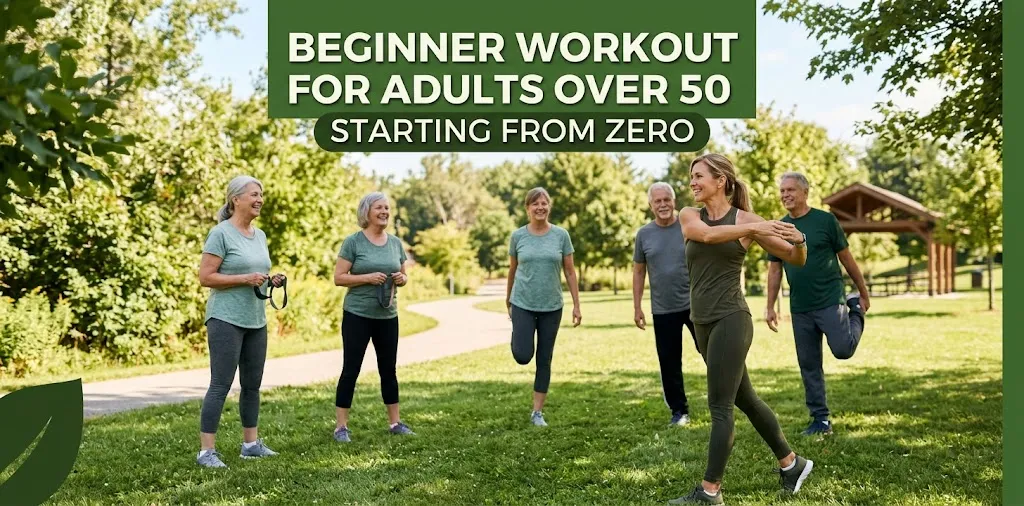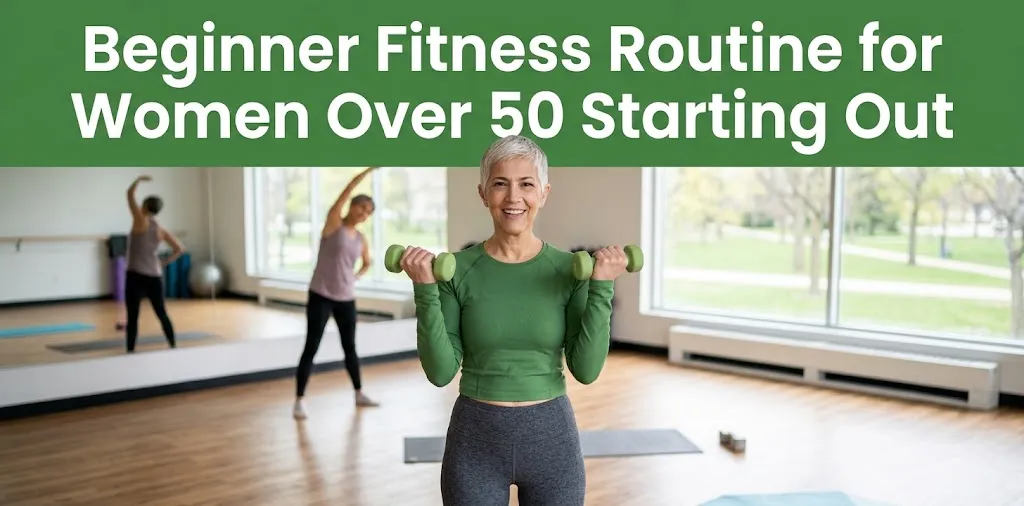
Starting exercise after 50 does not mean you need hard workouts, heavy weights, or long gym sessions. A good beginner fitness routine for women over 50 should build strength, improve balance, support heart health, and increase mobility while giving your body time to adjust. The best routine is one you can do consistently without feeling worn out after every workout.
What a Beginner Fitness Routine Should Include
A balanced routine for women over 50 should include walking or another form of aerobic activity, simple strength exercises, balance work, and gentle mobility exercises. Federal physical activity guidelines recommend adults work toward 150–300 minutes of moderate aerobic activity each week, plus muscle-strengthening activities on at least two days. Older adults should also include balance training.
You do not need to reach those targets immediately. If you have been inactive, starting with short sessions and gradually adding time is a sensible approach.
A simple weekly starting point
| Day | Activity | Beginner goal |
|---|---|---|
| Monday | Walking + strength | 15–20 min walk + 15 min strength |
| Tuesday | Easy movement | 15–20 min walk or gentle mobility |
| Wednesday | Strength + balance | 15–20 min strength + 5 min balance |
| Thursday | Rest or light movement | Easy walking and stretching |
| Friday | Walking + strength | 20 min walk + 15 min strength |
| Saturday | Fun activity | Dancing, swimming, gardening, or walking |
| Sunday | Rest | Gentle movement if desired |
This is a starting schedule, not a requirement to exercise every day. Your routine should match your current fitness level, schedule, and health needs.
Start With Walking Before Worrying About Hard Cardio
Walking is one of the easiest ways to begin building cardiovascular fitness. You can do it outdoors, at a mall, on a treadmill, or around your home.
For the first couple of weeks, try 10–20 minutes at a comfortable pace. As your fitness improves, slowly increase either the time or pace.
A useful intensity check is the talk test. During moderate activity, you should be breathing harder but still able to have a conversation.
You can also break activity into shorter periods. Several small walks during the day can be easier to manage than one long workout.
A four-week walking progression
| Week | Walking goal | Focus |
|---|---|---|
| 1 | 10–15 minutes, 3 days | Get comfortable moving |
| 2 | 15–20 minutes, 3–4 days | Build consistency |
| 3 | 20–25 minutes, 4 days | Increase endurance |
| 4 | 25–30 minutes, 4–5 days | Build toward a regular routine |
If a week feels too difficult, repeat it instead of increasing the workload.
Add Strength Training Twice a Week
Strength training becomes especially useful as you age because maintaining muscle helps with everyday movement and independence. Resistance training can help older adults maintain or increase muscle strength and support mobility.
You do not need a gym or heavy dumbbells. A sturdy chair, resistance band, or light hand weights can be enough for a beginner.
Start with one set of each exercise. As the movements become easier, you can gradually add repetitions or another set.
Beginner strength routine
Try these exercises twice a week, with at least a day between strength sessions:
- Chair sit-to-stand — 8–10 repetitions
Sit in a sturdy chair and stand up slowly. Sit back down with control. Use your hands for support if needed. - Wall push-up — 8–10 repetitions
Place your hands on a wall, step back slightly, and bend your elbows to bring your chest toward the wall. Push back to the starting position. - Standing knee lift — 8–10 per side
Hold a sturdy chair and slowly lift one knee. Lower it and repeat on the other side. - Calf raise — 10–12 repetitions
Hold a chair or countertop and slowly rise onto your toes. Lower your heels with control. - Resistance-band row — 8–12 repetitions
Pull the band toward your body while keeping your shoulders relaxed. If you do not have a band, skip this exercise until you have appropriate equipment. - Seated leg extension — 8–10 per side
Sit tall in a chair and slowly straighten one leg. Lower it and switch sides.
The goal is controlled movement, not speed. If you cannot maintain good form, reduce the number of repetitions.
Include Balance Training
Balance deserves a place in a fitness routine after 50 because good balance can help you move confidently and reduce the risk of falls.
Start near a sturdy counter, wall, or chair.
Try:
- Standing with your feet close together
- Shifting your weight from one foot to the other
- Heel-to-toe walking along a clear path
- Standing on one foot while holding a stable surface
- Gentle tai chi
- Beginner yoga with appropriate modifications
Do not practice challenging balance exercises where a fall could cause injury. If you already have significant dizziness or balance problems, discuss appropriate exercises with a health professional.
Do Gentle Mobility and Flexibility Work
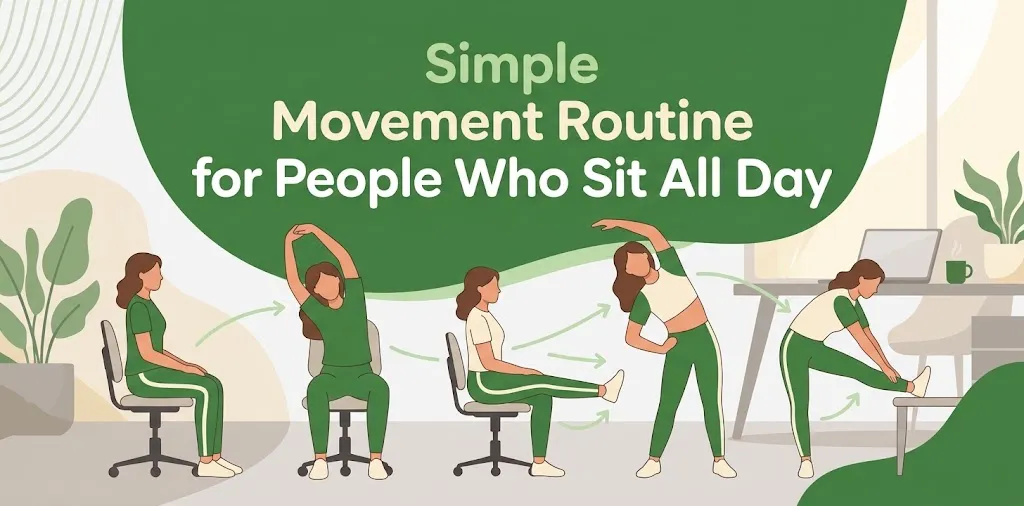
Mobility exercises help you move your joints through comfortable ranges of motion. They can fit naturally before or after walking and strength training.
A simple five-minute mobility routine might include:
- Shoulder rolls
- Gentle neck movements
- Arm circles
- Ankle circles
- Seated knee movements
- Gentle torso rotations
- Calf stretches
- Hamstring stretches
Avoid bouncing during stretches and do not force a joint into a painful position. Stretch gently and stop if you feel pain.
A 20-Minute Full-Body Beginner Workout
If you want something simple to follow at home, try this routine:
Warm-up — 5 minutes
- Walk slowly around the room
- Roll your shoulders
- Move your arms gently
- March slowly in place
Strength — 10 minutes
Complete one set of:
- 8–10 chair sit-to-stands
- 8–10 wall push-ups
- 8–10 standing knee lifts per side
- 10–12 calf raises
- 8–12 resistance-band rows
Rest when you need to.
Balance and mobility — 5 minutes
- 20–30 seconds of supported single-leg standing per side
- Gentle calf stretch
- Shoulder rolls
- Easy walking to cool down
This workout does not need to leave you exhausted. For someone starting from a low fitness level, completing a manageable workout consistently is more useful than doing an intense workout once and then needing several days to recover.
How Hard Should Exercise Feel After 50?
Beginners often make one of two mistakes: exercising too easily to make progress or exercising too hard too soon.
A better approach is to begin at a moderate level and increase gradually.
During moderate aerobic activity, you should feel that your heart and breathing rate have increased, but you should still be able to talk.
For strength exercises, the last few repetitions should require some effort without causing sharp pain or forcing you to lose control of the movement.
You should finish a beginner workout feeling like you worked, not like you were completely depleted.
How to Progress Without Overdoing It
Once your routine starts feeling easier, change only one thing at a time.
For example, you could:
- Add 5 minutes to a walk
- Add a few repetitions to an exercise
- Add a second set
- Use a slightly stronger resistance band
- Walk at a somewhat faster pace
- Add another short balance session
Avoid increasing everything at once.
A simple progression might look like this:
Weeks 1–2: Learn the movements and build the habit.
Weeks 3–4: Add a few minutes to walking and slightly increase repetitions.
Weeks 5–6: Consider adding another set to selected strength exercises.
After week 6: Gradually work toward the recommended weekly activity levels if your body is responding well.
The exact pace will vary. Someone returning from years of inactivity may need more time than someone who has remained moderately active.
What If You Have Knee Pain, Arthritis, or Another Health Condition?
Having a health condition does not automatically mean you cannot exercise. Many older adults with chronic conditions can participate in physical activity, but the type and amount should fit their abilities and health needs.
For example, someone with joint discomfort may find walking, swimming, water exercise, cycling, or other low-impact activities more comfortable than jumping or running. Some conditions, such as osteoporosis, may require specific exercise choices and modifications.
If you have not exercised for a long time and have a medical condition, take medications that affect exercise tolerance, have significant joint problems, heart or lung disease, or have other concerns about starting, talk with your health care professional about an appropriate starting point.
Stop exercising and seek medical advice if you experience unusual or severe symptoms such as chest pain, fainting, or severe shortness of breath.
Two Realistic Ways to Start
Example 1: A woman who has been inactive for years
Suppose a 55-year-old woman spends most of her day sitting and gets tired after walking for 10 minutes.
Starting with 30-minute workouts five days a week would probably feel like too much.
A better starting point could be:
- 10-minute walks three days a week
- Two short strength sessions
- Five minutes of gentle mobility on most days
After a few weeks, she could gradually extend her walks and add repetitions.
Example 2: A woman who walks but does not strength train
A 62-year-old woman might already walk 20–30 minutes several days a week but struggle with stairs or getting up from low chairs.
Instead of simply walking farther, she could add two weekly strength sessions focused on sit-to-stands, wall push-ups, calf raises, and other appropriate resistance exercises.
This creates a more balanced routine instead of relying on cardio alone.
Common Beginner Mistakes to Avoid
Starting with workouts designed for younger, experienced exercisers
A challenging online workout may look appealing, but it may not match your current strength, balance, or mobility.
Choose beginner-level movements and modify them when needed.
Trying to make up for years of inactivity
You cannot safely erase years of inactivity with a few hard workouts.
Your body needs time to adapt. Consistency matters more than punishment.
Skipping strength training
Walking is excellent, but a balanced routine should include muscle-strengthening activity too. Strength work can support everyday tasks such as climbing stairs, getting out of a chair, and carrying groceries.
Ignoring balance
Balance is easy to overlook because it may not feel like a traditional workout. However, it is an important part of a well-rounded exercise routine for older adults.
Treating soreness as proof of a good workout
A workout does not need to make you very sore to be effective. If soreness makes it difficult to move normally or complete your next workout, reduce the workload.
Comparing your progress with someone else’s
Two women of the same age can have very different fitness levels. Your starting point should be based on your current abilities, not someone else’s workout.
What Equipment Do You Actually Need?
You can start with very little.
Useful beginner equipment includes:
- Comfortable walking shoes
- A sturdy chair
- A resistance band
- Light dumbbells, if appropriate
- A yoga or exercise mat
- A clear, safe area for movement
You do not need a large home gym to become stronger or more active. Everyday activities can also contribute to physical activity, including walking, gardening, household tasks, and recreational activities.
How to Make Exercise Easier to Stick With
The best routine is one that fits your life.
Try connecting exercise to an existing habit. For example, walk after breakfast, perform strength exercises before lunch on two set days, or do balance exercises while waiting for coffee to brew.
You can also make exercise social. Walking with a friend, joining a beginner class, swimming with a family member, or participating in a community program can make regular activity more enjoyable.
Most importantly, give yourself permission to start small.
Ten minutes today is more useful than waiting for the perfect time to begin a one-hour workout.
Frequently Asked Questions
What is the best exercise for a woman over 50 who is just starting?
Walking is a simple starting option, but the best routine includes more than cardio. Combine walking or another comfortable aerobic activity with strength training, balance exercises, and mobility work.
How many days a week should a beginner woman over 50 exercise?
A practical starting point is three to five days of light-to-moderate movement, with strength training on two of those days. Build toward recommended weekly activity levels gradually rather than trying to reach them immediately.
Can women over 50 build strength with light weights or bodyweight exercises?
Yes. Bodyweight movements, resistance bands, and light weights can all be used for strength training. As exercises become easier, gradually increasing repetitions, resistance, or sets can provide additional challenge.
Start Smaller Than You Think
Beginning a fitness routine after 50 is less about proving what you can do and more about building a habit your body can handle. Start with manageable walks, two simple strength sessions each week, basic balance work, and gentle mobility. Then increase your activity little by little.
One practical tip: put your first three workouts on your calendar before you worry about building the perfect program. Once regular movement becomes part of your week, you can gradually make the routine longer, stronger, and more varied.