Starting exercise from zero can feel harder than the workout itself. If you have been inactive for months or years, you do not need to jump into running, intense cardio, or long gym sessions. A low impact workout gives you a gentler way to build strength, movement, balance, and confidence without making every session feel overwhelming.
The key is to start small enough that you can recover and come back again. This guide shows you how to begin, which exercises to choose, how long to work out, and how to build a simple routine over your first few weeks.
What Is a Low Impact Workout for Someone Starting From Zero?
A low impact workout uses movements that place less stress on your joints than activities such as running or jumping. For someone starting from zero, good choices include easy walking, marching in place, chair exercises, wall push-ups, sit-to-stands, and gentle strength movements. The goal is to build consistency first, then gradually increase time and effort.
Low impact does not mean “no effort.” You can still raise your heart rate, strengthen muscles, improve endurance, and make meaningful progress. The right starting level depends on your current fitness, health, age, and ability.
Why Low Impact Is a Good Starting Point
When you have been inactive, doing too much too soon can leave you extremely sore or make exercise feel unpleasant. Even small amounts of physical activity can provide health benefits, and inactive adults are generally encouraged to gradually increase their activity rather than trying to reach a full exercise target immediately.
A low impact approach can help you:
- Get used to moving regularly
- Build basic muscle strength
- Improve cardiovascular endurance
- Practice balance and coordination
- Reduce the fear of starting
- Create an exercise habit
- Increase activity without immediately adding jumping or running
Your first goal does not need to be getting “in shape.” Your first goal can simply be becoming someone who moves regularly.
The Best Exercises When You Are Starting From Zero
You do not need a gym or expensive equipment. Start with movements that are easy to control and easy to modify.
1. Easy Walking
Walking is one of the simplest ways to begin. You can walk outside, around your home, at a mall, or on a treadmill.
Start with a comfortable pace. You should not feel like you are racing.
If 10 minutes feels too long, try 5 minutes. You can also split your walking into several short sessions during the day.
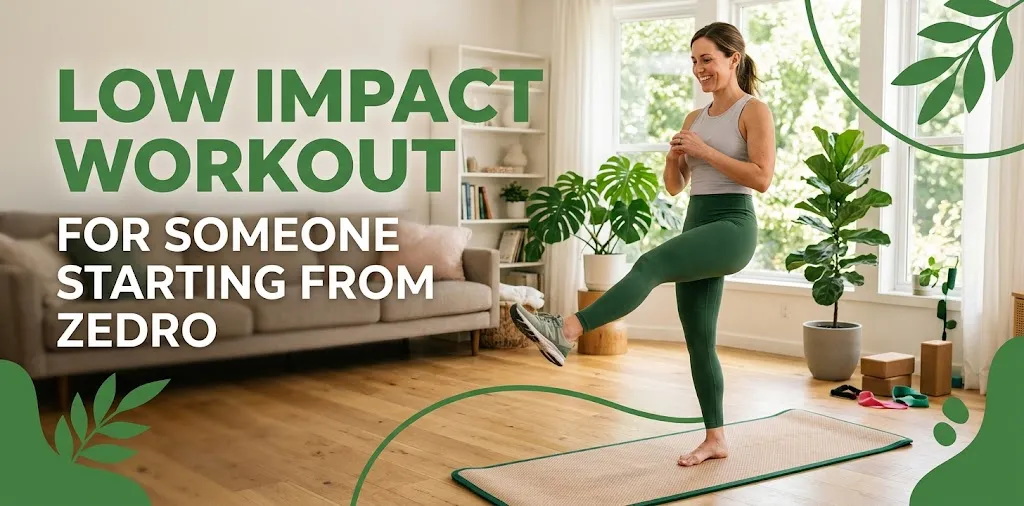
2. Marching in Place
Stand tall and slowly lift one foot, then the other.
Keep your steps controlled. Hold onto a sturdy surface if you need help with balance.
To make it easier:
- Lift your feet only a little
- Move slowly
- Hold a chair or counter
To make it harder later, lift your knees slightly higher or increase your pace.
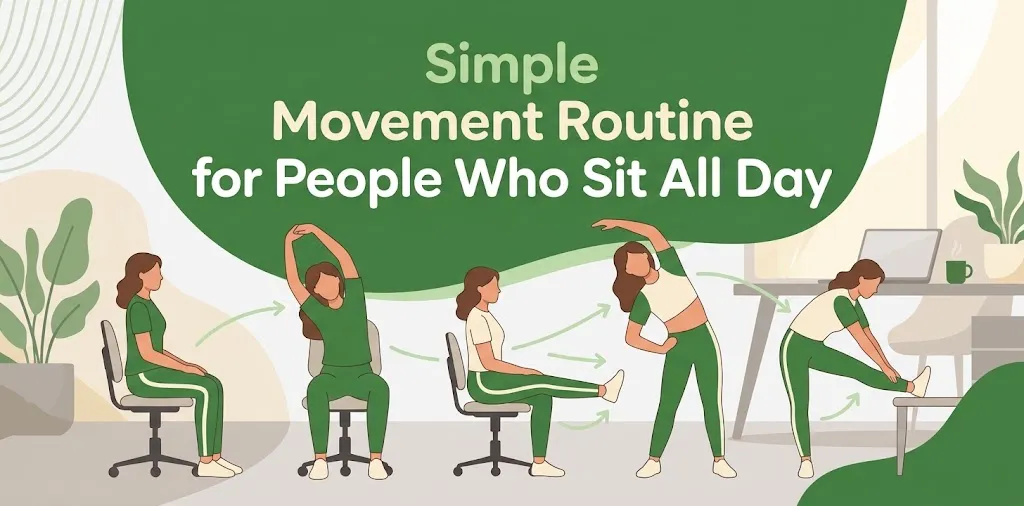
3. Sit-to-Stand From a Chair
Sit in a sturdy chair with your feet about hip-width apart. Lean forward slightly and stand up. Then slowly sit back down.
This simple movement works your legs and hips and also relates directly to everyday activities.
If standing is difficult, use your hands for support. As you get stronger, try using less assistance.
4. Wall Push-Ups
Stand facing a wall and place your hands against it around chest height. Bend your elbows to bring your body toward the wall, then push yourself away.
Wall push-ups are easier than floor push-ups because you control less of your body weight.
As your strength improves, you can move to a countertop, sturdy bench, or eventually a lower surface.
5. Heel Raises
Stand behind a sturdy chair and hold it lightly.
Slowly raise your heels so you are standing on your toes. Pause briefly, then lower your heels.
This works the lower legs and gives you an easy way to add strength work without getting on the floor.
6. Standing Leg Extensions
Hold the back of a sturdy chair. Slowly move one leg backward without leaning forward. Return it to the starting position and repeat on the other side.
Keep the movement small and controlled.
7. Seated Knee Lifts
Sit in a sturdy chair with your feet on the floor. Lift one knee a few inches, lower it, and then lift the other.
This is useful if standing exercises are uncomfortable or difficult.
8. Gentle Side Steps
Stand near a wall or sturdy surface. Take one small step to the side, bring your other foot over, and continue for several steps.
Then return in the opposite direction.
Side stepping adds movement in a direction that normal walking does not emphasize as much.
A Simple 15-Minute Beginner Workout
If you are truly starting from zero, you do not need a 45- or 60-minute workout.
Try this simple routine:
| Exercise | Time or Reps |
|---|---|
| Easy marching or walking | 3 minutes |
| Sit-to-stand | 5–8 reps |
| Wall push-ups | 5–8 reps |
| Heel raises | 8–10 reps |
| Seated knee lifts | 30 seconds |
| Easy walking or marching | 3 minutes |
| Gentle cool-down | 2 minutes |
Rest whenever you need to.
If even this feels too difficult, cut the time or repetitions in half. The routine should feel manageable rather than like a test.
How Hard Should Your First Workout Feel?
Use effort rather than a complicated fitness formula.
During an easy beginner workout, you should feel that you are working, but you should still be able to control your breathing and movement. Walking may feel easy for one person and surprisingly challenging for another.
For your first sessions, focus on:
- Controlled movements
- Comfortable breathing
- Good balance
- No sharp pain
- Enough energy to recover afterward
You do not need to finish exhausted for the workout to count.
A 4-Week Low Impact Plan From Zero
The goal of the first month is not maximum fitness. It is learning how to exercise consistently.
Week 1: Just Get Moving
Aim for 3 workout days.
Each session can be about 10–15 minutes.
For example:
- 5 minutes of easy walking
- 5 minutes of simple strength exercises
- 2–5 minutes of easy movement or stretching
On other days, try to add a few short walks or extra movement around your home.
If you miss a day, simply continue with the next planned session.
Week 2: Add a Little More
Aim for 3–4 active days.
Increase your walking or movement time by a few minutes if Week 1 felt comfortable.
You might do:
- 8–10 minutes of walking
- Sit-to-stands
- Wall push-ups
- Heel raises
- A short cool-down
Do not increase everything at once.
Week 3: Build Your Routine
Aim for 4 active days if your body is handling the earlier weeks well.
You can gradually make your sessions 15–20 minutes.
For example:
- 10 minutes of walking
- 5–8 minutes of strength exercises
- 2–3 minutes of easy movement
You can also add another set of an exercise if the first set feels easy.
Week 4: Create a Repeatable Habit
By Week 4, you may be ready for 20–25 minute sessions on several days each week.
Keep the basic exercises but slowly increase one variable:
- A few more minutes
- A few more repetitions
- Slightly faster walking
- Another set
- Less support from a chair or wall
Do not increase all five at once.
What a Full Beginner Week Could Look Like
A simple weekly schedule might look like this:
| Day | Activity |
|---|---|
| Monday | 15-minute low impact workout |
| Tuesday | 5–10 minutes of easy walking |
| Wednesday | Rest or light daily movement |
| Thursday | 15-minute low impact workout |
| Friday | Easy walking |
| Saturday | 15–20-minute low impact workout |
| Sunday | Rest |
This is only a starting point. If three workout days feel like too much, begin with two.
The best schedule is one you can repeat.
What If You Have No Stamina at All?
Start even smaller.
You could walk for 2–5 minutes, rest, and repeat later. You could also perform seated exercises if standing for long periods is difficult.
There is no rule that says your first workout has to look like a traditional workout.
For someone who has been inactive for a long time, five minutes of movement may be a meaningful starting point. Short sessions can be especially helpful when the biggest barrier is simply getting started.
Your starting point is not a measure of your worth or your future fitness.
What If You Are Overweight or Have Joint Discomfort?
Low impact exercise can be useful because it gives you options that do not require repeated jumping or running.
Walking, water exercise, seated movements, cycling, and controlled strength exercises can all be considered depending on your abilities.
However, joint discomfort should not automatically be treated as something you should push through. If an exercise causes sharp, severe, or worsening pain, stop and reassess the movement.
If you have a chronic health condition, disability, or another health concern that affects exercise, talk with a healthcare professional about what types and amounts of activity are appropriate for you.
Two Realistic Ways to Start
If You Sit Most of the Day
Imagine you work at a desk and rarely exercise.
Instead of starting with a hard 30-minute workout, begin with:
- A 5-minute morning walk
- A few sit-to-stands during the day
- A 10-minute beginner workout after work
After a couple of weeks, you could gradually extend the walking and workout time.
The goal is to add movement to your existing day rather than completely redesign your life.
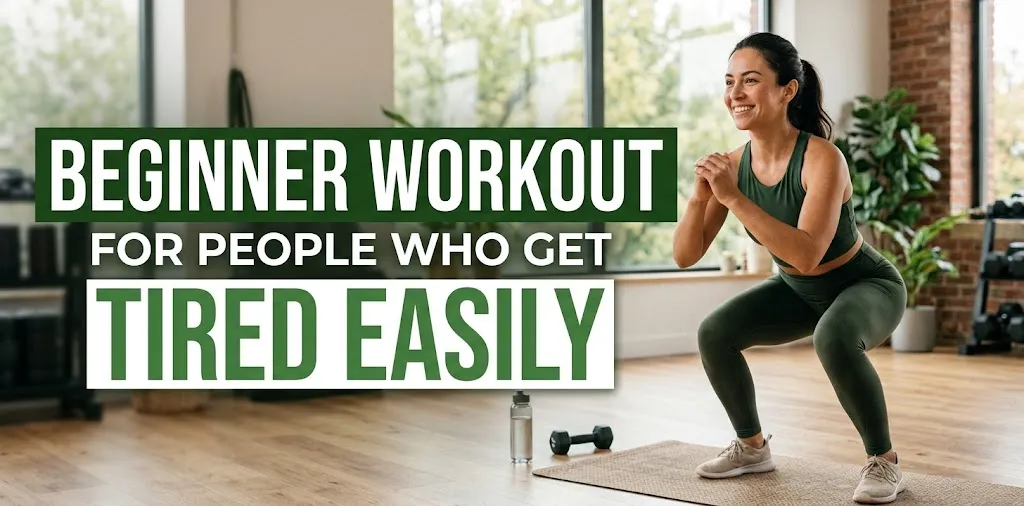
If You Get Tired Very Easily
Suppose even 15 minutes feels like too much.
Try:
- 3 minutes of easy walking
- 2 minutes of seated movements
- Rest
- Another 3 minutes of walking later
You can build from there.
Short sessions can be especially helpful when the biggest barrier is simply getting started.
Common Beginner Mistakes to Avoid
Starting With High-Impact Exercise
You do not need jumping, burpees, sprinting, or running to make progress.
Start with movements you can control.
Trying to Exercise Every Day
More is not automatically better when you are starting from zero.
Your body needs time to adapt. Rest days can make it easier to return for your next session.
Chasing Soreness
Being extremely sore does not prove that you had a better workout.
A better sign of progress is being able to perform your routine more comfortably over time.
Comparing Yourself With Fit People
Someone who has trained for years should not be your benchmark.
Compare your current ability with where you started.
Changing Too Much at Once
If you increase workout time, speed, repetitions, and resistance at the same time, it becomes harder to know what your body is responding to.
Make gradual changes.
Waiting for Motivation
Motivation can come and go.
A simple routine that takes 10–15 minutes is easier to follow than a demanding plan that requires perfect motivation.
When Low Impact Is No Longer Enough
Low impact exercise can remain part of your routine even after you become fitter.
But as your fitness improves, you may want to add more challenge.
That could mean:
- Longer walks
- Faster walking
- Resistance bands
- Light dumbbells
- More repetitions
- More challenging strength exercises
- Cycling
- Swimming
- Incline walking
You do not have to move from low impact directly to high impact.
There are many steps between “I never exercise” and “I do hard workouts.”
How Much Exercise Should You Eventually Aim For?
For general health, U.S. guidelines recommend that adults get at least 150 minutes of moderate-intensity aerobic activity each week and perform muscle-strengthening activities on at least two days per week. You do not need to reach that amount immediately when starting from zero.
Think of 150 minutes as a longer-term target, not your first-week requirement.
For example, 150 minutes could eventually look like:
- 30-minute brisk walks on five days
- 25-minute walks on six days
- A combination of walking, cycling, water exercise, and other activities
The right mix depends on your interests and abilities.
When to Stop a Workout
Exercise should challenge you, but certain symptoms should not be ignored.
Stop exercising and seek appropriate medical care for concerning symptoms such as severe chest pain, fainting, or severe difficulty breathing.
If you develop unusual or persistent pain during or after exercise, do not simply keep increasing the workload.
People who have been inactive and are considering vigorous exercise, particularly those with certain health conditions or disabilities, may need medical guidance before increasing intensity.
Frequently Asked Questions
What is the easiest low impact workout for a complete beginner?
Easy walking is one of the simplest starting points because you can control the pace and duration. Chair exercises, marching in place, sit-to-stands, and wall push-ups are also useful options when you want to exercise at home.
How long should a beginner low impact workout last?
Start with about 10–15 minutes if that feels manageable. If you are extremely inactive, even 5 minutes can be a reasonable starting point, and you can gradually increase the duration as your body adapts.
Can low impact workouts actually get you in shape?
Yes. Low impact exercise can improve endurance, strength, movement, and overall fitness when you do it consistently and gradually increase the challenge. As you become fitter, you can add more time, resistance, speed, or more demanding exercises.
The Bottom Line
Starting from zero does not mean you need to work out like someone who has been exercising for years. Begin with easy walking, chair exercises, wall push-ups, sit-to-stands, and other controlled movements. Keep your first sessions short, leave room for recovery, and increase the challenge slowly.
Your most useful first step is simple: choose a 10–15 minute low impact workout you can realistically repeat three times this week. Once that routine feels normal, build from there.