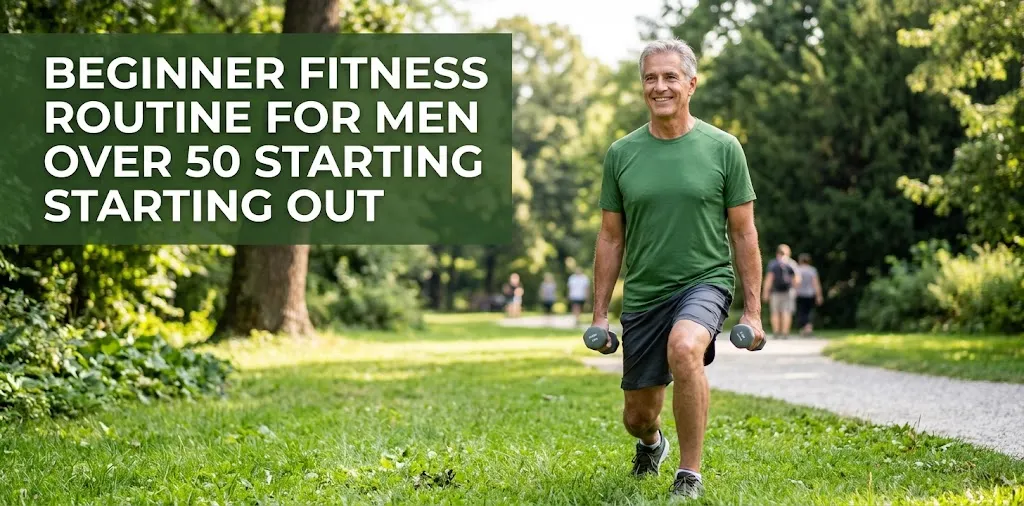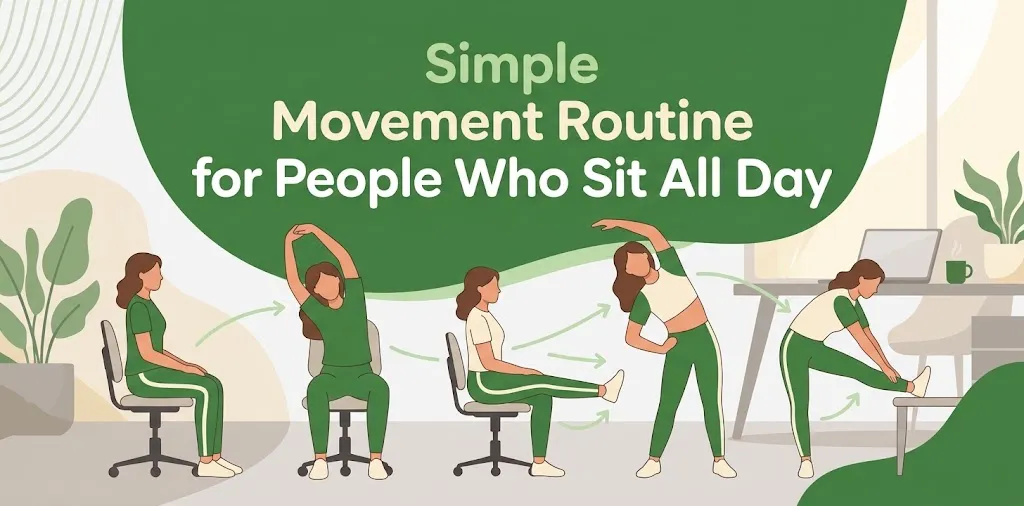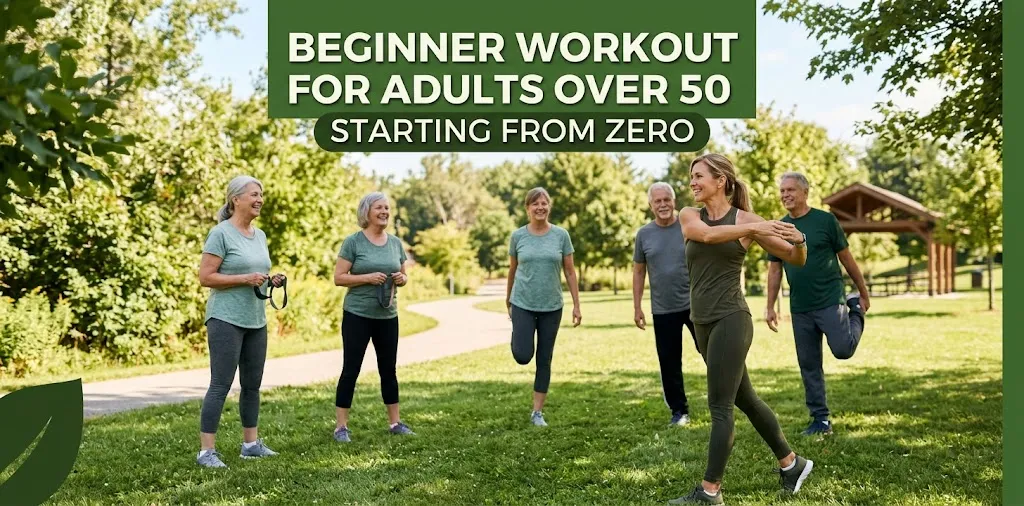
If you are over 50 and have been inactive for a long time, you do not need to start with hard workouts. A better approach is to begin with easy walking, simple strength exercises, balance work, and gentle mobility. Start with short sessions and increase your time and effort gradually. Even a few minutes of movement is a useful starting point.
Starting from zero can feel intimidating. You may worry about sore joints, low stamina, poor balance, or simply not knowing what to do. The good news is that your first workout does not need to look like a typical gym workout. Your goal at the beginning is to build a routine your body can handle and you can repeat.
What Exercise Should You Do First After 50?
For a true beginner, start with a mix of low-impact aerobic activity, basic strength training, balance exercises, and mobility work. Walking is one of the easiest ways to build endurance, while movements such as chair sit-to-stands and wall push-ups can help rebuild everyday strength.
You do not need to reach the full adult activity recommendations during your first week. Start with small amounts and gradually increase frequency, intensity, and duration.
The four parts of a beginner routine
| Type | Beginner options | Main purpose |
|---|---|---|
| Aerobic | Easy walking, cycling, water exercise | Build stamina |
| Strength | Chair sit-to-stand, wall push-ups, resistance bands | Build muscle and functional strength |
| Balance | Supported single-leg stand, heel-to-toe walking | Improve steadiness |
| Mobility | Gentle shoulder, ankle, hip, and leg movements | Help maintain comfortable movement |
These categories do not have to be separate workouts. A short walk followed by a few strength and balance exercises can give you a well-rounded session.
Your First 4 Weeks of Exercise
The biggest mistake when starting from zero is doing too much on the first day. A four-week progression gives your body time to adjust.
Week 1: Just Get Moving
Your first week should feel almost easy.
Try:
- 5–10 minutes of comfortable walking, 3 days this week
- 1 set of 5–8 chair sit-to-stands
- 1 set of 5–8 wall push-ups
- 10–20 seconds of supported balance practice on each side
- 5 minutes of gentle mobility
If 10 minutes of walking feels too difficult, start with 5 minutes. You can also divide activity into shorter periods during the day.
Week 2: Add a Little More
If your body handled week one well, increase your walking to about 10–15 minutes on 3 or 4 days.
Add two simple strength sessions:
- Chair sit-to-stand: 1–2 sets of 6–10
- Wall push-up: 1–2 sets of 6–10
- Standing calf raise while holding a sturdy chair: 1–2 sets of 8–10
- Supported balance: 20–30 seconds per side
You should still finish feeling like you could have done a little more.
Week 3: Build Consistency
Aim for roughly 15–20 minutes of easy-to-moderate walking on most planned walking days.
Continue strength training twice a week. If the exercises feel comfortable, add a few repetitions rather than suddenly using heavy weights.
For balance, continue using a wall, counter, or sturdy chair for support when needed.
Week 4: Create Your Regular Routine
By the fourth week, you may be ready for 20–30 minutes of walking on several days, depending on your fitness and health.
Your strength sessions can remain short. You do not need to spend an hour lifting weights to make progress.
The goal is now to create a routine you could realistically maintain for months.
A Simple Beginner Workout You Can Do at Home
You can perform this routine with a sturdy chair, a wall, and comfortable shoes. Keep a counter or another stable surface nearby for balance exercises.
Warm Up for 5 Minutes
Start slowly with:
- Walking in place
- Shoulder rolls
- Gentle arm movements
- Easy knee lifts
- An easy walk around the room
A warm-up gradually prepares your body for activity.
Chair Sit-to-Stand
Sit near the front of a sturdy chair. Stand up slowly, then lower yourself back down with control.
Start with 5–8 repetitions.
This movement is especially useful because standing from a chair is something you already do in everyday life.
If you need to use your hands, use them. As you become stronger, try doing more of the movement without pushing off.
Wall Push-Ups
Stand facing a wall with your hands against it. Slowly bend your elbows to bring your chest toward the wall, then push yourself away.
Start with 5–10 repetitions.
This is an easier starting point than a floor push-up and allows you to build upper-body strength gradually.
Calf Raises
Hold a sturdy chair or countertop. Slowly raise your heels, pause briefly, and lower them.
Start with 8–10 repetitions.
Move slowly rather than bouncing.
Supported Balance Stand
Stand next to a sturdy chair or countertop. Hold it lightly and shift your weight onto one leg.
Try holding for 10–20 seconds, then switch sides.
Do not practice balance exercises in an open area where a fall could cause an injury. Use a sturdy surface for support when needed.
Easy Walking
Finish with 5–15 minutes of comfortable walking.
If you cannot walk continuously for that long, break it into shorter walks.
How Hard Should Exercise Feel When You Are Starting From Zero?
Your first workouts should feel manageable, not exhausting.
A simple way to judge aerobic intensity is the talk test. At a moderate intensity, you should be able to talk, although you will be breathing harder than normal. If you can only say a few words before needing another breath, the activity is closer to vigorous intensity.
For a beginner over 50, there is usually little reason to chase vigorous exercise immediately. Build your basic endurance first.
For strength exercises, choose a resistance that makes the last few repetitions challenging while allowing you to maintain good control.
How Many Days a Week Should You Exercise?
When you are starting from zero, consistency matters more than hitting a perfect number right away.
A practical starting schedule could look like this:
| Day | Beginner activity |
|---|---|
| Monday | 10–15 minute walk + mobility |
| Tuesday | Strength + balance |
| Wednesday | Easy walk |
| Thursday | Rest or gentle movement |
| Friday | Strength + balance |
| Saturday | Easy walk |
| Sunday | Rest or gentle mobility |
As your fitness improves, gradually increase your activity.
For adults, federal guidelines recommend at least 150 minutes of moderate aerobic activity each week and muscle-strengthening activity on at least 2 days. Adults 65 and older are also advised to include balance activities. But these are goals to work toward, not requirements you must reach during your first week.
What If You Have Stiff Joints or Low Fitness?
Being out of shape does not mean you have to avoid exercise. It means the starting point needs to match your current ability.
For example, if walking for 10 minutes causes too much discomfort, try several shorter periods. Water exercise may also be an option for people who find land-based movement uncomfortable.
If you use a cane or walker or have difficulty moving around, you can still discuss appropriate forms of activity with a health professional. Even people with limited mobility can find ways to move, including gentle arm or leg movements.
Do not try to push through sharp or significant pain just because you are trying to get fit.
When Should You Talk With a Doctor Before Exercising?
Many healthy older adults who gradually increase their physical activity do not necessarily need medical clearance first. However, getting professional advice is especially sensible if you have a chronic health condition, significant mobility problems, or symptoms that could make exercise unsafe.
Talk with your health care professional about an exercise plan if you are being treated for conditions such as heart disease, type 2 diabetes, osteoarthritis, or high blood pressure, or if you have a physical disability.
You should also seek medical guidance if you have chest pain or pressure, dizziness, significant joint pain, or new health concerns when increasing activity.
How to Progress Without Overdoing It
Progress does not always mean exercising harder.
You can improve by changing one factor at a time:
- Walk for 5 more minutes.
- Add a few repetitions.
- Add another walking day.
- Improve your movement control.
- Use a slightly stronger resistance band.
- Reduce how much you rely on your hands during a movement.
- Walk a little faster when your current pace feels easy.
Increase activity gradually over weeks or months rather than making large jumps.
If a new level makes you excessively sore or unusually tired, return to the previous level for a while.
Two Realistic Ways to Start
Example 1: A Completely Inactive 52-Year-Old
Imagine someone who has spent most of the past few years sitting for work and watching TV after dinner.
Instead of joining a demanding fitness class, they could begin with a 10-minute walk after dinner three times a week. On two other days, they could perform chair sit-to-stands and wall push-ups for about 10 minutes.
After several weeks, they might gradually extend the walks and add resistance bands.
The important change is not the intensity. It is creating a routine that can be repeated.
Example 2: A 68-Year-Old Who Feels Unsteady
Someone who feels unsure about their balance should not begin with running, jumping, or complicated exercises.
A better starting point could include short walks, chair-based strength movements, and supported balance exercises near a sturdy surface. As confidence and strength improve, the person can gradually increase the challenge.
Balance training is an important part of exercise for older adults because it can improve stability and help reduce fall risk.
Common Beginner Mistakes After 50
Starting With Workouts Meant for Younger, Fitter People
A workout being popular does not mean it is appropriate for your current fitness level.
Start with movements you can control.
Trying to Make Up for Years of Inactivity
You cannot safely erase years of inactivity in a weekend.
Your body needs time to adapt to new demands.
Ignoring Recovery
Rest days are not wasted days. They give you time to recover and make it easier to maintain your routine.
Using Too Much Weight
You do not need heavy dumbbells when learning basic movement patterns. Begin with body weight or very light resistance and increase gradually.
Treating Soreness as Proof of a Good Workout
A workout does not need to leave you extremely sore to be effective.
Focusing Only on Cardio
Walking is an excellent starting point, but a well-rounded routine should also include muscle-strengthening and, particularly as you get older, balance work.
How to Make Exercise Easier to Stick With
The best workout is one you will actually repeat.
Try attaching exercise to an existing habit. For example, walk after breakfast or dinner instead of waiting for the perfect time.
You can also:
- Put workout times on your calendar.
- Keep your walking shoes where you can see them.
- Exercise with a friend or family member.
- Choose activities you enjoy.
- Keep a simple activity log.
- Set small weekly goals.
Specific, trackable goals are often easier to follow than vague goals such as simply deciding to “exercise more.”
If you miss a few days, do not treat it as failure. Start again at a level that feels manageable.
Frequently Asked Questions
Can I Start Exercising at 50 if I Have Never Worked Out Before?
Yes. You can begin with low-intensity activities such as short walks and simple body-weight movements. Start with small amounts and gradually increase your activity as your fitness improves.
What Is the Best Exercise for a Beginner Over 50?
Walking is a practical starting choice because it is simple and low impact, but it should not be your only form of exercise. A useful beginner routine combines walking with basic strength, balance, and mobility exercises.
How Long Should a Beginner Workout Last?
There is no single required workout length when you are starting from zero. Begin with a few minutes if necessary and gradually build toward longer sessions; even short periods of activity can be useful.
Start Small and Build From There
Starting exercise after 50 is less about proving how fit you can become in one workout and more about giving your body a manageable reason to get stronger.
Begin with short walks, simple strength exercises, and supported balance work. Increase only when your current routine feels comfortable. Your first goal can be as simple as completing three short walks this week and two brief strength sessions.
The most useful expert tip is to start below your maximum, not at it. A routine that feels almost too easy today gives you room to progress tomorrow.