Starting exercise when you feel completely out of shape can be uncomfortable. You may get tired quickly, feel weak, or worry that everyone else is more fit than you. The good news is that you do not need to run, lift heavy weights, or spend an hour at the gym to begin.
The best starting point is simple movement that feels manageable. Walking, chair squats, wall push-ups, standing marches, and gentle mobility exercises can help you build strength, balance, and stamina without making your first workouts overwhelming.
What Are the Easiest Exercises for Someone Who Is Completely Out of Shape?
If you are completely out of shape, start with low-impact exercises such as easy walking, chair sit-to-stands, wall push-ups, standing marches, heel raises, and gentle mobility movements. Begin with just 5–10 minutes and increase your time gradually as your body adapts. The goal at first is consistency, not intensity.
You do not have to become fit before you start exercising. Starting exercise is how you begin getting fitter.
For someone who has been inactive for a long time, the first few workouts should feel almost easy. That may seem too simple, but it gives your muscles, joints, heart, and lungs time to adjust.
8 Easy Exercises to Start With
You can do most of these exercises at home with little or no equipment. Keep a sturdy chair or wall nearby for support when needed.
1. Easy Walking
Walking is one of the simplest ways to restart physical activity.
You can walk around your home, outside, at a local park, or inside a shopping mall. You do not need to walk fast at first.
Start with:
- 5–10 minutes at an easy pace
- 3–5 days per week
- A pace that allows you to breathe comfortably
- Shorter sessions if 10 minutes feels like too much
As walking becomes easier, add a few minutes at a time. Eventually, you can increase your pace or distance.
2. Chair Sit-to-Stands
This exercise works your legs and hips while also practicing a movement you use every day.
Stand in front of a sturdy chair with your feet about hip-width apart. Slowly lower yourself until you lightly touch the chair, then stand back up.
Try:
- 5 repetitions
- Rest for a minute
- Repeat once if you feel comfortable
If standing up is difficult, use your hands on the chair or another stable surface for support.
As you get stronger, work toward 8–12 repetitions without using your hands.
3. Wall Push-Ups
Regular floor push-ups can be difficult for someone who is just starting. Wall push-ups let you practice the same basic pushing movement with much less body weight involved.
Stand about an arm’s length from a wall. Place your hands on the wall around chest height. Bend your elbows and slowly bring your chest toward the wall. Then push yourself back.
Start with:
- 5–10 repetitions
- Slow, controlled movements
- 1–2 sets
Keep your body fairly straight rather than bending at the waist.
When wall push-ups become easy, you can progress to a higher countertop or sturdy table before eventually trying a lower surface.
4. Standing Marches
Standing marches are an easy way to get your heart and legs moving without jumping.
Stand tall near a wall or sturdy chair. Lift one knee a few inches, lower it, and then lift the other knee.
Try marching for:
- 20–30 seconds
- Rest for 30–60 seconds
- Repeat 2–3 times
You can make the movement slower if you feel unsteady. If standing is difficult, seated marching in a sturdy chair is another option.
5. Heel Raises
Heel raises strengthen the lower legs and can also help you practice balance.
Stand behind a sturdy chair and lightly hold it. Slowly raise your heels so you come onto the balls of your feet. Pause briefly, then lower your heels.
Start with 8–10 repetitions.
Do not rush. The goal is controlled movement, not getting as high or as fast as possible.
6. Seated Knee Lifts
This is a useful option if standing exercises are uncomfortable or tiring.
Sit toward the front of a sturdy chair with your feet on the floor. Lift one knee, lower it, and then lift the other.
Try alternating for 30 seconds.
You can use this exercise as a gentle cardio movement or as a short activity break during a long period of sitting.
7. Wall Plank
A traditional floor plank can be challenging for beginners. A wall plank provides a much easier way to practice bracing your core.
Place your hands on a wall and walk your feet slightly backward. Keep your body in a straight line from your head toward your heels. Hold the position for 10–20 seconds.
Repeat 2–3 times.
If that feels difficult, move your feet closer to the wall.
8. Gentle Mobility Movements
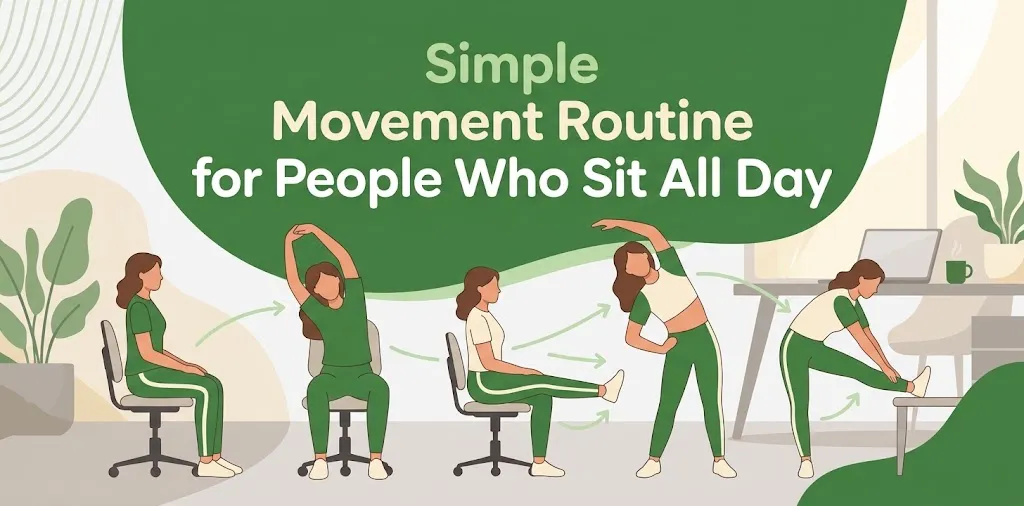
If you have been sitting for much of the day, gentle movement can help you become more comfortable moving your body.
Try:
- Shoulder rolls
- Gentle arm circles
- Ankle circles
- Easy torso turns
- Slow knee bends
- Gentle calf stretches
Keep these movements comfortable. Do not force a stretch or bounce into it.
A Simple 10-Minute Beginner Workout
You do not need to complete all eight exercises in one session.
Try this simple routine:
| Exercise | Starting Amount |
|---|---|
| Easy walking | 3 minutes |
| Chair sit-to-stands | 5 reps |
| Wall push-ups | 5 reps |
| Standing marches | 30 seconds |
| Heel raises | 8 reps |
| Easy walking | 2 minutes |
| Gentle mobility | 1 minute |
Rest whenever you need to.
If 10 minutes is too much, cut the workout in half. Five minutes of movement is a perfectly reasonable starting point for someone who has been inactive.
How Hard Should Exercise Feel When You Are Out of Shape?
Your first workouts should feel manageable rather than exhausting.
A useful test is whether you can still speak while exercising. As your fitness improves, moderate activity should make your breathing faster, but you should generally still be able to talk.
For your first few weeks, focus on:
- Smooth movements
- Comfortable breathing
- Good control
- Short workouts
- Plenty of recovery
- Gradual progress
You do not need to feel sore the next day for a workout to be effective.
Extreme soreness can make it harder to exercise again, which is why pushing yourself too hard at the beginning can work against your goal.
A 4-Week Plan for Getting Started
If you have done very little exercise recently, use the following as a flexible starting point.
Week 1: Just Get Moving
Your main goal is to make movement part of your routine.
Try 5–10 minutes of activity on 3–5 days.
For example:
- Monday: 10-minute easy walk
- Tuesday: Rest
- Wednesday: 5–10-minute beginner workout
- Thursday: Rest
- Friday: 10-minute walk
- Saturday: Optional easy movement
- Sunday: Rest
If even this feels difficult, reduce the time.
Week 2: Add a Little Strength
Continue walking and add simple strength exercises twice during the week.
A session could include:
- 5 chair sit-to-stands
- 5 wall push-ups
- 8 heel raises
- 30 seconds of marching
- 5 minutes of walking
Repeat the routine only if you feel ready.
Week 3: Increase Time
If the first two weeks feel manageable, add a few minutes to your walks.
You can also increase some exercises to 8–10 repetitions.
There is no need to increase everything at once. Changing one thing at a time makes it easier to see how your body responds.
Week 4: Build a Routine
By the fourth week, aim for regular movement on most days.
You might have:
- 3 walking days
- 2 simple strength days
- 1 optional mobility or easy activity day
- 1 rest day
This is not a test. If a week feels too difficult, repeat the previous week instead of progressing.
What If You Get Tired Very Quickly?
Getting tired quickly does not necessarily mean you are doing something wrong.
If you have been inactive for a long time, your current fitness level may simply be low. Start by reducing the workout rather than quitting altogether.
For example, if you planned a 10-minute walk but feel tired after 5 minutes, stop and recover. On another day, try 5 minutes again.
You can also break activity into smaller periods throughout the day. Several short movement sessions can be easier to manage than one longer workout.
The goal is to gradually increase what your body can comfortably handle.
What If Your Knees or Joints Hurt?
Choose low-impact movements and pay attention to how your body responds.
Walking may work well for some people, while others may find chair exercises, water exercise, or another low-impact option more comfortable.
Do not assume that pain is something you must push through. If exercise causes significant or persistent pain, stop the activity and discuss it with a health care professional.
People with conditions such as arthritis can often benefit from physical activity, but the right type and amount may need to be adjusted to their abilities.
What If You Are Overweight or Have Not Exercised in Years?
You can still start with simple movement.
Your starting point may be different from someone who has been active for years. That is completely fine. Walking for five minutes, doing a few chair stands, or completing several wall push-ups can be enough for your first session.
The mistake is thinking you need to perform a traditional gym workout immediately.
If you have been inactive and want to begin vigorous exercise such as jogging, or if you have a chronic health condition, talk with your doctor about what type and amount of activity is appropriate.
How to Progress Without Doing Too Much
Once your workouts feel easy, increase only one factor at a time.
You can increase:
- Time: Walk for a few more minutes.
- Repetitions: Do a few more chair stands.
- Frequency: Add another easy activity day.
- Difficulty: Move from wall push-ups to a sturdy countertop.
- Pace: Walk slightly faster.
For example, if you currently walk for 10 minutes three times a week, you could first increase one or two walks to 12–15 minutes. You do not need to increase speed and duration at the same time.
Two Realistic Ways to Start
Example 1: Someone who sits most of the day
A person who works at a desk and rarely exercises could start with a 5-minute walk after lunch and a 5-minute walk after dinner. After several days, they could add five chair stands and five wall push-ups.
The goal is not to burn as many calories as possible. The goal is to create a repeatable routine.
Example 2: Someone who gets winded easily
A person who becomes tired after a few minutes of walking might start with two or three minutes of easy walking followed by rest. They could repeat that process once or twice rather than forcing themselves to walk continuously.
As their tolerance improves, they can gradually extend the walking periods.
Common Beginner Mistakes to Avoid
Starting from zero does not require a perfect workout. In fact, several common approaches can make the process harder.
Starting With High-Intensity Workouts
HIIT, running, jumping, and difficult workout classes may be too demanding when your current fitness level is very low.
Build a base first.
Doing Too Much on Day One
A long first workout may leave you extremely sore and discouraged.
Finishing a short workout and feeling like you could have done a little more is often a better starting point.
Comparing Yourself With Fit People
Someone who has exercised for years should not be your standard.
Compare your current ability with your own ability from a week or month ago.
Ignoring Recovery
Rest days are not wasted days. Your body needs time to adapt to new physical demands.
Believing Exercise Only Counts if It Is Hard
It does not have to leave you exhausted to be worthwhile. For someone who has been inactive, even small increases in movement can be a useful first step.
When Should You Talk to a Doctor Before Exercising?
Moderate physical activity is generally safe for most people, but some people should get personalized guidance before starting or increasing activity.
Talk with your health care professional if you have a chronic condition such as heart disease, diabetes, or arthritis, or if you have concerns about how exercise may affect an existing condition.
If you experience symptoms such as chest pain or pressure, dizziness, or significant joint pain with activity, stop and seek appropriate medical guidance rather than trying to push through them.
Frequently Asked Questions
What is the easiest exercise for someone who is completely out of shape?
Walking is usually one of the easiest ways to begin because you can control the speed, distance, and duration. Chair exercises and wall push-ups are also useful when standing or walking for long periods is difficult.
How long should a beginner exercise if they are very out of shape?
Start with whatever amount you can comfortably handle, even if that is only 5 minutes. You can gradually increase your workout time as your fitness improves instead of trying to reach 30 minutes immediately.
Should I exercise every day if I am completely out of shape?
You can include light movement on many days, but you do not need a hard workout every day. Start with a few structured sessions each week and allow enough recovery time, especially when adding strength exercises.
The Bottom Line
If you are completely out of shape, your first workout does not need to look like a gym workout. Start with easy walking, chair sit-to-stands, wall push-ups, standing marches, and other simple movements that you can perform safely and consistently.
Your best first goal is not to get exhausted—it is to come back and do it again.
Start with 5–10 minutes, repeat it several times during the week, and gradually add time or difficulty as your body becomes more comfortable. Over time, those small sessions can become the foundation for reaching recommended activity levels.