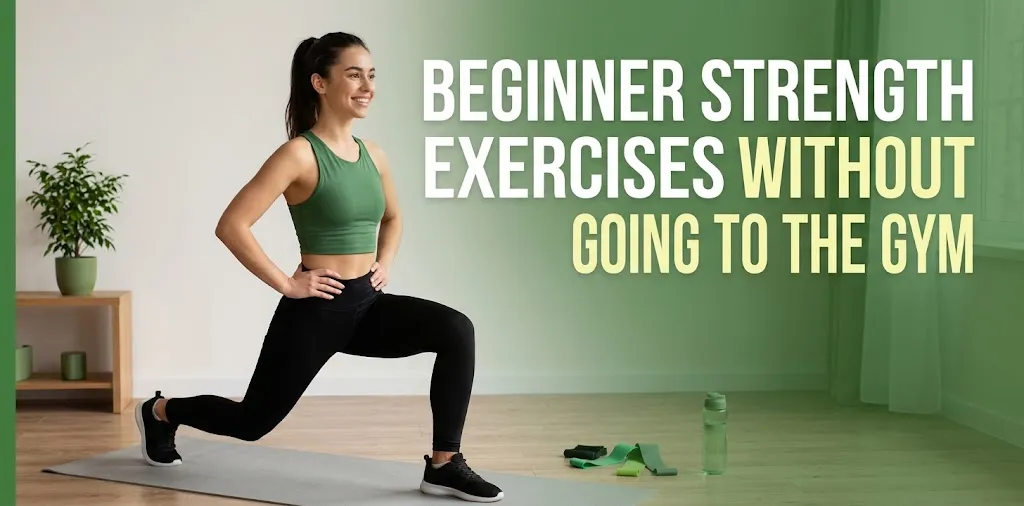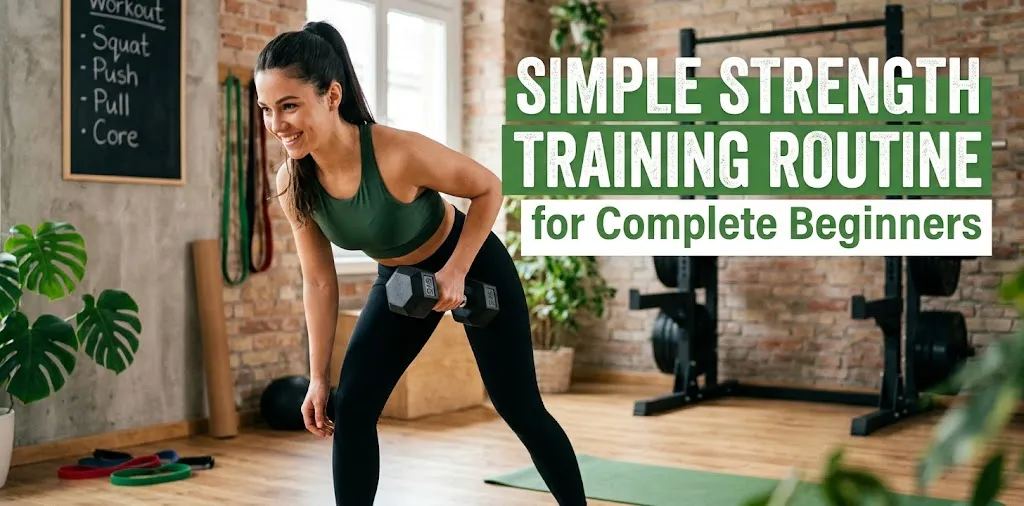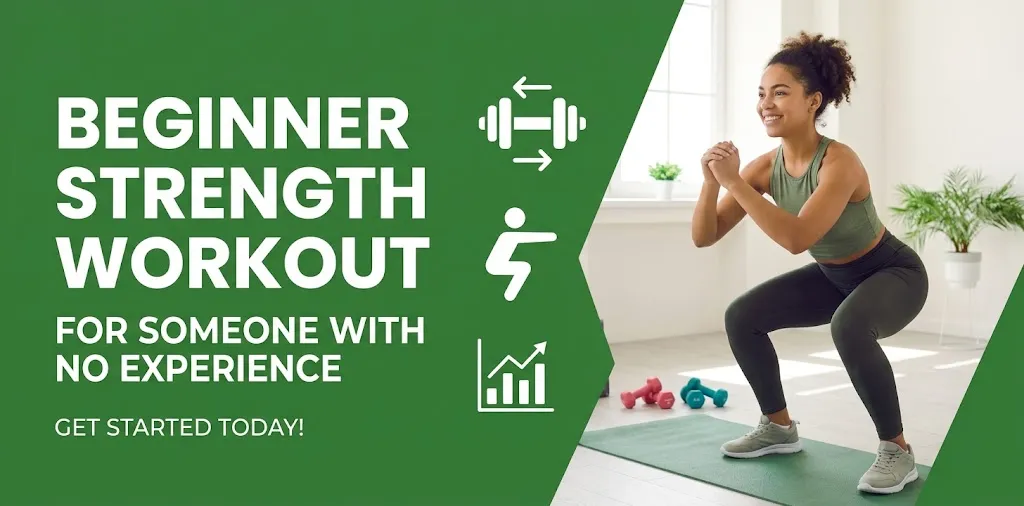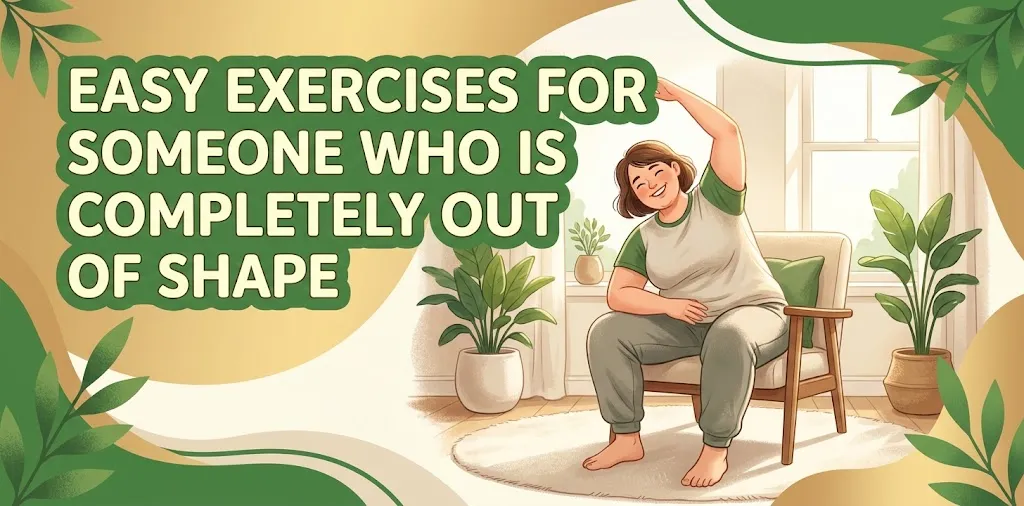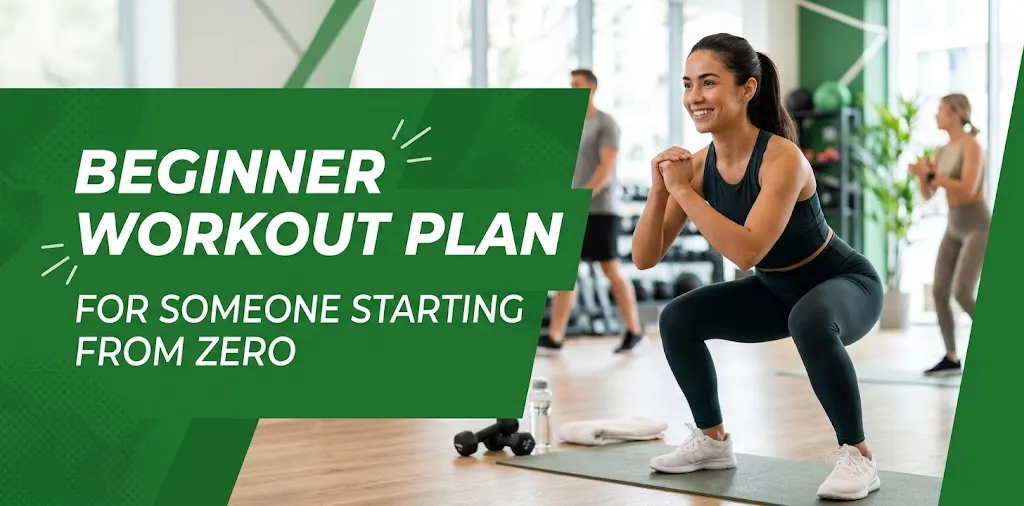
If you are starting from zero, your first workout plan should be simple, short, and easy to repeat. Begin with 2–3 workout days per week, combine easy cardio with basic strength exercises, and leave recovery days between harder sessions. Start below your maximum effort and gradually increase time, repetitions, or resistance as your body adapts. Even small amounts of activity are useful when you have been inactive.
Starting a workout routine can feel harder than the workout itself. You may not know which exercises to choose, how many days to train, or how much you should push yourself.
The good news is that you do not need to be fit before you start exercising. You need a plan that matches your current fitness level.
This beginner workout plan is designed for someone who has little or no recent exercise experience. You can do most of it at home with no gym membership or expensive equipment.
What to Expect When You Start From Zero
When you have been inactive for a long time, normal exercise can feel surprisingly difficult. Walking for 10 minutes may make you breathe harder. A few chair squats may make your legs tired. That does not mean you are doing something wrong.
Your body is simply getting used to a new demand.
The goal during the first few weeks is not to become extremely fit. Your goals are to:
- Build the habit of exercising
- Improve basic strength and movement
- Increase your walking and general activity
- Learn good exercise technique
- Improve your stamina gradually
- Avoid doing so much that you quit or become overly sore
Current U.S. physical activity guidance recommends that adults eventually work toward at least 150 minutes of moderate-intensity aerobic activity each week plus muscle-strengthening activity on at least 2 days per week. If you are inactive, you can build toward those amounts gradually rather than trying to reach them immediately.
Your Simple 4-Week Beginner Workout Plan
This plan starts with manageable sessions and gradually increases the amount of work.
You do not need to complete every exercise perfectly. If an exercise is too difficult, use the easier version. If you feel that the workout is too hard, reduce the repetitions or stop after one round.
| Week | Strength Days | Walking/Cardio | Main Goal |
|---|---|---|---|
| Week 1 | 2 days | 3 easy days | Build the habit |
| Week 2 | 2 days | 3 days | Improve movement |
| Week 3 | 3 days | 2–3 days | Build strength and stamina |
| Week 4 | 3 days | 2–3 days | Create a repeatable routine |
You can change the days to fit your schedule. Try to avoid putting your hardest sessions back-to-back when you are new to exercise.
Week 1: Get Your Body Moving
Your first week should feel almost too easy.
That is intentional.
Monday — Strength Workout
- 5-minute easy warm-up
- Chair squats: 6–8 reps
- Wall push-ups: 6–8 reps
- Glute bridges: 8–10 reps
- Standing knee raises: 6–8 per side
- Easy walk: 5 minutes
Complete one round. If you feel comfortable, rest for 1–2 minutes and complete a second round.
Tuesday — Easy Walking
Walk for 10–15 minutes at a comfortable pace.
Wednesday — Rest or Gentle Movement
Take a rest day or do a few minutes of easy stretching and walking.
Thursday — Strength Workout
Repeat Monday’s workout.
Friday — Easy Walking
Walk for 10–15 minutes.
Saturday — Optional Easy Activity
Take a relaxed walk, do gentle mobility exercises, or do another activity you enjoy.
Sunday — Rest
Give your body a full recovery day.
Week 2: Add a Little More
In Week 2, keep the same basic exercises but increase the work slightly.
For strength workouts:
- Chair squats: 8–10 reps
- Wall or counter push-ups: 8–10 reps
- Glute bridges: 10–12 reps
- Standing knee raises: 8–10 per side
- Bird dogs: 6–8 per side
Complete 1–2 rounds.
For walking, try 15–20 minutes on three days during the week.
You should still finish most sessions feeling like you could have done a little more.
Week 3: Move to Three Strength Days
By Week 3, you can move to three short strength sessions if your body is recovering well.
A simple schedule could look like this:
Monday: Strength A
Tuesday: Easy walk
Wednesday: Strength B
Thursday: Rest or easy walk
Friday: Strength A
Saturday: Easy walk
Sunday: Rest
For Strength A:
- Chair or bodyweight squats: 8–12 reps
- Incline push-ups: 6–10 reps
- Glute bridges: 10–15 reps
- Bird dogs: 6–10 per side
- Standing calf raises: 10–15 reps
For Strength B:
- Sit-to-stand from a chair: 8–12 reps
- Wall or incline push-ups: 6–10 reps
- Supported reverse lunges: 5–8 per side
- Glute bridges: 10–15 reps
- Dead bug or standing core brace: 6–10 per side
Complete 1–2 rounds depending on your fitness level.
Week 4: Build Consistency
The fourth week is about making your routine sustainable.
Continue with three strength workouts and two or three easy cardio sessions.
You can increase the challenge by:
- Adding a few repetitions
- Performing another round
- Walking a little longer
- Using a lower surface for incline push-ups
- Moving from chair squats toward regular bodyweight squats
- Using light dumbbells if you already have them
Do not increase everything at the same time.
Choose one change and give your body time to adjust.
The Best Exercises When You Are Starting From Zero
You do not need complicated exercises. A beginner routine can be built around a few basic movement patterns.
Chair Squats
Stand in front of a sturdy chair with your feet about shoulder-width apart.
Push your hips backward and slowly lower yourself toward the chair. Lightly touch the chair, then stand again.
Use your hands on a nearby surface for support if needed.
Easier option: Use a higher chair and reduce the depth.
Progression: Move from chair squats to regular bodyweight squats.
Wall or Incline Push-Ups
Place your hands on a wall or sturdy countertop. Keep your body in a straight line and bend your elbows to bring your chest closer to the surface. Push yourself back.
Wall push-ups are usually easier than countertop push-ups. Countertop push-ups are easier than floor push-ups.
Easier option: Use a wall.
Progression: Move your hands to a lower, sturdy surface.
Glute Bridges
Lie on your back with your knees bent and feet flat on the floor.
Press through your feet and lift your hips until your body forms a comfortable line from your shoulders toward your knees. Lower slowly.
Do not force your lower back into an extreme arch.
Bird Dogs
Start on your hands and knees. Slowly extend one arm and the opposite leg. Return to the starting position and switch sides.
Move slowly rather than trying to lift your arm and leg as high as possible.
This exercise also helps you practice controlling your body during movement.
Walking
Walking is one of the simplest ways to build aerobic fitness.
Start with a pace that feels comfortable. As your fitness improves, you can make some walks longer or slightly faster.
You do not need to run to improve your fitness.
How Hard Should a Beginner Workout Feel?
One of the biggest mistakes beginners make is assuming every workout should leave them exhausted.
It does not.
For your first few weeks, aim for an effort that feels manageable. During moderate-intensity activity, you should be breathing harder but still able to speak in short sentences.
You should also finish most beginner strength sets with good form rather than pushing every set until you cannot do another repetition.
A simple rule is:
Finish the set while you still feel that you could perform a few more clean repetitions.
As your fitness improves, you can gradually make the workouts harder.
How Long Should a Beginner Workout Last?
Your first workouts may only take 10–20 minutes.
That is enough to start.
For example:
5-minute warm-up + 10-minute strength workout + 5-minute easy walk = 20 minutes
You do not need a one-hour gym session to make progress.
The U.S. Department of Health and Human Services specifically recommends that inactive adults start with small amounts of activity and build gradually toward the weekly activity target. Activity can also be accumulated in smaller periods throughout the day.
If 20 minutes feels too difficult, start with 5–10 minutes.
The best starting workout is one you can repeat.
What to Do Before Each Workout
You do not need a complicated warm-up.
Spend about 5 minutes getting your body moving.
Try:
- Easy walking
- Marching in place
- Shoulder rolls
- Gentle arm circles
- Slow bodyweight squats
- Easy ankle movements
The goal is simply to transition from sitting or resting into exercise.
Do not turn the warm-up into another hard workout.
How to Progress Without Overdoing It
Once a workout becomes easy, you need a slightly greater challenge.
But progress should be gradual.
A simple progression system is:
First: Improve your technique.
Second: Add a few repetitions.
Third: Add another set.
Fourth: Increase resistance or choose a harder exercise variation.
For example, your push-up progression might look like:
Wall push-up → countertop push-up → sturdy bench push-up → knee push-up → floor push-up
You do not have to follow that exact order. The right variation is the one that lets you maintain good control.
The American College of Sports Medicine’s 2026 resistance-training guidance emphasizes consistency and notes that moving from no resistance training to resistance training provides meaningful benefits; complicated programs are not required for healthy adults.
A Simple Weekly Schedule You Can Keep Using
After your first month, a schedule like this can work well for many beginners:
| Day | Activity |
|---|---|
| Monday | Full-body strength |
| Tuesday | Easy walk |
| Wednesday | Full-body strength |
| Thursday | Rest or easy movement |
| Friday | Full-body strength |
| Saturday | Walk or enjoyable activity |
| Sunday | Rest |
You can also use two strength days instead of three if three days feels like too much.
The important thing is to find a schedule you can maintain.
What If You Cannot Finish the Workout?
Do less.
This is one of the most useful rules for someone starting from zero.
If your plan says to complete two rounds but you can only complete one, one round still counts.
If 20 minutes of walking feels too hard, walk for 10 minutes.
If eight push-ups are too difficult, do four.
If regular squats are uncomfortable, use a chair.
A workout does not have to look impressive to be useful.
The goal is to create a sustainable starting point and gradually increase what your body can handle.
Common Beginner Mistakes
Starting Too Hard
Doing an intense workout on your first day can leave you extremely sore and make your next workout much harder.
Start below your maximum effort.
Exercising Every Day
More exercise is not automatically better.
Your muscles and other body systems need time to recover, especially when you are not accustomed to exercise.
Copying Advanced Workouts
A workout designed for someone who has trained for years may be completely inappropriate for a person starting from zero.
You do not need burpees, heavy barbell lifts, complicated circuits, or advanced HIIT sessions to get started.
Chasing Soreness
Muscle soreness is not a reliable measure of workout quality.
A good beginner workout should help you progress without making you too sore to move normally for several days.
Changing the Plan Every Week
Constantly trying new workouts can make progress difficult to track.
Choose a simple routine and repeat it long enough to learn the movements and see how your body responds.
Focusing Only on Weight Loss
If losing weight is one of your goals, exercise can be part of the process, but your first goal should be building an active routine you can maintain.
Strength, stamina, movement ability, sleep, mood, and daily energy can all matter too.
How to Stay Consistent When Motivation Drops
Motivation is unreliable.
Instead of waiting until you feel motivated, make your workout easier to start.
Try these simple strategies:
- Put your workout clothes out the night before.
- Choose a specific workout time.
- Keep your first sessions short.
- Exercise in the same place when possible.
- Track completed workouts on a calendar.
- Choose activities you actually enjoy.
- Have a backup 5-minute workout for busy days.
For example, your backup workout could be:
- 5 chair squats
- 5 wall push-ups
- 5 glute bridges
- 2 minutes of walking
That is not your full training session. It is a way to keep the habit alive on a difficult day.
What Equipment Do You Actually Need?
You can start with almost nothing.
For a home beginner workout, useful items include:
- Comfortable athletic shoes
- A sturdy chair
- Comfortable clothing
- A clear area to move
- A water bottle
Optional equipment can come later.
A pair of light dumbbells or resistance bands can give you more exercise options once bodyweight movements become easy.
Do not buy a large collection of fitness equipment before you know what type of exercise you enjoy.
What About Gym Workouts?
You can use this same approach in a gym.
Instead of trying every machine, learn a few basic movements.
A beginner gym session might include:
- Leg press
- Seated chest press
- Seated row
- Lat pulldown
- Leg curl
- Easy treadmill walking
Start with light resistance and focus on learning how each machine works.
If you have never used gym equipment, asking a qualified fitness professional to demonstrate the machines can be helpful.
You do not need to lift heavy weights during your first few sessions.
How to Know When You Are Ready to Progress
You may be ready for the next level when:
- Your current workout feels noticeably easier.
- You can complete all repetitions with controlled form.
- You recover well between sessions.
- You are no longer unusually tired after basic workouts.
- You can increase repetitions without losing technique.
Progress does not need to happen every workout.
Some weeks may feel easier than others because of sleep, stress, work, travel, or other parts of life.
That is normal.
When to Stop or Get Medical Guidance
Exercise is generally beneficial, but not every workout is appropriate for every person.
Stop exercising and seek appropriate medical attention for concerning symptoms such as severe chest pain, fainting, or severe difficulty breathing.
If you have a chronic health condition, disability, significant injury, or another medical concern that may affect exercise, talk with a health care professional about the types and amounts of activity that are appropriate for you. The CDC specifically recommends professional guidance for people with chronic conditions or disabilities when needed.
You do not need medical clearance for every normal beginner workout, but your individual health situation matters.
Two Realistic Ways to Start
Example 1: The Completely Sedentary Beginner
Imagine you spend most of the day sitting and currently do almost no planned exercise.
Your first week could be:
- Monday: 10-minute walk
- Tuesday: Rest
- Wednesday: 15-minute beginner strength workout
- Thursday: Rest
- Friday: 10-minute walk
- Saturday: 15-minute beginner strength workout
- Sunday: Rest
That may look small, but it gives you a starting point.
After a few weeks, those short sessions can become longer and more challenging.
Example 2: The Beginner Who Can Already Walk
Suppose you do not exercise but can comfortably walk for 20–30 minutes.
You can start a little higher:
- Monday: 20-minute strength workout
- Tuesday: 20-minute brisk walk
- Wednesday: Rest
- Thursday: 20-minute strength workout
- Friday: 20-minute walk
- Saturday: Optional activity
- Sunday: Rest
The right plan depends on your current ability, not the label “beginner.”
Frequently Asked Questions
How many days a week should a complete beginner work out?
Start with 2–3 planned workout days each week. Add easy walking or other comfortable movement on some of the days between workouts, while keeping recovery days when you need them.
Can I start working out at home with no equipment?
Yes. Chair squats, wall push-ups, glute bridges, bird dogs, and walking can create a useful starting routine without gym equipment. As you become stronger, you can add resistance bands or dumbbells if you want more challenge.
How long does it take to get in shape from zero?
There is no single timeline because starting fitness, age, sleep, health, consistency, and training all affect progress. Many beginners notice that basic movements and workouts become easier with consistent practice, but meaningful fitness changes require continued training over time.
Your Next Step
Do not wait until you feel ready.
For your first workout, put on comfortable clothes, spend five minutes warming up, complete one easy round of chair squats, wall push-ups, glute bridges, and bird dogs, then take a short walk.
That is enough for Day 1.
Your first goal is not to become fit overnight. It is to prove that you can start, recover, and come back for the next workout. Once that habit becomes normal, increasing your strength and endurance becomes much easier.
The best beginner workout plan is not the hardest one. It is the one you can perform safely, recover from, and keep doing week after week.