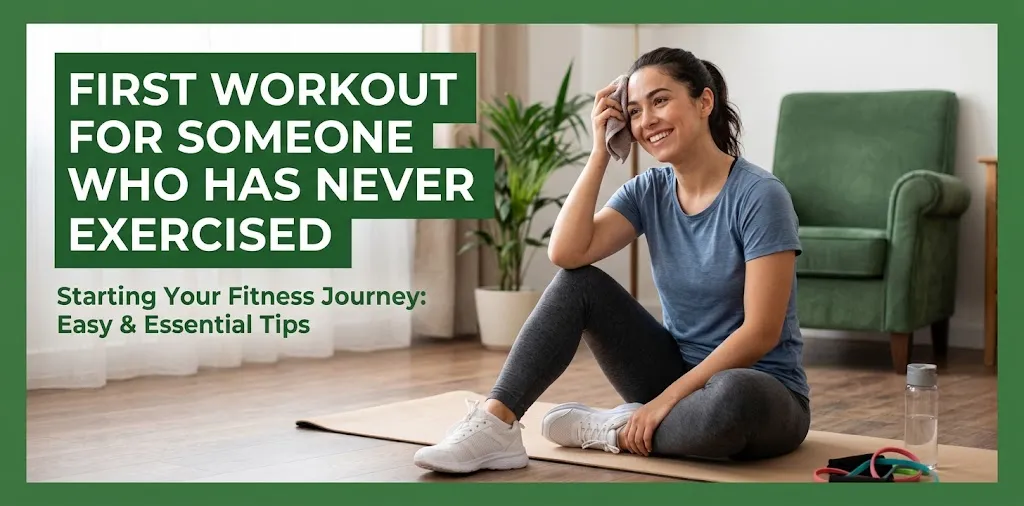
Starting your first workout can feel harder than the workout itself. You may wonder what exercises to do, how long to exercise, or whether you are fit enough to begin. The good news is that your first session does not need to be intense. For someone who has never exercised, the best first workout is short, simple, and easy enough to repeat. The goal is to help your body get used to movement—not to exhaust yourself.
What should the first workout look like?
Your first workout should usually combine a gentle warm-up, easy aerobic movement, a few basic strength exercises, and a short cool-down. If you have been inactive, start with light activity and build gradually rather than trying to reach the standard weekly exercise target on day one. Federal guidelines recommend that adults eventually work toward at least 150 minutes of moderate-intensity aerobic activity each week plus muscle-strengthening activity on at least 2 days, but beginners can build toward that goal over time.
A simple first workout can take about 15–20 minutes:
- 5 minutes: Easy warm-up
- 5–8 minutes: Walking or another gentle cardio activity
- 5 minutes: Basic bodyweight exercises
- 2–3 minutes: Easy cool-down
You should finish feeling like you could have done a little more.
A simple first workout for a complete beginner
You do not need a gym, weights, or complicated equipment for your first session. A sturdy chair and a little open floor space are enough.
Step 1: Warm up for 5 minutes
Begin slowly. The purpose of a warm-up is to get your body ready for movement without tiring yourself out.
Try:
- Walking slowly around your home or outside
- Gentle shoulder rolls
- Easy arm circles
- Marching in place
- Gentle ankle movements
- Slow side-to-side steps
Keep the movements comfortable. You do not need to stretch aggressively before exercising.
Step 2: Walk for 5–8 minutes
Walking is one of the easiest ways for a new exerciser to begin. Start at a comfortable pace where you can breathe normally and talk without struggling.
You can walk:
- Around your neighborhood
- On a treadmill
- Around a shopping mall
- Around your home
- In a nearby park
If 8 minutes feels like too much, start with 5 minutes. Even small amounts of physical activity are useful, and the CDC recommends starting slowly and gradually increasing the amount you do.
Step 3: Try 3 basic strength exercises
After walking, do a small amount of beginner strength work. You are learning the movements, not testing your limits.
Chair squats
Stand in front of a sturdy chair with your feet about hip-width apart. Slowly bend your knees and hips as if you were going to sit down. Lightly touch the chair, then stand back up.
Do 5–8 repetitions.
If this feels difficult, use your hands for support or reduce the depth of the movement.
Wall push-ups
Stand facing a wall with your hands against it. Keep your body fairly straight as you slowly bend your elbows and bring your chest toward the wall. Push yourself back to the starting position.
Do 5–8 repetitions.
Wall push-ups are a simpler starting point than floor push-ups because you are moving less of your body weight.
Supported calf raises
Stand behind a sturdy chair and hold it lightly for balance. Slowly raise your heels so you come onto the balls of your feet, then lower them.
Do 8–10 repetitions.
Move slowly rather than bouncing.
Step 4: Cool down for 2–3 minutes
Finish by walking slowly or standing and taking relaxed breaths.
Your heart rate should gradually return toward normal. You can also perform gentle stretches if they feel comfortable, but there is no need to force a stretch.
How hard should your first workout feel?
Your first workout should feel easy to moderate, not like a test of how much discomfort you can tolerate.
A useful beginner rule is to leave some energy in the tank. You should not need to collapse onto the couch afterward or feel unable to perform normal daily activities.
For someone starting from very little activity, the biggest mistake is often doing too much too soon. Current guidance recommends starting slowly and increasing activity over time.
A simple way to judge your effort is the talk test. During moderate activity, you can generally talk, although singing would be difficult. Your first workout can be easier than that while you learn how your body responds.
What if you cannot finish the workout?
That is completely fine.
Suppose you planned to walk for 8 minutes but feel tired after 4 minutes. Stop, rest, or finish with very gentle movement. Your starting point should match your current ability.
For example:
- Very inactive: 5-minute walk + 3 simple exercises
- Able to walk comfortably: 10-minute walk + 3 exercises
- Already somewhat active: 10–15-minute walk + 2 sets of easy exercises
There is no prize for starting with the hardest version.
What should you do after the first workout?
Recovery matters because your body is being introduced to a new type of stress.
You may notice mild muscle soreness during the following day or two, especially after strength exercises. That does not mean you need to stop exercising forever, but severe pain is a sign that you pushed too hard or should get medical advice.
For your next session, focus on gradually increasing either the time or the amount of work rather than increasing everything at once.
A simple progression might look like this:
| Stage | Walking | Strength work |
|---|---|---|
| First session | 5–8 minutes | 1 set of 3 exercises |
| Next few sessions | 8–10 minutes | 1 set |
| After you adapt | 10–15 minutes | 1–2 sets |
| Later | 15–30 minutes | 2 sets on selected days |
This is only a starting framework. Your pace should depend on how your body responds.
How many days should a beginner exercise?
You do not need to exercise hard every day.
A practical starting schedule is 2–3 easy workout days per week, with rest or light movement between sessions. On other days, you can add ordinary activity such as short walks, household tasks, or taking the stairs when comfortable.
The long-term goal is to become more active consistently. Federal guidance emphasizes that inactive adults should gradually work toward the recommended activity level rather than trying to do it all immediately.
For example:
| Day | Activity |
|---|---|
| Monday | First beginner workout |
| Tuesday | Easy walking or rest |
| Wednesday | Beginner workout |
| Thursday | Rest or light movement |
| Friday | Beginner workout |
| Saturday | Optional easy walk |
| Sunday | Rest |
You can change this schedule around your work, family, and energy levels.
Should your first workout be at home or at a gym?
Either can work. The better choice is the one that makes it easier for you to exercise consistently.
Starting at home
Home workouts can be useful if you feel uncomfortable in a gym or want to keep things simple. You can start with walking, chair squats, wall push-ups, and other bodyweight movements.
Starting at a gym
A gym gives you access to treadmills, bikes, machines, and other equipment. However, you do not need to use complicated equipment during your first visit.
If you go to a gym, spend your first session learning where things are and using simple equipment at an easy pace. You are building a routine, not trying to impress anyone.
What beginners often get wrong
The first workout is not the time to copy an advanced fitness routine from social media.
Avoid these common mistakes:
- Doing too much too soon: A long, hard workout can leave you excessively sore and make the next workout harder to start.
- Trying to prove your fitness: Your first session should establish a starting point, not a personal record.
- Skipping the warm-up: A few minutes of easy movement helps you transition into exercise.
- Using complicated exercises: Basic movements are enough at first.
- Training through sharp pain: Stop an exercise that causes unusual or sharp pain.
- Expecting immediate results: Fitness develops through repeated sessions over time.
- Comparing yourself with experienced exercisers: Their starting point is different from yours.
The CDC specifically recommends choosing activities that match your ability and increasing activity gradually to help reduce barriers and injury concerns.
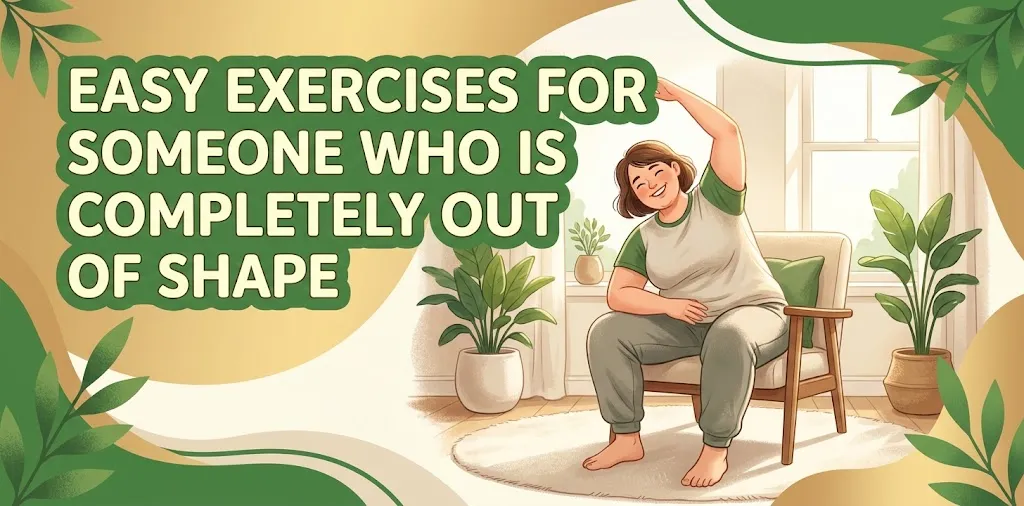
What if you are very overweight or extremely out of shape?
You can still begin, but choose activities that match your current ability and comfort.
Walking may be appropriate for some people, while others may need lower-impact options such as seated exercises or gentle cycling. If standing or walking is difficult, consider working with a qualified health professional or physical therapist to find suitable movements.
Do not assume that being very out of shape means you need an intense workout to make progress. Small increases in movement can be a useful starting point.
When should you talk to a doctor before exercising?
Moderate physical activity is safe for many adults, but it is not appropriate to give everyone the same starting plan.
The CDC advises people with chronic health conditions to talk with their doctor about the types and amounts of activity that are appropriate. It also recommends talking with a doctor before starting vigorous-intensity activity if you have been inactive, have a disability, or have overweight.
You should also stop exercising and seek appropriate medical attention if you develop concerning symptoms such as chest pain, fainting, severe shortness of breath, or other unusual symptoms.
If you are unsure whether exercise is appropriate for you, getting personalized medical advice before beginning is a sensible step.
How to make your first workout easier to repeat
The first workout is only useful if it helps you come back for the second one.
Make the routine easy to repeat by:
- Choosing a time that fits your normal schedule
- Keeping the first sessions short
- Wearing comfortable clothes and shoes
- Exercising somewhere convenient
- Tracking your workouts
- Choosing activities you do not hate
- Increasing the challenge slowly
The CDC recommends setting aside specific times for activity and choosing activities you enjoy and that fit your abilities.
A hypothetical example: if you normally finish work at 5 p.m. and have more energy before dinner, a 15-minute walk followed by a few chair squats may be easier to maintain than a 60-minute gym session that requires a long commute.
The best beginner routine is often the one that feels realistic enough to repeat.
What should your first month look like?
You do not need to create a perfect fitness program immediately. Focus on gradually becoming more comfortable with regular movement.
One possible progression is:
Week 1:
Two or three short sessions. Focus on walking and learning basic movements.
Week 2:
Add a few minutes to your walks if the previous week felt comfortable.
Week 3:
Continue walking and add another set of one or two strength exercises if you feel ready.
Week 4:
Gradually increase workout time or walking pace while keeping the exercises controlled.
Do not increase the workload simply because the calendar says you should. If your body needs more time to adapt, repeat the previous level.
Over time, you can work toward the adult guideline of 150 minutes of moderate aerobic activity each week and muscle-strengthening activity on at least 2 days.
Frequently Asked Questions
What is the best first workout for someone who has never exercised?
A short combination of easy walking and simple bodyweight exercises is a good starting point for many beginners. Try 5–10 minutes of comfortable walking followed by a few chair squats, wall push-ups, and calf raises.
Should I be sore after my first workout?
You may experience some muscle soreness after unfamiliar exercise, but severe pain is not the goal. If soreness is intense, affects normal movement, or you develop unusual symptoms, stop and consider getting medical advice.
Can I exercise every day if I have never worked out before?
You can move every day, but your first workouts do not need to be hard every day. Alternate beginner workouts with rest or easy movement and gradually increase your activity as your body adapts.
Start smaller than you think
Your first workout does not need to leave you exhausted to count. A 15-minute session with an easy walk and a few basic exercises can give you a practical starting point.
The most useful goal for a new exerciser is not to finish the hardest workout possible. It is to finish a manageable workout and feel ready to move again. Start slowly, pay attention to how your body responds, and build your time and intensity little by little. That approach can turn one first workout into a sustainable exercise habit.