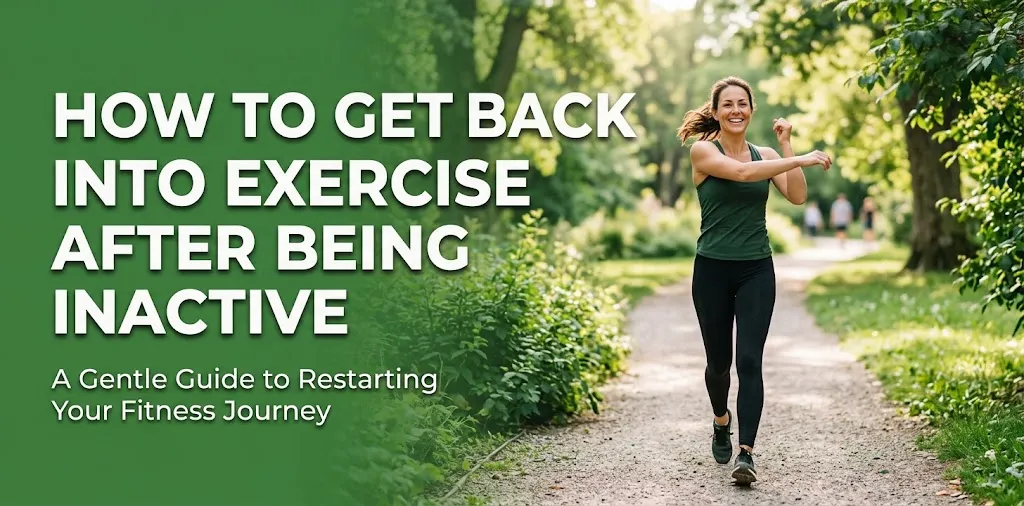
If you have been inactive for weeks, months, or even years, you do not need to jump back into hard workouts. The safest approach is to start with small amounts of easy movement, rebuild your stamina gradually, and add strength work as your body adapts. The goal at first is not to match your old fitness level. It is to create a routine you can keep doing.
Getting back into exercise can feel harder than expected. You may remember how strong or active you used to be and feel frustrated when your body cannot do the same things now. That is normal. Your starting point today is what matters.
Start With Less Than You Think You Need
One of the biggest mistakes people make after a long break is trying to make up for lost time. A workout that once felt easy may now place much more stress on your muscles, joints, and cardiovascular system.
Easing back into exercise is better than immediately returning to your previous workload. Starting too hard can increase your chance of injury and make it harder to stay consistent.
For your first few sessions, choose an effort that feels manageable. You should finish feeling like you could have done a little more.
For example:
- Walk for 10–20 minutes instead of running.
- Use light weights instead of your old lifting weights.
- Do a few bodyweight exercises instead of a full workout.
- Take breaks before you feel completely exhausted.
- Increase your activity gradually rather than all at once.
The first goal is simply to get your body used to regular movement again.
Build Your First Week Around Easy Movement
You do not need a complicated workout plan to restart.
A simple first week might look like this:
| Day | Activity |
|---|---|
| Monday | 15-minute easy walk |
| Tuesday | Rest or light daily movement |
| Wednesday | 15–20-minute walk |
| Thursday | Rest |
| Friday | 15-minute walk + a few basic strength exercises |
| Saturday | Easy walk, bike ride, or another activity you enjoy |
| Sunday | Rest or gentle movement |
This is only an example. Your starting point should depend on your current fitness, age, health, and previous activity level.
If 15 minutes feels like too much, start with 5 or 10 minutes. Even a small amount of activity can be a useful first step when you have been inactive.
Choose Exercise You Can Actually Keep Doing
The best exercise when you are restarting is not necessarily the hardest exercise. It is an activity you can do regularly without dreading it.
Good choices include:
- Walking
- Stationary cycling
- Swimming
- Water aerobics
- Beginner strength training
- Dancing
- Easy hiking
- Low-impact exercise classes
- Simple home workouts
If your knees bother you when walking, for example, swimming or water exercise may be more comfortable. If you dislike gyms, you can start at home or outdoors.
Your first exercise routine does not need to look impressive. It needs to be realistic.
Use the Talk Test to Control Your Intensity
You do not need to measure every workout with a heart-rate monitor.
A simple way to judge moderate effort is the talk test. During moderate activity, you can usually talk but would have difficulty singing. If you are so breathless that speaking several words is difficult, you are probably working harder than you need to at the beginning.
For someone returning after a long period of inactivity, most early workouts can stay at an easy or moderate effort.
As your fitness improves, you can gradually add speed, resistance, distance, or duration.
Add Strength Training Gradually
Cardio is only part of rebuilding fitness. Strength training can help you regain muscle strength and make everyday activities easier.
You do not need a full gym setup.
Begin with simple movements such as:
- Chair squats
- Wall push-ups
- Glute bridges
- Step-ups onto a low step
- Resistance-band rows
- Light dumbbell exercises
Start with a small number of repetitions and focus on controlled movement.
You may initially do strength training once a week. As your body becomes accustomed to it, you can gradually work toward two strength-training sessions each week.
The goal is progression, not exhaustion.
Follow a Gradual Progression
Once your first workouts feel comfortable, increase one part of your routine at a time.
You might progress like this:
Week 1: 10–15 minutes of easy movement
Week 2: 15–20 minutes
Week 3: 20–25 minutes
Week 4: 25–30 minutes
This is an example rather than a rule. Some people will progress faster, while others will need more time.
You can also progress by adding a little distance, resistance, or exercise volume instead of simply making every workout longer.
If a change causes unusual pain or leaves you struggling to recover, back off rather than forcing the progression.
Work Toward a Regular Activity Level
For generally healthy adults, a common long-term goal is around 150 minutes of moderate aerobic activity each week, along with muscle-strengthening activities on at least two days.
You do not need to reach that amount immediately after being inactive.
Think of it as a longer-term destination rather than your first-week requirement.
For example, once your fitness improves, you could work toward:
- 30-minute brisk walks on five days
- Two strength-training sessions
- Shorter activity sessions spread throughout the day
You can also break activity into smaller chunks. Your weekly movement does not have to happen in long, uninterrupted workouts.
Know the Difference Between Normal Soreness and a Warning Sign
Some muscle soreness can happen when you restart exercise. Muscles that have not been challenged for a while may feel tired or mildly sore afterward.
That does not mean you should ignore pain, though.
General muscle soreness can be expected after unfamiliar exercise, but sharp pain, pain that does not improve with rest, or persistent symptoms are reasons to reduce the workload and consider getting professional advice.
Stop exercising and seek medical attention for concerning symptoms such as chest pain, fainting, severe shortness of breath, or other symptoms that feel serious or unusual.
If you have a known medical condition, significant injury, or have been inactive because of illness, talk with your health care professional about the right way to return to exercise.
Give Your Body Time to Recover
More exercise is not always better.
When you are restarting, recovery is part of the program. Your muscles need time to adapt to new demands, especially after strength training.
You may need a rest day between harder sessions. On rest days, normal daily movement or an easy walk may be enough.
If you are constantly exhausted, unusually sore, or losing motivation because every workout feels difficult, your routine may be progressing too quickly.
A good restart should leave room for recovery.
Make Exercise Easier to Repeat
Motivation can help you begin, but a simple routine makes it easier to continue.
Try attaching exercise to something you already do.
For example:
- Walk after breakfast.
- Exercise immediately after work.
- Keep resistance bands where you can see them.
- Put your walking shoes beside the door.
- Schedule workouts on your calendar.
- Ask a friend to walk with you.
- Choose activities you genuinely enjoy.
The less effort it takes to decide whether you will exercise, the easier it becomes to build a habit.
Do Not Compare Yourself With Your Old Fitness Level
This is one of the hardest parts of returning to exercise.
Maybe you used to run several miles, lift heavy weights, play sports every weekend, or attend challenging fitness classes. After a long break, you may not be able to do those things at the same level.
That does not mean you have failed.
Your previous fitness level is useful as background information, not as today’s target.
Focus on questions such as:
- Can I walk a little farther than last week?
- Does this workout feel easier than it did before?
- Am I recovering better?
- Can I do another repetition with good form?
- Am I exercising more consistently?
Small improvements are still improvements.
Two Realistic Ways to Restart
Example 1: Returning After a Sedentary Year
Imagine someone who has spent the past year working from home and doing very little structured exercise.
Instead of joining a gym and trying to train five days a week, they could begin with a 10-minute walk after lunch three days a week.
After that becomes comfortable, they could extend the walks to 15 or 20 minutes and add one short strength session each week.
This approach creates a routine before adding a large workload.
Example 2: Returning to Running
Suppose you used to run regularly but have not run for six months.
Going directly back to your previous mileage may be tempting, but your current conditioning may not match your memory of your old fitness.
A better starting point could be walking first, then introducing short periods of easy jogging as your tolerance improves. The exact progression should depend on your current condition and any previous injuries.
The goal is to rebuild your ability to run rather than prove that you can still run your old distance on day one.
Common Mistakes When Getting Back Into Exercise
Trying to Make Up for Lost Time
You cannot erase months of inactivity with one hard workout. Trying often leads to excessive soreness, fatigue, or injury.
Starting Too Many Workouts at Once
Going from almost no exercise to six intense workouts a week creates a huge jump in workload.
Start with a routine you can realistically repeat.
Using Your Old Weights or Running Distance
Your previous fitness level does not automatically return on the first day.
Use your current ability to determine your starting point.
Ignoring Pain
Mild muscle soreness can occur, but sharp or persistent pain should not be treated as something you simply need to push through.
Quitting Because Progress Feels Slow
Fitness does not return at exactly the same speed for everyone. Give your body time to adapt.
When Should You Increase Your Workouts?
A useful sign that you may be ready to progress is when your current routine feels manageable, your recovery is good, and you can complete the activity with solid form.
Then change one variable.
You might:
- Add 5 minutes to a walk.
- Walk slightly faster.
- Add a small amount of resistance.
- Add a few repetitions.
- Add another easy exercise session.
You do not need to increase everything at the same time.
Gradual progression helps you build a routine without turning every workout into a test of willpower.
What If You Have Been Inactive for a Very Long Time?
There is no special deadline for getting fit again.
If you have been inactive for years, begin at a level appropriate for your current ability. That might mean short walks, simple mobility exercises, or brief bouts of activity throughout the day.
Some physical activity is better than none, and inactive people can build toward higher activity levels gradually.
If you have heart disease, diabetes, high blood pressure, a significant injury, or another condition that could affect exercise, speak with your health care professional about an appropriate plan before increasing your activity.
Frequently Asked Questions
How long does it take to get back into exercise after being inactive?
It depends on how long you have been inactive, your previous fitness, age, health, and the type of exercise you want to resume. You may notice improvements in how exercise feels within a few weeks, but rebuilding substantial fitness can take longer. Focus on steady progress instead of a fixed deadline.
Should I exercise every day after being inactive?
You do not need to exercise hard every day when restarting. Begin with manageable sessions and include recovery days as needed. You can still stay lightly active on rest days through normal walking and other easy movement.
Can I start exercising if I am very out of shape?
Yes, many people can begin with small amounts of physical activity and gradually increase them. Walking, gentle cycling, water exercise, and simple strength movements can be practical starting points, but people with medical conditions, injuries, or other health concerns should get appropriate professional guidance first.
The Best Way to Get Back Into Exercise
Getting back into exercise is less about finding the perfect workout and more about choosing a starting point you can repeat.
Start smaller than your old routine. Walk, add simple strength exercises, allow your body to recover, and increase your workload gradually. Over time, those small sessions can grow into a regular routine.
Your practical next step is simple: choose one activity you enjoy and schedule a short, manageable session this week. You do not need to get back to your old fitness level before you start—you rebuild it by starting where you are now.