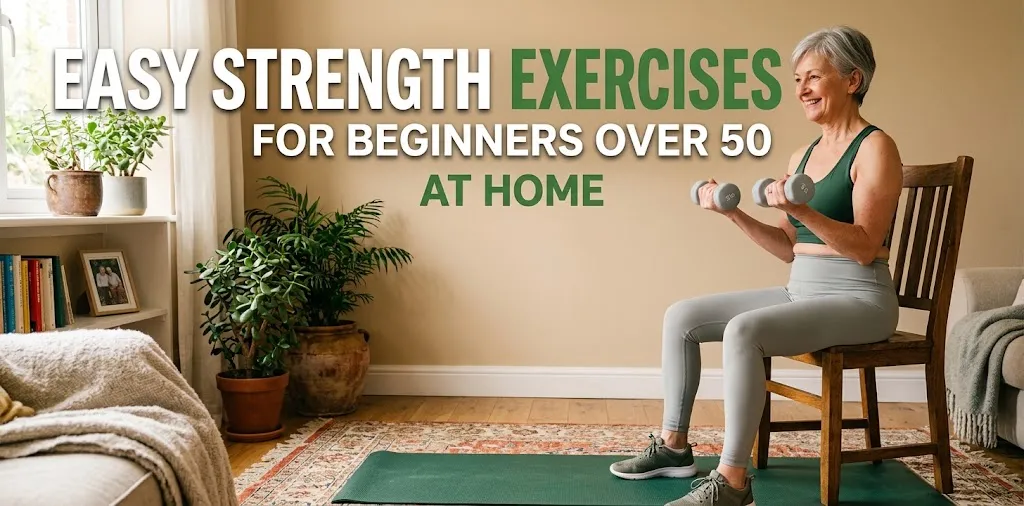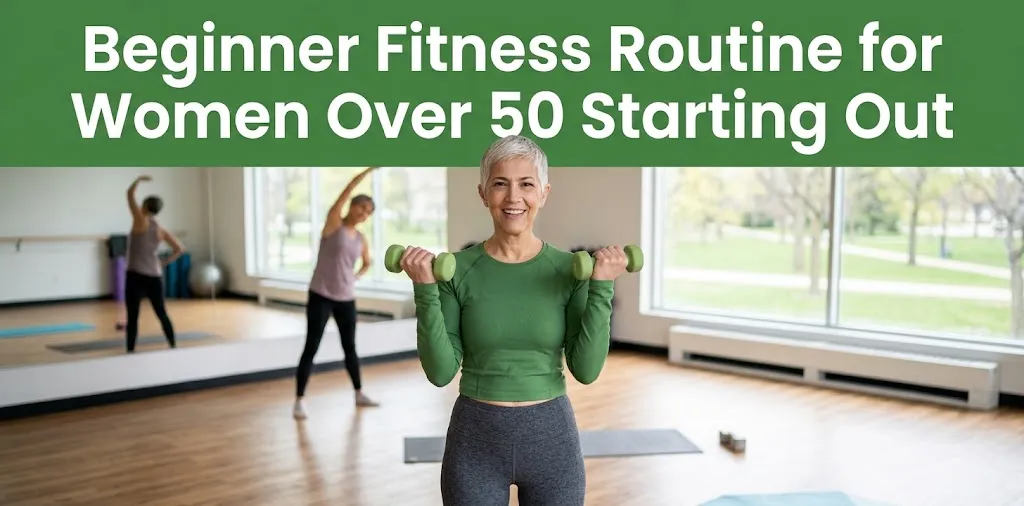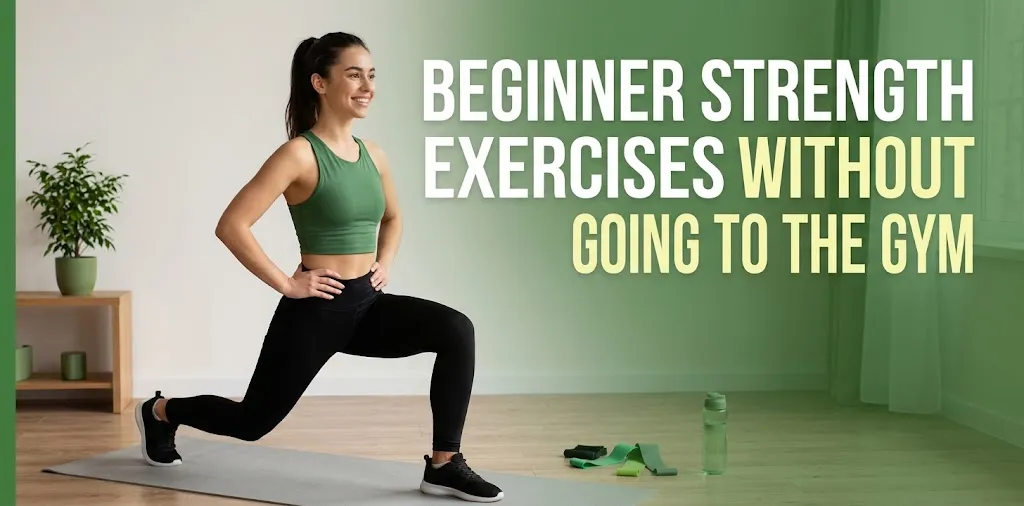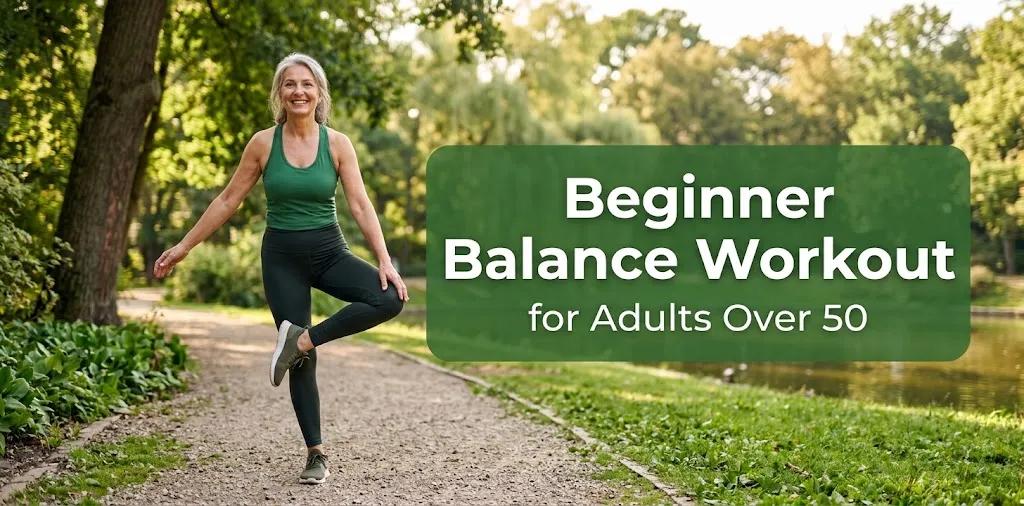
A beginner balance workout for adults over 50 should focus on slow, controlled movements that improve stability without making the exercises too difficult. Simple exercises such as supported single-leg stands, heel-to-toe walking, side steps, sit-to-stands, and gentle leg raises can help build balance and lower-body control. Start near a sturdy chair or countertop, move carefully, and increase the challenge only when you feel stable.
Why Balance Training Matters After 50
Balance can become more challenging with age as strength, flexibility, coordination, vision, and reaction time change. Regular physical activity can help maintain physical function and make everyday movements easier.
Balance training is only one part of a well-rounded exercise routine. Adults over 50 can benefit from combining balance exercises with walking, muscle-strengthening activities, and flexibility work.
For adults 65 and older, regular balance activities become especially important because maintaining stability can support independence and everyday mobility.
How to Start Safely
Before doing standing balance exercises, choose a safe area with plenty of open space. Keep a sturdy chair, countertop, or stable surface within easy reach.
A few simple rules can make your workout safer:
- Wear comfortable shoes with good traction.
- Keep the floor free of clutter.
- Move slowly instead of rushing through repetitions.
- Keep a sturdy support nearby.
- Use your hands whenever you feel unsteady.
- Do not close your eyes during standing balance exercises.
- Stop if you experience unusual pain, dizziness, chest pain, or severe shortness of breath.
- If you have frequent falls or significant balance problems, speak with a health professional before beginning a new exercise routine.
The goal is not to balance without support. The goal is to gradually improve control while staying safe.
8 Beginner Balance Exercises for Adults Over 50
You do not need a gym or expensive equipment for these exercises. A sturdy chair is enough for most of them.
1. Supported Single-Leg Stand
Stand behind a sturdy chair and lightly hold the back with one or both hands. Shift your weight onto one foot and slowly lift the other foot slightly off the floor.
Hold for about 5–10 seconds, then place your foot down and repeat on the other side.
As your balance improves, gradually reduce how much you rely on your hands.
Beginner goal: 2–3 attempts per leg.
2. Heel-to-Toe Walk
Stand near a wall or countertop for support. Take a slow step forward and place the heel of your front foot close to the toes of your other foot.
Continue for several small steps while looking forward.
Beginner goal: 5–10 controlled steps.
3. Side-to-Side Steps
Stand near a counter or sturdy chair. Take a small step to the right and bring your other foot toward it. Repeat several times, then move back in the opposite direction.
Keep your knees slightly bent and avoid crossing your feet.
Beginner goal: 5 steps in each direction.
4. Sit-to-Stand
Sit near the front of a sturdy chair with your feet about hip-width apart.
Lean forward slightly and stand up under control. Slowly lower yourself back into the chair.
Use your hands for support if needed.
Beginner goal: 5–8 repetitions.
5. Standing Leg Raises
Hold a sturdy chair with one or both hands. Keep your upper body upright and slowly move one leg backward without leaning forward.
Return the leg to the starting position and repeat. You can also raise the leg gently to the side.
Beginner goal: 6–10 repetitions per side.
6. Marching in Place
Stand near a chair or counter. Slowly lift one knee, lower it, and then lift the other knee.
Keep the movement controlled instead of trying to lift your knees as high as possible.
Beginner goal: 10–20 alternating steps.
7. Backward Walking
Backward walking can be more challenging than normal walking, so use extra caution.
Stand near a sturdy counter and take very small steps backward. Keep your posture upright and move slowly.
Beginner goal: 3–5 slow steps backward.
8. Toe-to-Heel Weight Shifts
Stand behind a sturdy chair. Slowly shift your weight toward your toes without lifting your heels.
Return to the center, then gently shift your weight toward your heels without lifting your toes.
Keep the movement small and controlled.
Beginner goal: 8–10 repetitions.
A Simple 10-Minute Balance Workout
If you are new to exercise, you do not need a long workout. This short routine can help you get started.
| Exercise | Starting Amount |
|---|---|
| Marching in place | 30 seconds |
| Supported single-leg stand | 5–10 seconds per leg |
| Side-to-side steps | 5 each direction |
| Sit-to-stand | 5–8 reps |
| Standing leg raises | 6–10 per leg |
| Heel-to-toe walk | 5–10 steps |
| Easy walking | 2–3 minutes |
Rest whenever you need to.
If the routine becomes comfortable, slowly add a few repetitions or a little more time. Avoid making several exercises harder at the same time.
How to Progress Safely
Balance improves with regular practice, but progression should be gradual.
You can make an exercise more challenging by:
- Starting with both hands on a chair.
- Moving to one hand.
- Using only a few fingertips for support.
- Increasing the exercise time slightly.
- Adding a few more repetitions.
- Practicing more controlled movements.
- Moving to a harder exercise only after mastering the easier version.
Do not remove support simply to make an exercise harder.
A useful rule is control first, challenge second.
How Often Should You Do Balance Exercises?
Two or three short balance sessions per week can be a practical starting point for beginners.
Balance exercises should also be part of a larger activity routine. Walking, strength exercises, flexibility work, swimming, dancing, gardening, and other physical activities can help create a more complete fitness routine.
You do not need to exercise for a long time in every session. Consistency is often more useful than doing one difficult workout and then taking several days off.
A Beginner Weekly Schedule
A simple weekly routine might look like this:
| Day | Activity |
|---|---|
| Monday | 10-minute balance workout + easy walk |
| Tuesday | Comfortable walking |
| Wednesday | Balance workout + basic strength exercises |
| Thursday | Easy walking or active household tasks |
| Friday | 10-minute balance workout |
| Saturday | Walking, swimming, dancing, or another enjoyable activity |
| Sunday | Rest or gentle movement |
This is only an example. Your current fitness level, health conditions, injuries, and comfort with exercise should determine how much activity you do.
How Balance Training Fits With Strength Exercise
Balance and strength exercises work well together.
Strong legs and hips can make everyday movements easier, while balance exercises help you practice controlling your body while standing, walking, turning, and changing direction.
Simple strength exercises to combine with balance training include:
- Chair sit-to-stands
- Wall push-ups
- Resistance-band rows
- Calf raises
- Supported mini-squats
- Light resistance exercises
Start with an amount that allows you to maintain good form.
Two Real-Life Examples
Example 1: Getting Around the House
Imagine a 55-year-old who feels slightly unsteady when standing up from the couch and walking into the kitchen.
A beginner routine could start with chair sit-to-stands, supported marching, side steps, and short walks. These exercises practice several movements used during normal daily activities.
Example 2: Feeling Less Steady Outdoors
Imagine a 68-year-old who walks comfortably on a flat sidewalk but feels less confident when turning or walking across uneven ground.
A routine that includes supported single-leg stands, heel-to-toe walking, side steps, and leg-strengthening exercises could provide useful practice. If the balance problem continues or becomes worse, it is better to have it evaluated by a health professional.
Common Mistakes to Avoid
Trying to Balance Without Support
Using a chair or countertop does not mean you are doing the exercise incorrectly. Support gives you a safer way to practice.
Moving Too Fast
Fast movements can make balance exercises harder to control. Slow repetitions allow you to focus on stability.
Training Only Your Stronger Side
Balance may differ between your two sides. Practice both legs instead of focusing only on the side that feels easier.
Holding Your Breath
Try to breathe normally throughout the workout.
Choosing Difficult Exercises Too Soon
You do not need to stand on unstable surfaces or perform unsupported single-leg exercises when you are just starting.
Build a solid foundation first.
Ignoring Repeated Balance Problems
Exercise can improve physical function, but repeated falls, frequent dizziness, or a new balance problem should not simply be ignored.
When to Talk With a Doctor or Physical Therapist
Many people can begin gentle physical activity safely, but individual circumstances matter.
Talk with a health professional before changing your exercise routine if you have a medical condition, significant mobility limitations, a recent injury, frequent falls, or a balance problem that has not been evaluated.
A physical therapist may also help create exercises based on your specific movement and balance needs.
If you experience chest pain, fainting, severe shortness of breath, or another serious symptom during exercise, stop exercising and seek appropriate medical care.
Frequently Asked Questions
What is the best balance exercise for beginners over 50?
Supported single-leg standing is a simple starting point because you can control how much support you use. Heel-to-toe walking, side steps, and chair sit-to-stands are also useful beginner exercises.
How many times a week should adults over 50 do balance exercises?
Two or three short sessions per week can be a practical starting point. Beginners can focus on consistency and gradually increase the amount of practice as the exercises become easier.
Can balance exercises help prevent falls after age 50?
Balance and strength exercises can help improve physical function and stability. However, fall risk can have many causes, so exercise should be combined with other appropriate steps when needed, such as addressing vision problems, medication concerns, and hazards around the home.
Start Small and Build From There
You do not need complicated equipment or difficult movements to begin improving balance after 50. A sturdy chair, a few minutes of practice, and consistent effort can give you a strong starting point.
Focus on controlled movements, keep support nearby, and increase the challenge only when the current exercise feels steady. Combine balance work with walking and strength exercises to build a routine that supports mobility, stability, and everyday independence.