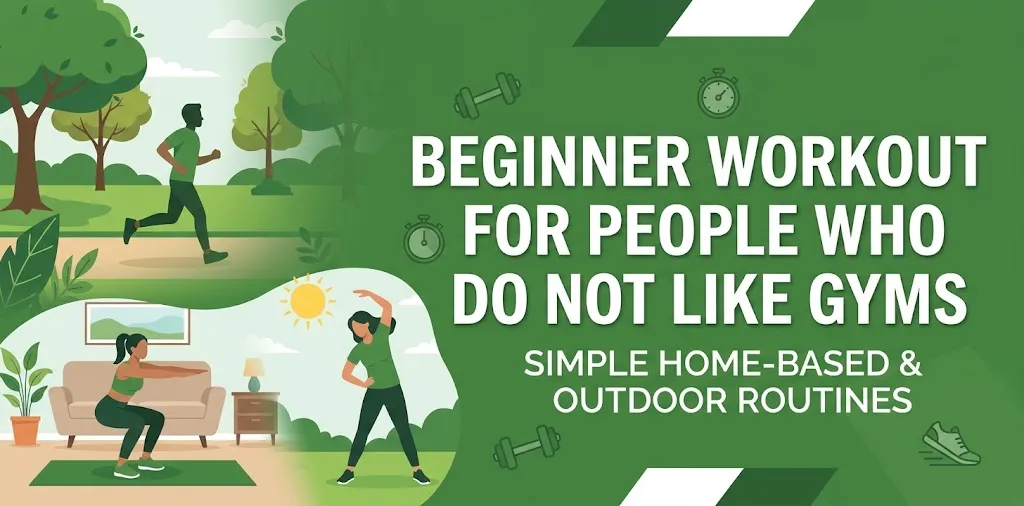
If you dislike gyms, you do not need to force yourself to become a “gym person” to get fit. Walking, dancing, bodyweight exercises, cycling, hiking, and simple home workouts can all help you become more active. The best beginner workout is one you can do comfortably and repeat often. Start with short sessions, choose activities you actually enjoy, and gradually build your strength and endurance without worrying about crowded gyms or complicated equipment.
You Do Not Need a Gym to Get Fit
A gym is only one place to exercise. It is not a requirement for improving your fitness.
For beginners, a simple routine can include:
- Walking around your neighborhood
- Bodyweight exercises at home
- Dancing in your living room
- Riding a bike
- Hiking on local trails
- Beginner yoga or mobility work
- Playing recreational sports
- Using stairs
- Doing simple resistance exercises with household items
- Following a beginner-friendly workout video at home
The U.S. Physical Activity Guidelines recommend that adults work toward 150 to 300 minutes of moderate-intensity aerobic activity each week, plus muscle-strengthening activity on at least two days. But people who are inactive do not have to start there. Federal guidance recommends starting with small amounts and building up over time.
That makes a short, comfortable home workout a much better starting point than forcing yourself through an hour-long gym session you already dislike.
Why People Who Dislike Gyms Often Struggle With Exercise
Not liking gyms does not necessarily mean you dislike physical activity. You may simply dislike the gym environment.
Some common problems include:
- Feeling uncomfortable exercising around other people
- Not knowing how to use gym equipment
- Feeling pressured to work harder than you want
- Disliking loud music or crowded spaces
- Finding gym memberships expensive
- Not wanting to drive to a gym
- Feeling self-conscious about your fitness level
- Getting bored with traditional workouts
- Preferring privacy
- Feeling like exercise takes too much time
The solution is not always more motivation. Sometimes the better solution is changing the type, location, or length of your workout.
If you enjoy walking but hate treadmills, walk outside. If you dislike lifting weights in a gym, try bodyweight exercises at home. If traditional cardio feels boring, try dancing, cycling, hiking, or a sport.
Your workout should fit your life.
The Best Beginner Workout Without a Gym
A good starting routine can take about 15 to 20 minutes and require no equipment.
| Exercise | Beginner amount |
|---|---|
| Easy warm-up walk | 3 minutes |
| Chair squats | 8–10 reps |
| Wall push-ups | 8–10 reps |
| Glute bridges | 8–12 reps |
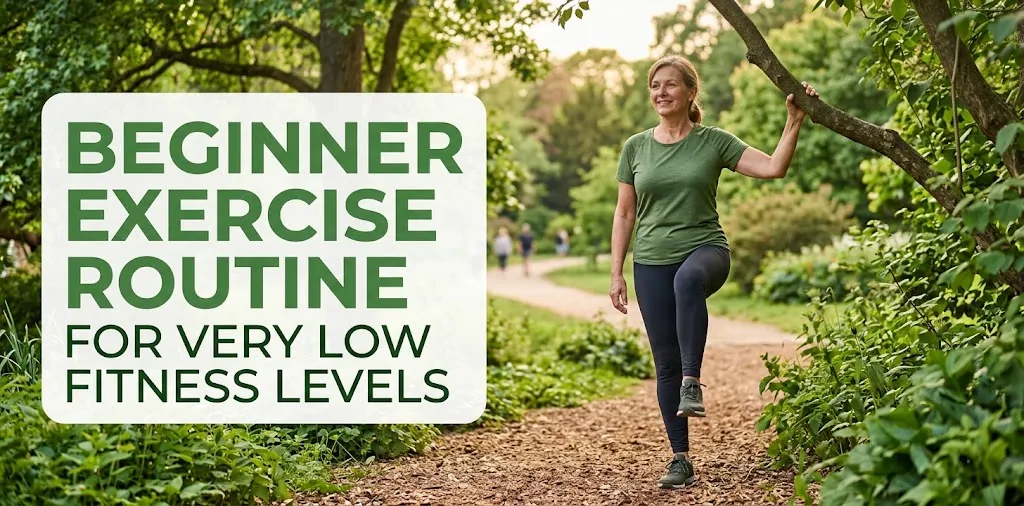
| Standing knee raises | 8–10 per side |
| Bird dogs | 6–8 per side |
| Easy walking | 5 minutes |
| Gentle stretching | 2–3 minutes |
Move slowly and focus on controlled movement rather than speed.
If one exercise feels too difficult, make it easier. For example, use a higher surface for support during a squat or do push-ups against a wall instead of the floor.
You do not need to finish every exercise perfectly. The goal during the first few weeks is to build the habit of moving.
A Simple 4-Week No-Gym Workout Plan
You can start with three workout days each week and add easy movement on the other days.
Week 1: Make Exercise Easy
Your main goal is consistency.
Monday: 15-minute home workout
Tuesday: 10–15-minute easy walk
Wednesday: Rest or gentle movement
Thursday: 15-minute home workout
Friday: 10–15-minute walk
Saturday: Fun activity such as dancing, biking, or hiking
Sunday: Rest
Do not worry about burning a certain number of calories. Simply get used to moving regularly.
Week 2: Add a Little More Movement
Keep the same basic schedule, but add a few minutes to your walks or workouts.
For strength sessions, try two rounds of the exercises instead of one if you feel ready.
If you are tired or sore, keep the workout shorter. Progress does not have to happen every day.
Week 3: Build Strength and Endurance
Try three strength-focused sessions during the week if your body is responding well.
You can also make walking slightly faster for short periods.
For example:
- Walk easily for 3 minutes
- Walk briskly for 2 minutes
- Walk easily for 3 minutes
- Repeat once or twice
You should still be able to control your breathing and maintain good form.
Week 4: Create Your Long-Term Routine
By now, you should have a better idea of what you actually enjoy.
You might decide that your regular routine is:
- Two home strength workouts
- Three walking sessions
- One dance or recreational activity
- One rest day
There is no single correct combination. Choose activities that you are willing to keep doing.
Beginner Exercises You Can Do at Home
You can train most major muscle groups without a traditional gym.
Chair Squats
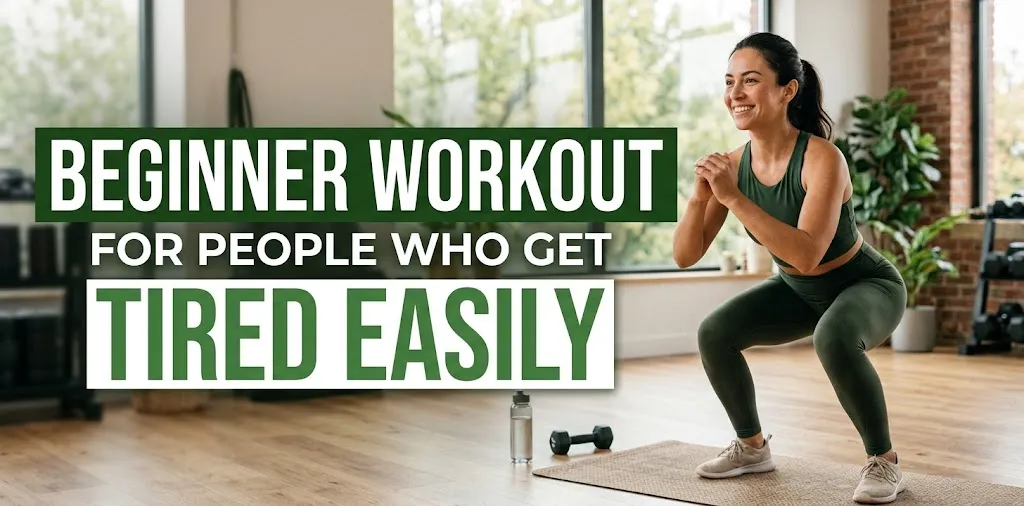
Stand in front of a sturdy chair with your feet about hip-width apart.
Push your hips back and slowly lower toward the chair. Lightly touch the chair, then stand again.
Use your hands for support if needed.
Wall Push-Ups
Stand facing a wall and place your hands against it around chest height.
Bend your elbows to bring your chest toward the wall, then push yourself back.
Wall push-ups are an easier starting point than floor push-ups.
Glute Bridges
Lie on your back with your knees bent and feet on the floor.
Press your feet into the floor and gently raise your hips. Lower them slowly.
This exercise works the muscles around your hips and backside.
Bird Dogs
Start on your hands and knees.
Slowly extend one arm and the opposite leg. Return them to the starting position and switch sides.
Move slowly rather than trying to lift your limbs as high as possible.
Standing Knee Raises
Stand tall while holding a stable surface if necessary.
Lift one knee toward your waist, lower it, and repeat on the other side.
This is an easy way to add movement without getting on the floor.
Cardio for People Who Hate Cardio
You do not have to run on a treadmill to improve your cardiovascular fitness.
Try activities that feel more like recreation:
- Brisk walking
- Dancing
- Cycling
- Hiking
- Swimming
- Playing basketball
- Playing tennis
- Walking while listening to a podcast
- Taking a long walk with a friend
- Walking your dog
Moderate-intensity activity generally means your breathing and heart rate are noticeably faster, but you can still talk. Brisk walking is one common example.
If you hate one form of cardio, replace it. There is no special benefit to forcing yourself to do an activity you cannot stand.
How to Make Home Workouts Less Boring
Boredom is one of the easiest ways to stop exercising.
Instead of repeating the same workout every day, create a small menu of activities.
For example:
Monday: Bodyweight workout
Tuesday: Favorite music and dancing
Wednesday: Walk outside
Thursday: Yoga or mobility
Friday: Bodyweight workout
Saturday: Hiking or recreational activity
Sunday: Rest
You can also pair exercise with something you already enjoy.
Listen to a podcast while walking. Watch a show while using a stationary bike. Play your favorite music during strength exercises.
The goal is to make movement feel like part of your normal day instead of a punishment.
What If You Are Very Out of Shape?
Start smaller than you think you need to.
A five- or ten-minute walk is still a legitimate workout when you are starting from very little activity. Federal guidance encourages inactive people to begin with small amounts and gradually increase their activity.
For example, your first week might look like this:
- 5-minute walk on Monday
- 5-minute home workout on Wednesday
- 10-minute walk on Friday
- 5–10 minutes of enjoyable movement on Saturday
Once that feels manageable, add a few minutes.
Starting too aggressively can make exercise feel miserable and may make it harder to keep the habit.
What If You Hate Working Out Alone?
You still do not need a gym.
Try finding a social activity that happens outside a gym:
- Walk with a friend
- Join a local walking group
- Take a beginner dance class
- Play recreational sports
- Go hiking with family
- Ride bikes with a friend
- Follow the same home workout with a partner
For some people, the social part of exercise is more motivating than the workout itself.
How Often Should Beginners Exercise?
There is no need to exercise hard every day.
A practical starting point is three structured sessions per week, combined with easy movement on other days.
As your fitness improves, you can gradually work toward the federal recommendation of 150 to 300 minutes of moderate aerobic activity each week and muscle-strengthening activity at least two days per week.
Remember that this is a longer-term target, not a test you must pass during your first week.
Your starting point might be 10 minutes. Later, it might become 20, 30, or more.
How to Know If You Are Progressing
Progress is not only about losing weight or lifting heavier objects.
Look for changes such as:
- Walking farther without getting as tired
- Finding stairs easier
- Doing more repetitions
- Recovering faster after exercise
- Feeling more comfortable with basic movements
- Exercising more consistently
- Needing fewer breaks
- Enjoying activities that used to feel difficult
You can also track how many workouts you complete each week.
For someone who dislikes gyms, completing three short home workouts every week may be a much more useful measure of progress than trying to follow an intense program for several days and quitting.
Common Mistakes to Avoid
Starting With Workouts You Hate
If you already dislike running, choosing a running program may make exercise harder to maintain.
Choose an activity you dislike less—or one you genuinely enjoy.
Doing Too Much Too Soon
A long, exhausting first workout can leave you extremely sore and discouraged.
Start with less than you think you can handle and increase gradually.
Thinking Home Workouts Must Be Intense
A workout does not need to leave you exhausted to be worthwhile.
Consistency matters. Moderate and manageable activity can be part of a healthy routine.
Comparing Yourself With Experienced Exercisers
Someone who has trained for years will move differently from a beginner.
Compare your current ability with where you started.
Waiting to Feel Motivated
Motivation is unreliable.
Instead, make the starting point very small. Tell yourself you will walk for five minutes or complete one round of exercises.
Once you start, you can decide whether you want to continue.
Two Realistic Ways to Start
If You Have Very Little Time
Imagine you work from home and have only 15 minutes during your lunch break.
You could spend three minutes walking around your home, eight minutes doing chair squats, wall push-ups, glute bridges, and bird dogs, and finish with four minutes of easy walking.
That is enough to begin building an exercise habit.
If You Hate Exercise but Enjoy Being Outdoors
Suppose traditional workouts bore you, but you enjoy being outside.
Instead of forcing yourself into a home workout every day, make walking or hiking your main activity. Add two short bodyweight sessions each week for muscle strengthening.
This approach can feel much more natural than following an intense gym-style program.
When to Slow Down or Get Medical Advice
Exercise should challenge you without making you ignore warning signs.
If you have a chronic health condition, significant physical limitations, or concerns about whether a new exercise program is appropriate for you, talk with a healthcare professional about how to start safely.
Stop exercising and seek medical attention for concerning symptoms such as chest pain, fainting, or severe or unusual shortness of breath.
If you have not exercised for a long time, starting gradually is generally a better approach than jumping into intense workouts.
Frequently Asked Questions
Can I get fit without ever going to a gym?
Yes. Walking, cycling, dancing, hiking, bodyweight exercises, resistance exercises, swimming, and recreational sports can all contribute to physical fitness. A gym can provide equipment and structure, but it is not required.
What is the easiest workout for someone who hates exercise?
Walking is one of the simplest places to start because it requires little equipment and can be adjusted to your fitness level. You can also try short home workouts, dancing, cycling, or another activity you naturally enjoy.
How long should a beginner workout last?
There is no required starting length. If you are inactive, even five to ten minutes can be a useful starting point, and you can gradually increase the duration as your fitness improves.
Build a Routine You Actually Want to Repeat
You do not have to learn to love gyms to become more active. The better approach is to find movement that fits your personality, schedule, space, and fitness level.
Start with one or two activities you do not hate. Keep the first workouts short. Build consistency before adding intensity. Over time, work toward a mix of aerobic activity and muscle strengthening that fits your life.
A simple next step: choose a 10-minute walk or one round of the home workout above and schedule it for your next available day. Once exercise becomes something you can live with—not something you dread—it becomes much easier to keep going.