Starting exercise again can feel harder than starting for the first time. You may remember what you used to do, but your current fitness level may not match your old routine. The best approach is to begin with manageable workouts, give your body time to adjust, and increase activity slowly.
You do not need a gym membership, expensive equipment, or long workouts to get moving again. A simple mix of walking, basic strength exercises, and recovery can give you a practical starting point.
A Simple Workout Routine for Someone Starting Over
A good restart routine should be easy enough to complete consistently without leaving you extremely sore or exhausted. For the first few weeks, focus on 3 workout days, 2 lighter movement days, and plenty of recovery.
| Day | Activity | Time |
|---|---|---|
| Monday | Full-body strength workout | 20–30 minutes |
| Tuesday | Easy walk | 15–25 minutes |
| Wednesday | Rest or gentle mobility | 5–10 minutes |
| Thursday | Full-body strength workout | 20–30 minutes |
| Friday | Easy walk | 15–25 minutes |
| Saturday | Optional light activity | 15–30 minutes |
| Sunday | Rest | — |
For adults, federal physical activity guidelines recommend eventually working toward 150–300 minutes of moderate aerobic activity each week plus muscle-strengthening activity on at least 2 days. If you are starting from a low activity level, you do not have to reach that amount immediately. Building up gradually is a sensible way to begin.
Your 20–30 Minute Full-Body Workout
Start with 5 minutes of easy movement, such as walking around your home or marching slowly in place.
Then complete the following exercises:
| Exercise | Starting Amount |
|---|---|
| Chair squats | 8–10 reps |
| Wall push-ups | 8–10 reps |
| Glute bridges | 8–12 reps |
| Standing calf raises | 10–15 reps |
| Bird dogs | 6–8 per side |
| Easy walking | 5–10 minutes |
Rest when needed. During your first week, one round may be enough. If that feels comfortable, move to two rounds during later workouts.
The goal is not to finish as quickly as possible. Use controlled movements and stop a set when your form starts to break down.
How Hard Should the Workout Feel?
Your first workouts should feel manageable rather than brutal.
A useful target is to finish each exercise feeling like you could still perform a few more good repetitions. You should not feel that you have to push through sharp pain or severe fatigue.
Walking is also a useful starting point because you can easily adjust the pace and duration. Building fitness gradually is generally better than immediately returning to hard exercise after a long period of inactivity.
How to Progress When You Are Starting Over
The biggest mistake is trying to make up for lost time.
If you used to run 5 miles, lift heavy weights, or attend intense fitness classes, that does not mean you should immediately return to the same workload.
Instead, change only one thing at a time.
For example:
- Add 5 minutes to a walk.
- Add a few repetitions to an exercise.
- Add a second workout round.
- Increase the walking pace slightly.
- Add light resistance after bodyweight exercises become comfortable.
Give yourself time to adjust before making another increase.
A Four-Week Comeback Plan
Week 1:
Do two short strength sessions and two easy walks. Keep the workouts comfortable.
Week 2:
Move to three strength or movement sessions, with one or two easy walks on other days.
Week 3:
Increase the walking time or add a few repetitions to your strength exercises.
Week 4:
If you are recovering well, continue progressing toward three regular workouts and longer periods of moderate activity.
This gradual approach is more useful than trying to reach your final fitness goal during the first week.
What to Do If You Feel Very Sore
Some muscle soreness can happen when you return to exercise, especially if your body has not been challenged recently. That does not mean you need to train harder.
If you are very sore, take an easier day. Gentle walking and normal daily movement may be more appropriate than another hard workout.
You can also reduce your next workout by:
- Doing fewer repetitions
- Completing only one round
- Using easier exercise variations
- Taking longer rest periods
- Replacing a workout with an easy walk
Pain that is sharp, severe, persistent, or associated with an injury should not be treated as normal workout soreness.
How to Restart Strength Training Without a Gym
You can build a useful beginner routine with little or no equipment.
Lower Body
Chair squat: Sit toward a sturdy chair and stand back up. Use the chair for support if needed.
Glute bridge: Lie on your back with your knees bent and gently raise your hips.
Calf raise: Hold a stable surface and slowly raise your heels from the floor.
Upper Body
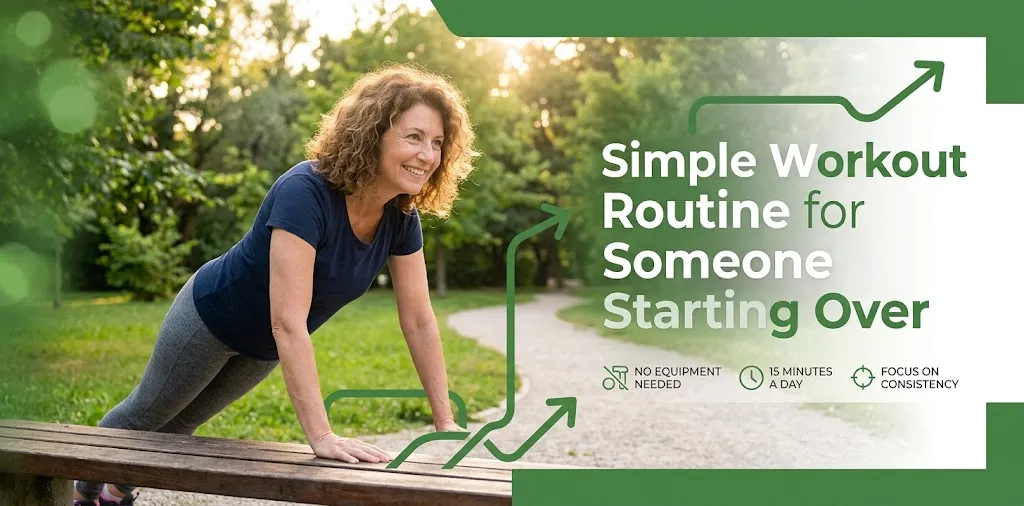
Wall push-up: Place your hands on a wall and perform a controlled push-up.
As you get stronger, you can progress from wall push-ups to incline push-ups using a sturdy elevated surface and eventually to floor push-ups if appropriate.
Core and Balance
Bird dog: From a hands-and-knees position, extend one arm and the opposite leg while keeping your torso steady.
You do not need complicated ab exercises when you are rebuilding your fitness. Learning to control simple movements is a better starting point.
What If You Have Not Exercised in Months or Years?
Treat yourself like a beginner, even if you were once very fit.
Fitness can return over time, but your previous workout capacity should not determine your starting point. Begin with the amount of activity you can handle comfortably now.
For example, someone who used to run regularly might begin with 15-minute walks instead of immediately running several miles. Someone who previously lifted weights might start with bodyweight movements or light resistance.
The first goal is to rebuild the habit.
Once your body becomes accustomed to regular activity, you can work toward longer workouts, greater resistance, faster walking, or more challenging exercises.
How to Stay Consistent When Motivation Drops
Motivation is useful, but a routine should not depend on feeling motivated every day.
Make your workouts easy to start.
Try:
- Keeping your walking shoes where you can see them.
- Scheduling workouts at a regular time.
- Starting with just 10 minutes when you do not feel like exercising.
- Choosing activities you actually enjoy.
- Tracking completed workouts instead of judging every workout by intensity.
- Giving yourself permission to take an easier day.
You can also split activity into smaller periods. If a 30-minute walk feels difficult to schedule, several shorter periods of movement may be easier to fit into your day.
Two Realistic Ways to Use This Routine
Example 1: Someone Returning After a Long Break
Imagine you previously exercised but stopped for about a year. Your first week could look like this:
- Monday: 20-minute strength workout
- Tuesday: 15-minute easy walk
- Wednesday: Rest
- Thursday: 20-minute strength workout
- Friday: 15-minute easy walk
- Saturday: Optional light activity
- Sunday: Rest
If that feels manageable, increase gradually during the following weeks.
Example 2: Someone With Very Low Fitness
If 20 minutes feels like too much, make the starting point smaller.
You could begin with:
- 5–10 minutes of walking
- 5 chair squats
- 5 wall push-ups
- 5 glute bridges
- Rest
That may look too easy, but an easy workout you actually complete is more useful than an ambitious workout you repeatedly avoid.
Common Mistakes When Starting Over
Trying to Match Your Old Fitness Level
Your previous ability is not a good reason to use your previous workload. Start based on your current fitness.
Doing Too Much Too Soon
Long workouts and intense exercise can leave you overly tired and make it harder to continue. Gradual increases are generally a better approach.
Training Hard Every Day
Recovery is part of getting fit. Your schedule should include easier days and rest.
Focusing Only on Cardio
Walking and other aerobic activities are useful, but strength training also matters. Adults should include muscle-strengthening activities as part of a balanced exercise routine.
Treating Soreness as Proof of a Good Workout
You do not need extreme soreness to make progress. A successful comeback is measured by consistency and gradual improvement.
When to Modify the Routine
The routine above is intended as a general starting point for generally healthy adults. Your starting point may need to be different if you have an injury, a medical condition, significant joint problems, or other health concerns.
If you have been inactive for a long time and have health concerns, talking with a healthcare professional before beginning a new exercise program can help you determine an appropriate level of activity.
Stop exercising and seek appropriate medical attention for concerning symptoms such as chest pain, fainting, severe shortness of breath, or other symptoms that feel unusual or serious.
How to Know When You Are Ready to Do More
You are probably ready to progress when your current workouts feel comfortable, your recovery is good, and you can complete the exercises with controlled form.
You do not need to increase everything at once.
For example, if you currently walk for 15 minutes, try 20 minutes before trying to walk much faster. If you perform one round of strength exercises comfortably, add a second round rather than immediately choosing much harder exercises.
Small improvements add up.
Frequently Asked Questions
How many days a week should I exercise when starting over?
Three planned workout or movement days can be a practical starting point for many people. You can add more activity gradually as your fitness and recovery improve.
Should I walk or lift weights first when restarting exercise?
You can use both. Walking provides accessible aerobic activity, while simple resistance exercises help rebuild strength. Combining the two can provide a balanced starting routine.
How long does it take to get back into shape?
There is no single timeline because fitness, age, previous activity, sleep, health, and consistency all differ. Focus on steady progress rather than expecting your old fitness level to return within a specific number of days or weeks.
Start Smaller Than You Think You Need To
A simple workout routine for someone starting over should make exercise feel manageable, not intimidating. Begin with short walks, basic full-body movements, and plenty of recovery. Then increase your activity little by little as your body adapts.
Your first goal does not need to be getting back to your old fitness level. Your first goal is simply to establish a routine you can repeat next week. Once that habit becomes consistent, building strength, endurance, and overall fitness becomes much easier.