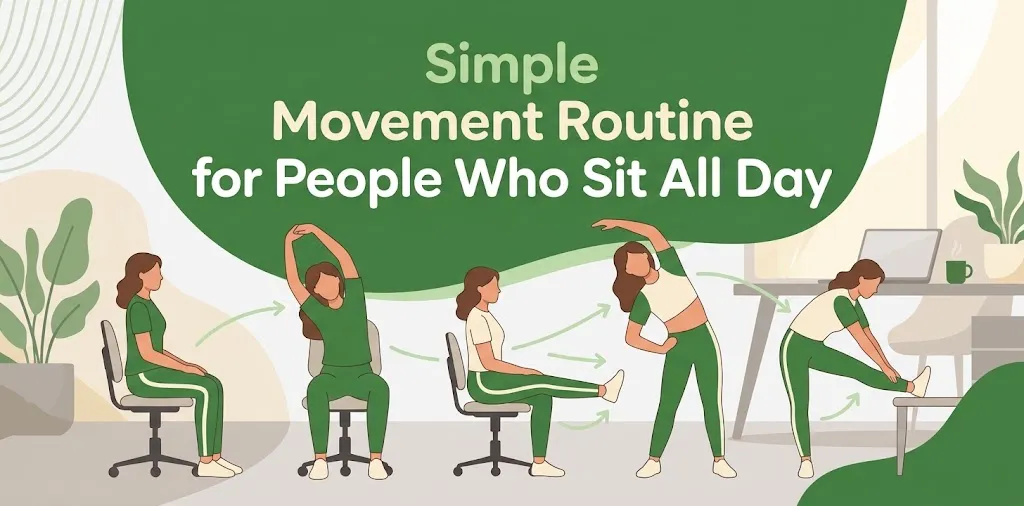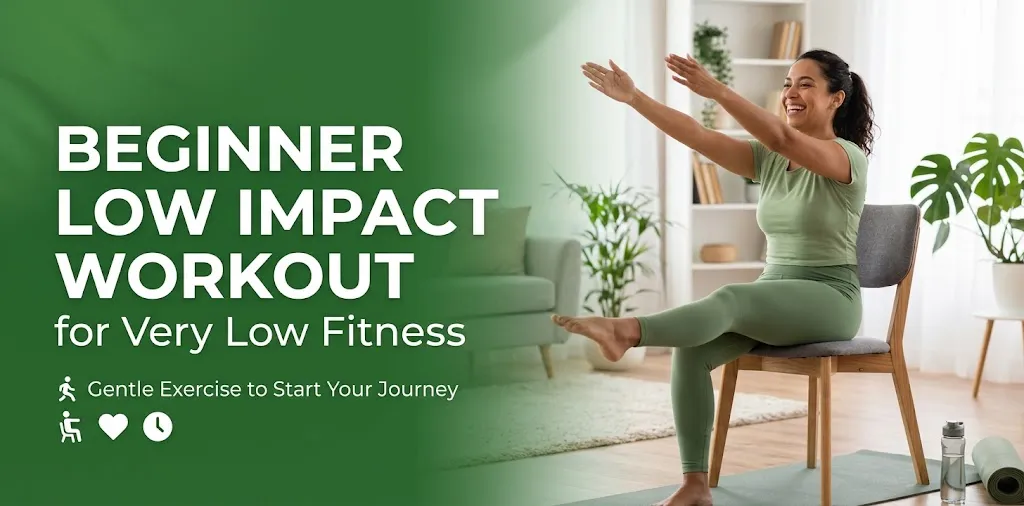
If you are very out of shape, have been inactive for a long time, or feel tired after only a few minutes of movement, you do not need a hard workout to get started. A short, low-impact routine can help you build stamina, strength, balance, and confidence without jumping or high-impact movements.
What Is a Low Impact Workout for Very Low Fitness?
A beginner low impact workout for very low fitness uses simple movements that keep at least one foot on the floor and avoid jumping, running, or hard landings. The goal is not to work as hard as possible. It is to start at a level you can control, recover from, and repeat consistently.
For someone who has been inactive, even small amounts of physical activity can provide health benefits. U.S. physical activity guidance recommends starting with small amounts and gradually building toward 150 minutes of moderate-intensity aerobic activity each week.
Low impact does not mean you have to stay completely still or avoid getting your heart rate up. Walking, marching, chair exercises, gentle cycling, swimming, and controlled strength exercises can all be adapted to a very low fitness level.
Before You Start
Very low fitness can mean different things. You might simply be deconditioned from months or years of inactivity, or you might have pain, balance problems, a chronic condition, or another reason that exercise feels difficult.
If you have a health condition, significant mobility limitations, or you are unsure whether exercise is safe for you, talk with your health care professional before starting a new workout routine. This is especially important if you have symptoms such as chest pain, unusual shortness of breath, fainting, or unexplained dizziness.
For otherwise healthy adults, the safest approach is usually to begin with light activity and increase gradually rather than jumping straight into vigorous exercise.
The 10-Minute Very Beginner Low Impact Workout
You do not need a gym, treadmill, or weights for this routine. A sturdy chair can provide support for standing movements.
Start with one round. If you feel comfortable after several sessions, you can gradually add time or a second round.
| Exercise | Starting amount | Main purpose |
|---|---|---|
| Seated or standing march | 1 minute | Gentle cardio |
| Shoulder rolls | 30 seconds | Upper-body mobility |
| Side steps | 1 minute | Cardio and coordination |
| Chair sit-to-stand | 5–8 reps | Leg strength |
| Wall push-ups | 5–8 reps | Upper-body strength |
| Seated knee extensions | 5–8 each leg | Leg strength |
| Heel raises | 8–10 reps | Calves and balance |
| Easy walking or marching | 1–2 minutes | Cool-down |
You can shorten any exercise if it feels too difficult. The routine is meant to be adjusted to your current ability, not completed perfectly.
1. Seated or Standing March
Sit tall in a sturdy chair or stand while holding the chair for support.
Lift one foot a few inches, lower it, and then switch sides. Move your arms gently if that feels comfortable.
Start with about one minute. If standing is tiring, stay seated and lift your feet one at a time.
2. Shoulder Rolls
Sit or stand comfortably.
Roll your shoulders slowly backward several times, then forward. Keep the movement relaxed instead of forcing a large range of motion.
This is a simple way to loosen up before the strength exercises.
3. Side Steps
Stand near a wall or sturdy chair.
Take one small step to the side, bring your other foot next to it, and repeat in the opposite direction.
Keep the steps small. You do not need to move quickly.
If standing balance is difficult, skip this exercise and use seated marching instead.
4. Chair Sit-to-Stand
Place a sturdy chair against a wall so it cannot slide.
Sit near the front of the chair with your feet on the floor. Lean forward slightly and stand up. Then slowly sit back down.
Start with 5 repetitions.
If standing all the way up is too difficult, practice lifting your body slightly from the chair and sitting back down. Over time, work toward a full stand.
5. Wall Push-Ups
Stand facing a wall with your hands against it at about chest height.
Slowly bend your elbows and bring your chest closer to the wall. Then push gently back to the starting position.
Start with 5 repetitions.
Wall push-ups are much easier to modify than floor push-ups, making them useful when you are just beginning.
6. Seated Knee Extensions
Sit in a sturdy chair with both feet on the floor.
Straighten one leg until it is comfortable, pause briefly, and lower it. Switch legs.
Start with 5–8 repetitions per side.
You do not need to straighten your knee completely if that is uncomfortable.
7. Heel Raises
Stand behind a sturdy chair and hold it lightly.
Raise your heels so you are standing on the balls of your feet. Lower your heels slowly.
Start with 8–10 repetitions.
If standing balance is poor, skip this movement or ask a qualified professional about a safer modification.
8. Easy Walking or Marching
Finish by slowing down.
Walk around your home at an easy pace or continue gentle seated marching for one or two minutes. Let your breathing gradually return to normal.
How Hard Should a Very Beginner Workout Feel?
Use your breathing and how you feel rather than trying to reach a specific heart rate.
A useful guide is the talk test. During moderate-intensity activity, you should generally be able to talk but not sing. If you can barely speak because you are out of breath, the activity is too hard for this stage.
For your first few workouts, you may not even need to reach moderate intensity. Light activity is a reasonable starting point when you have been inactive, and you can gradually increase your effort as your fitness improves.
A simple effort scale can also help:
- 0–2: Very easy
- 3–4: Easy
- 5–6: Moderate
- 7–8: Hard
- 9–10: Very hard
For your first workouts, staying around the easy range is fine. You are building the habit and teaching your body to handle regular movement.
A Simple 4-Week Progression
Do not feel pressured to reach 30-minute workouts immediately. Progress can mean adding only a few minutes or a few repetitions.
| Week | Goal | Suggested routine |
|---|---|---|
| Week 1 | Get comfortable moving | 5–10 minutes, 3 days |
| Week 2 | Add a little time | 10–12 minutes, 3–4 days |
| Week 3 | Build endurance | 12–15 minutes, 4 days |
| Week 4 | Add another round if ready | 15–20 minutes, 4–5 days |
This is a flexible progression, not a test. If Week 2 feels too difficult, repeat Week 1. If you feel unusually tired after a workout, give yourself more recovery time.
How to Make the Workout Even Easier
If the 10-minute routine feels like too much, change the exercises instead of giving up.
You can:
- Do the entire workout seated.
- Reduce each exercise to 20–30 seconds.
- Take a longer rest between movements.
- Do fewer repetitions.
- Use a chair or countertop for support.
- Reduce the range of motion.
- Walk slowly instead of marching quickly.
- Split the workout into two or three short sessions.
For example, you might do five minutes in the morning and another five minutes later in the day. Physical activity does not have to happen in one long session.
Low Impact Exercises You Can Add Later
Once the basic routine becomes comfortable, you can add other movements without jumping or running.
Good options include:
- Easy walking
- Stationary cycling
- Water exercise
- Seated boxing
- Step-touch movements
- Gentle dancing
- Resistance-band exercises
- Light dumbbell exercises
- Chair squats
- Standing knee lifts
- Gentle mobility exercises
Walking is especially easy to scale. You can start with a slow five-minute walk and gradually increase either the duration or pace.
Swimming and water-based exercise can also be useful for people who prefer exercise with less joint loading.
How Often Should You Do a Beginner Workout?
Start with three days per week if that feels manageable, leaving recovery days between harder sessions.
You can also include light movement on other days. For example:
Monday: 10-minute workout
Tuesday: Easy 5–10-minute walk
Wednesday: Rest or gentle movement
Thursday: 10-minute workout
Friday: Easy walk
Saturday: 10–15-minute workout
Sunday: Rest
As your fitness improves, you can slowly increase your weekly activity.
The long-term federal target for adults is at least 150–300 minutes of moderate-intensity aerobic activity per week, plus muscle-strengthening activity on at least two days. But someone starting from a very low fitness level should build toward that goal over time rather than forcing it immediately.
Two Realistic Ways to Start
If You Get Tired Very Quickly
Suppose you have spent most of the past year sitting at a desk and watching TV after work. A 30-minute workout may feel overwhelming.
Instead, start with five minutes:
- 1 minute seated marching
- 1 minute easy walking
- 5 chair sit-to-stands
- 5 wall push-ups
- 1 minute easy walking
Stop there if you need to.
After several sessions, add another minute rather than suddenly doubling the workout.
If Your Balance Is Poor
If standing exercises make you feel unstable, do not try to force yourself through them.
Start with:
- Seated marching
- Seated knee extensions
- Seated arm movements
- Seated punches
- Gentle seated mobility exercises
You can later add supported standing exercises while holding a sturdy surface. Balance activities may be especially useful for older adults when appropriate.
Common Mistakes When Starting From Very Low Fitness
Starting With a Workout Designed for Fit People
A workout can be labeled “beginner” and still be too difficult for someone who has been inactive for years.
Choose movements you can control and modify them immediately when needed.
Trying to Reach 30 Minutes on Day One
Long workouts are not required when you are starting.
Five or ten minutes that you can repeat regularly is more useful than one exhausting workout that makes you avoid exercise for the next week.
Ignoring Recovery
Muscles and your cardiovascular system need time to adapt.
Mild tiredness can be expected after new activity, but persistent or worsening pain is a reason to stop and reassess the exercise.
Using Speed Instead of Control
Fast movements can make a very easy exercise surprisingly difficult.
For your first few weeks, slow and controlled movements are often a better choice than trying to move quickly.
Comparing Yourself With Other People
Your starting point is your own fitness level.
Someone else may walk for 45 minutes while you start with five. That does not make your five minutes meaningless.
The goal is to create a starting point that you can improve.
When to Stop a Workout
Stop exercising and seek appropriate medical advice if you develop concerning symptoms such as chest pain, fainting, severe dizziness, or unusual shortness of breath.
Do not try to “push through” significant pain.
If an exercise causes joint or muscle pain, stop that movement and consider a gentler modification. If pain continues, talk with a health care professional.
What Progress Should Look Like
Fitness progress is not only about losing weight or exercising for longer.
You may notice that:
- Walking around your home feels easier.
- You recover faster after activity.
- You can stand up from a chair more easily.
- You can walk farther without stopping.
- Everyday tasks feel less tiring.
- You can perform more repetitions with good form.
- You feel more confident about exercising.
These changes can happen gradually. The best sign that your routine is working is that movement becomes more manageable over time.
FAQ
Is a low impact workout good if I am extremely out of shape?
Yes. Low impact movements can be modified to very easy levels, including seated exercises. Start with short sessions and gradually increase your activity as your body adapts.
How long should a beginner with very low fitness exercise?
There is no required starting duration. Five to 10 minutes can be a reasonable starting point for someone who has been inactive. You can gradually build toward longer sessions as your stamina improves.
Should I walk or do strength exercises first?
You can use both. Walking or marching builds aerobic fitness, while movements such as chair sit-to-stands and wall push-ups help build strength. Start with whichever feels easiest and gradually include both types of activity.
Start Smaller Than You Think You Need
The best beginner workout is one you can actually repeat.
If 10 minutes feels manageable, start there. If 10 minutes feels like too much, start with five. If standing exercises are difficult, use a chair. Then give yourself time to adapt before adding more.
You do not need to become fit before you start exercising. Starting at your current ability and slowly building from there is the workout plan.