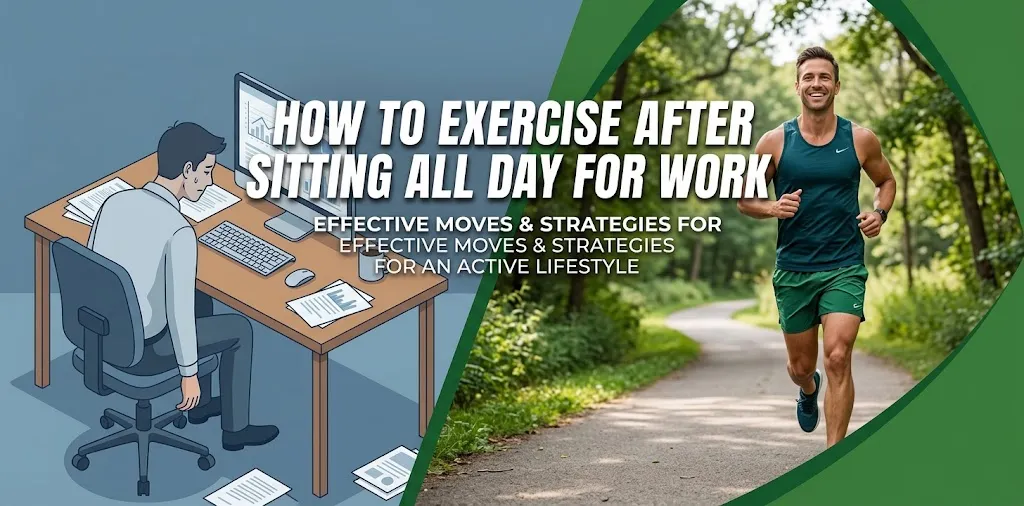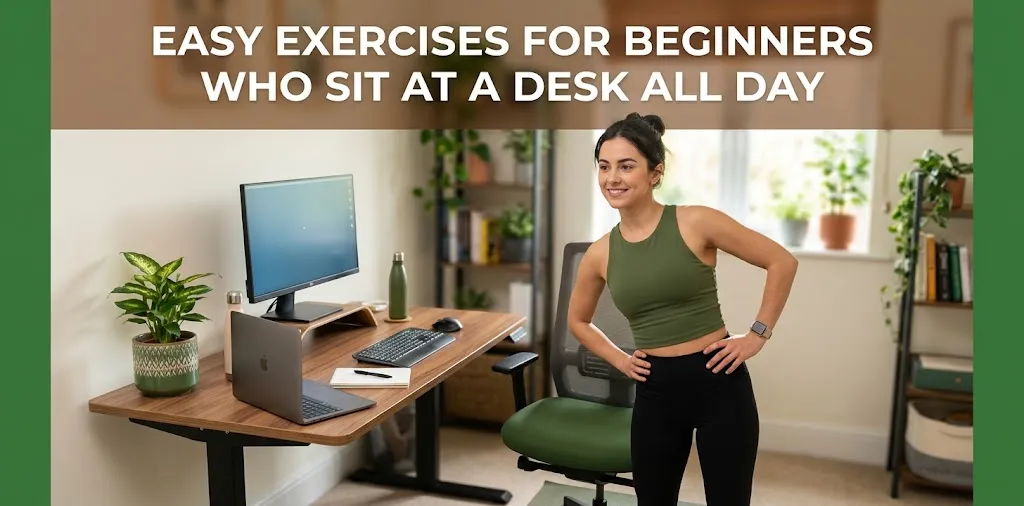
Working at a desk can make exercise feel difficult. You may spend most of the day sitting, staring at a screen, and moving only when you need coffee, lunch, or a meeting. The good news is that you do not need a gym or long workout sessions to become more active.
A beginner workout for desk workers should focus on simple movements that build strength, improve mobility, raise your heart rate, and break up long periods of sitting. The goal is not to exercise all day. It is to make regular movement a normal part of your workweek.
What Is a Good Beginner Workout for Desk Workers?
A good beginner workout for someone who works at a desk combines walking or other easy cardio with basic strength and mobility exercises. Start with short sessions you can repeat consistently, such as 10–20 minutes at a time, and gradually increase the amount of activity. Adults should ultimately work toward at least 150 minutes of moderate aerobic activity each week plus muscle-strengthening activity on at least 2 days.
You can do part of this activity before or after work and use short movement breaks during the workday to avoid sitting for hours without moving.
Why Desk Workers Need a Different Starting Point
If you sit for eight or more hours a day, jumping straight into intense workouts may be uncomfortable and hard to maintain. Your hips, upper back, shoulders, and legs may feel stiff simply because they have spent so much time in one position.
The better approach is to start with movements that feel manageable and build from there.
A beginner desk-worker routine should include:
- Walking or easy cardio to build basic endurance
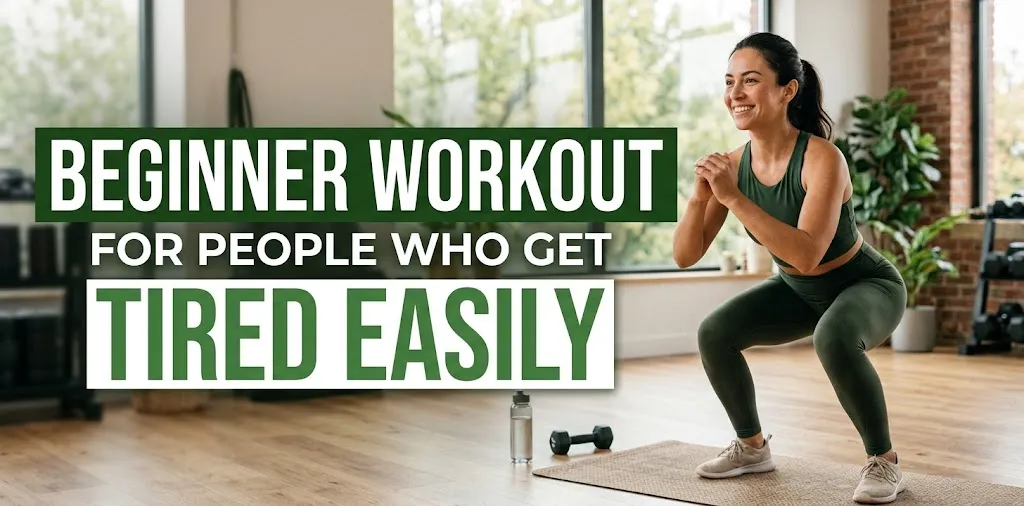
- Squats or sit-to-stands for the legs and hips
- Wall or desk push-ups for the chest, shoulders, and arms
- Glute bridges for the hips and glutes
- Core exercises for trunk strength
- Mobility movements for areas that become stiff during sitting
- Short movement breaks throughout the workday
A Simple 15-Minute Beginner Workout
You can perform this workout at home, in a private office, or in another safe open area. You do not need weights.
| Exercise | Beginner amount | Main focus |
|---|---|---|
| Easy marching | 2 minutes | Warm-up |
| Sit-to-stand | 8–10 reps | Legs and hips |
| Wall push-ups | 8–10 reps | Chest and arms |
| Glute bridges | 10 reps | Glutes and hips |
| Bird dogs | 6–8 per side | Core and balance |
| Standing calf raises | 10–15 reps | Lower legs |
| Gentle mobility | 2 minutes | Recovery |
Move slowly during your first few sessions. You should be able to control every repetition without rushing.
1. March in Place
Stand tall and march slowly in place for about two minutes.
Swing your arms naturally and gradually increase your pace. This raises your body temperature and prepares your muscles for the exercises that follow.
If standing for two minutes is difficult, start with 30–60 seconds and take a short rest.
2. Sit-to-Stand
Use a sturdy chair.
- Sit near the front of the chair with your feet about hip-width apart.
- Lean forward slightly.
- Push through your feet and stand up.
- Slowly lower yourself back into the chair.
- Repeat 8–10 times.
Keep your movements controlled. If the chair is low and standing is difficult, use a higher, stable chair.
As you get stronger, you can work toward regular bodyweight squats.
3. Wall Push-Ups
Wall push-ups are a simple alternative to floor push-ups.
- Stand facing a wall.
- Place your hands on the wall around chest height.
- Step back slightly.
- Bend your elbows and bring your chest toward the wall.
- Push yourself back to the starting position.
Try 8–10 repetitions.
Once these become easy, you can progress to push-ups against a sturdy desk or countertop. Later, you can try incline push-ups from a lower surface.
4. Glute Bridges
Lie on your back with your knees bent and feet flat on the floor.
Press your feet into the floor and lift your hips slowly. Pause briefly at the top, then lower your hips with control.
Start with 8–10 repetitions.
This exercise is useful for beginners because it trains the glutes and hips without requiring heavy equipment.
5. Bird Dogs
Start on your hands and knees.
Slowly extend one arm and the opposite leg. Keep your torso steady rather than twisting. Return to the starting position and switch sides.
Begin with 6–8 repetitions per side.
If balancing both limbs at once feels difficult, practice lifting only one arm or one leg at a time.
6. Standing Calf Raises
Stand behind a sturdy chair and hold it lightly for balance.
Raise your heels until you are on the balls of your feet. Lower them slowly.
Start with 10–15 repetitions.
This is an easy way to add lower-leg strengthening to your routine.
7. Finish With Gentle Movement
Spend the final two minutes walking slowly or performing comfortable mobility movements.
You can gently move your shoulders, rotate your upper back, or stretch your calves and hips.
Do not force a stretch or bounce into a painful position.
How to Turn a 15-Minute Workout Into a Weekly Routine
You do not need to perform the full workout every day.
A simple starting schedule could look like this:
| Day | Activity |
|---|---|
| Monday | 15-minute beginner workout |
| Tuesday | 10–20 minute walk |
| Wednesday | 15-minute beginner workout |
| Thursday | Short walks and movement breaks |
| Friday | 15-minute beginner workout |
| Saturday | Easy walk or recreational activity |
| Sunday | Rest or gentle movement |
This is only a starting point. Your schedule can be adjusted around your work hours, fitness level, and other activities.
The long-term goal is to gradually build toward regular aerobic and muscle-strengthening activity rather than trying to reach the full target immediately.
How to Exercise During a Busy Workday
The biggest challenge for desk workers is often not knowing which exercises to do. It is remembering to move.
Short activity breaks can help you interrupt long periods of sitting. A 5–10-minute activity break can be a practical way to add movement to the workday.
You can connect movement to things you already do.
Use Work Tasks as Movement Reminders
Try one small movement whenever you:
- Finish a meeting
- Make a phone call
- Get a drink
- Use the restroom
- Finish a major task
- Wait for a file or program to load
- Take a lunch break
For example, after finishing a 60-minute meeting, stand up and walk for a few minutes instead of immediately starting the next task.
The goal is to make movement automatic rather than relying on motivation.
Try a Short Movement Break
A five-minute break might include:
- Walk around for two minutes.
- Perform 10 sit-to-stands.
- Do 10 wall push-ups.
- Perform 10 calf raises.
- Take a few slow breaths before returning to work.
You do not need to do this exact sequence every time. The important part is changing position and moving your body.
Five Easy Desk-Friendly Exercises
Not every exercise needs to look like a traditional workout.
If you work in an office where exercising openly would feel uncomfortable, choose simple movements that fit naturally into your day.
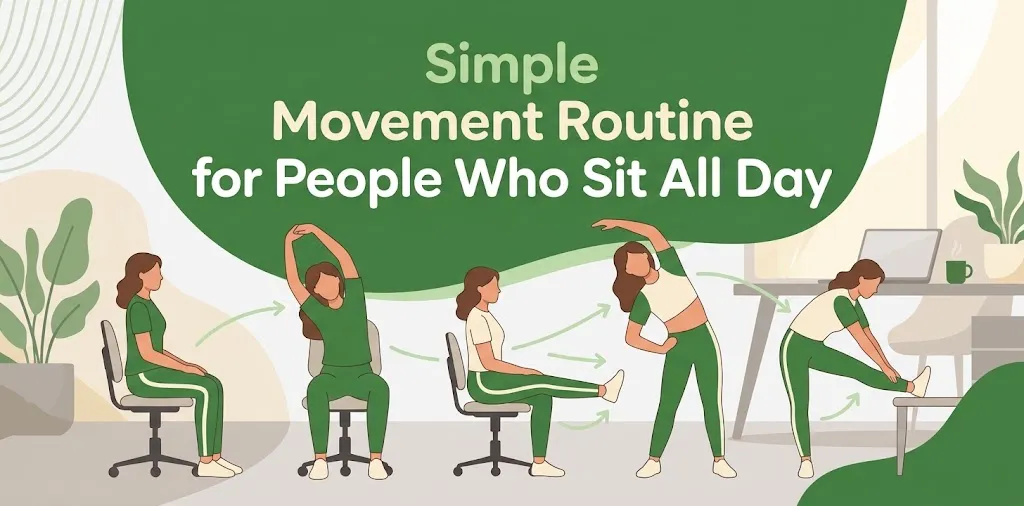
Seated Leg Extensions
Sit upright with both feet on the floor. Slowly straighten one leg, pause, and lower it. Repeat on the other side.
Start with about 10 repetitions per leg.
Glute Squeezes
While sitting or standing, gently contract your glute muscles for several seconds and then relax.
Repeat several times.
This does not replace a full lower-body workout, but it can provide a simple way to activate your muscles during a long workday.
Shoulder Rolls
Roll your shoulders slowly backward several times, then forward.
Keep the movement comfortable and avoid forcing your neck or shoulders.
Seated Upper-Body Rotation
Sit tall with your feet on the floor. Slowly rotate your upper body to one side, return to the center, and repeat on the other side.
Keep the movement controlled and comfortable.
Wall Push-Ups
If you have enough space, wall push-ups are one of the easiest strength exercises to add to a workday.
They require no equipment and are easier to control than traditional floor push-ups.
A Beginner Progression for the First Four Weeks
Your first goal should be consistency, not intensity.
| Week | Main goal |
|---|---|
| Week 1 | Move regularly and learn the exercises |
| Week 2 | Add a few repetitions or another short walk |
| Week 3 | Make one or two workouts slightly longer |
| Week 4 | Gradually increase resistance, repetitions, or walking time |
Change only one part of your routine at a time.
For example, if you can comfortably complete 10 sit-to-stands, try 12 rather than suddenly adding a heavy dumbbell.
This gradual approach makes it easier to notice how your body responds.
What to Do If You Have Almost No Free Time
You can break exercise into smaller pieces.
Suppose your workday is packed with meetings. Instead of waiting for a free 30-minute period, try:
- 5 minutes of walking before work
- 5 minutes of movement during lunch
- 5 minutes of walking in the afternoon
- A 10-minute strength session after work
These short sessions can add up.
You do not have to complete all your movement in one long session. Breaking activity into smaller periods can make it easier to fit exercise around a busy work schedule.
How to Make the Workout Easier or Harder
Your workout should match your current fitness level.
Make It Easier
If an exercise feels too difficult:
- Reduce the number of repetitions.
- Use a wall instead of a lower surface.
- Hold onto a sturdy support for balance.
- Take longer rest periods.
- Reduce the workout to one set.
- Walk more slowly.
There is no benefit to making your first workout so hard that you cannot repeat it.
Make It Harder
When the basic version becomes comfortable, you can:
- Add repetitions.
- Add another set.
- Increase walking time.
- Use resistance bands.
- Hold light weights.
- Progress from wall push-ups to incline push-ups.
- Progress from sit-to-stands to bodyweight squats.
Only increase difficulty when you can perform the current version with good control.
Two Realistic Desk-Worker Examples
Example 1: The Remote Worker
Imagine a person who works from home and spends most of the day at a laptop.
Instead of trying to complete a one-hour workout every morning, they could take a five-minute walk after breakfast, perform the 15-minute strength routine three days a week, and walk for 10 minutes during lunch.
They could also stand and move around between meetings.
This approach fits exercise around the workday rather than requiring the entire schedule to change.
Example 2: The Office Worker
Someone working in a shared office may not feel comfortable doing squats beside their desk.
They could walk during lunch, take stairs when practical, stand during some phone calls, and use a private space for a short strength workout before or after work.
During the workday, subtle movements such as walking to refill water or taking a short movement break can help reduce uninterrupted sitting.
Common Mistakes Beginners Should Avoid
Trying to Make Up for Years of Inactivity in One Workout
A long, intense first workout may leave you extremely sore and make it harder to exercise again.
Start with an amount you can recover from.
Treating Stretching as Your Entire Workout
Stretching and mobility can be useful, especially when you feel stiff, but a complete fitness routine should also include aerobic activity and muscle-strengthening work.
Exercising Only on Weekends
A weekend workout is better than nothing, but it does not solve the problem of sitting almost continuously during the workweek.
Add small amounts of movement throughout your weekdays.
Sitting All Day Because You Exercised Later
A 30-minute workout does not mean you need to remain seated for the rest of the day.
Try to combine planned exercise with regular movement breaks.
Increasing Intensity Too Quickly
If 10 bodyweight squats are challenging, there is no need to immediately start doing 50.
Build your capacity gradually.
When to Stop or Get Professional Guidance
Exercise should challenge you, but it should not cause significant pain.
Stop an exercise if you experience unusual or severe pain, dizziness, fainting, chest pain, severe shortness of breath, or another concerning symptom.
If you have a medical condition, recent injury, significant joint problems, or you have been inactive for a long time and are unsure how to begin, talk with a healthcare professional about an appropriate starting point.
For people who are new to exercise, the safest routine is one that matches their current ability rather than one designed for an experienced athlete.
How to Stay Consistent With Exercise When You Work at a Desk
The easiest workout to maintain is usually the one that fits your routine.
Try these strategies:
- Keep your workout clothes ready.
- Schedule exercise like a work appointment.
- Start with a small target.
- Use calendar reminders for movement breaks.
- Walk during suitable phone calls.
- Keep a water bottle nearby and use refilling as a movement cue.
- Track workouts instead of focusing only on weight or appearance.
- Increase your activity slowly.
You do not need perfect motivation. You need a routine that is easy enough to repeat.
Frequently Asked Questions
How often should a beginner who works at a desk exercise?
Start with manageable workouts two or three days per week and add walking or other easy activity on the remaining days. Over time, work toward regular aerobic activity and muscle-strengthening activity at least two days each week.
Can desk exercises replace a regular workout?
Desk exercises are useful for adding movement and strength work during the day, but they should not necessarily replace planned aerobic and full-body exercise. A better approach is to combine short desk-friendly movement breaks with walking and regular strength workouts.
What is the best exercise for someone who sits all day?
There is no single best exercise. Walking, sit-to-stands, wall push-ups, glute bridges, and simple mobility exercises provide a useful starting mix because they address movement, strength, and fitness without requiring much equipment or experience.
Start Small and Build From There
If you work at a desk all day, you do not need to completely change your lifestyle to become more active. Start with a 10–15-minute workout, add short walks or movement breaks during your workday, and gradually increase your activity as your fitness improves.
Your first goal is not to become extremely fit. It is to stop letting a desk job control all of your movement.
Pick two or three exercises from this guide and do them today. Once they feel routine, add another exercise or a little more walking. Small actions repeated consistently can build the foundation for a much more active lifestyle.