How to Start When Your Fitness Level Is Very Low
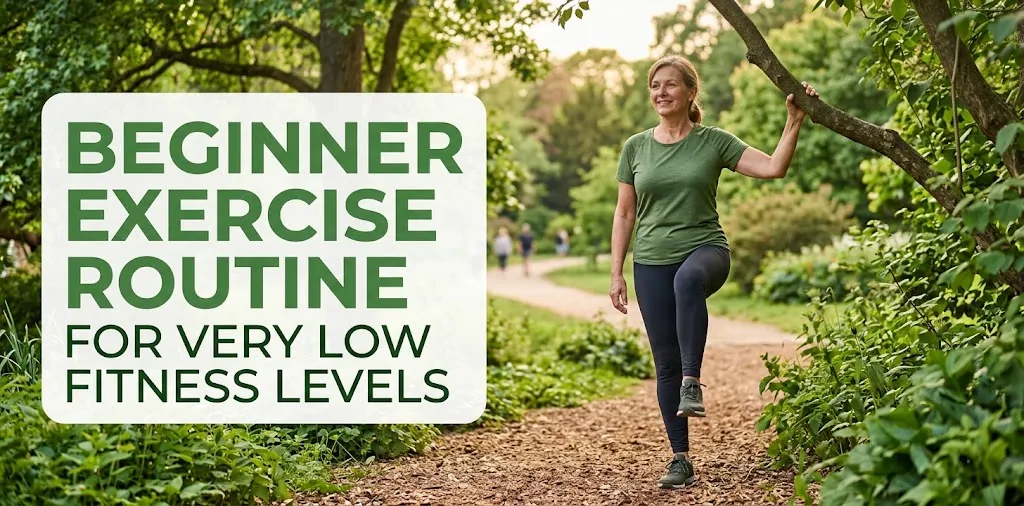
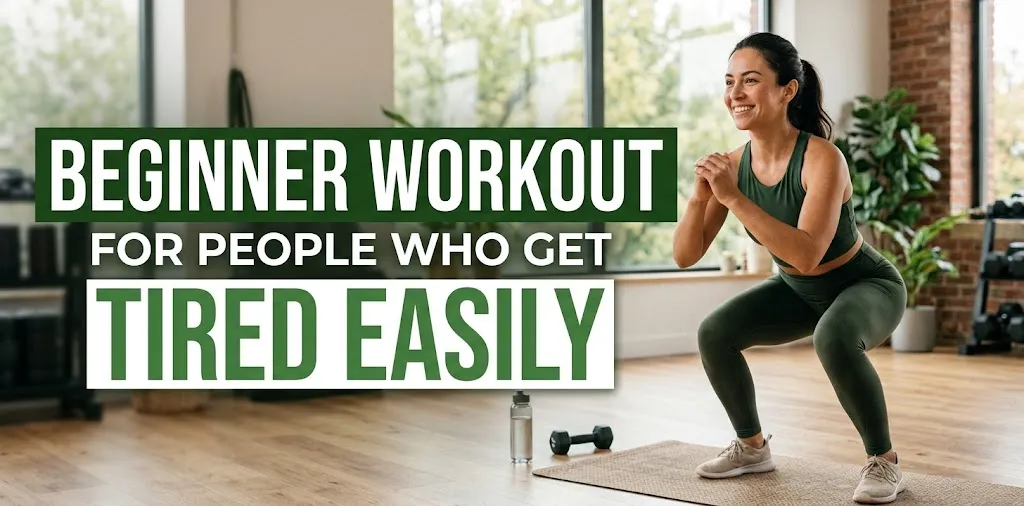
If your fitness is very low, the best workout is one you can finish without feeling crushed afterward. Start with short, easy sessions such as walking, gentle mobility work, and simple bodyweight exercises. Build your time and effort slowly as your breathing, strength, and confidence improve. You do not need to begin with a hard gym workout or intense cardio.
The goal at first is simple: teach your body to move regularly without doing too much too soon.
If you have been inactive for a long time, have a chronic health condition, have an injury, or are unsure about your ability to exercise safely, talk with a health care professional before starting a new routine.
What Counts as Very Low Fitness?
Very low fitness can look different from person to person. You may be starting from a low fitness level if everyday activities such as walking up stairs, carrying groceries, or walking for several minutes leave you unusually tired.
You may also notice that:
- You spend most of the day sitting.
- You have not exercised regularly for months or years.
- A short walk makes you breathe harder than expected.
- Basic bodyweight movements feel difficult.
- You need frequent breaks during simple physical activities.
- You feel unsure about how to exercise safely.
You do not need to pass a fitness test before beginning. Your starting point is simply the level at which you can move safely today.
The Best Beginner Workout for Very Low Fitness
For most people starting from a very low fitness level, a combination of easy cardio, basic strength exercises, and gentle mobility work is a practical place to begin.
You can start with only 10 to 15 minutes.
A Simple 15-Minute Beginner Workout
| Exercise | Starting Amount | Main Purpose |
|---|---|---|
| Easy walking | 5 minutes | Build basic endurance |
| Chair sit-to-stand | 5–8 reps | Strengthen legs |
| Wall push-ups | 5–8 reps | Build upper-body strength |
| Standing knee lifts | 5 per side | Improve movement and coordination |
| Gentle stretching | 2–3 minutes | Cool down |
Rest whenever you need to.
The first few workouts should feel manageable rather than exhausting. As your fitness improves, you can gradually increase the time or number of repetitions.
Start With Walking
Walking is one of the easiest ways to build basic fitness because you can control your pace and stop when needed.
If five or ten minutes feels difficult, divide it into smaller sessions. For example, you could walk for five minutes in the morning and another five minutes later in the day. Short periods of activity can still contribute to your overall physical activity.
Try this progression:
- Week 1: 5–10 minutes at an easy pace.
- Week 2: 10–12 minutes.
- Week 3: 12–15 minutes.
- Week 4: 15–20 minutes.
You do not have to follow these exact numbers. If a week feels too difficult, stay at the same level longer.
Your walking pace should allow you to control your breathing. Moderate activity generally makes breathing faster but still allows you to talk, while vigorous activity makes conversation much harder.
Beginner Strength Exercises
You do not need a gym or heavy weights to start building strength.
Chair Sit-to-Stand
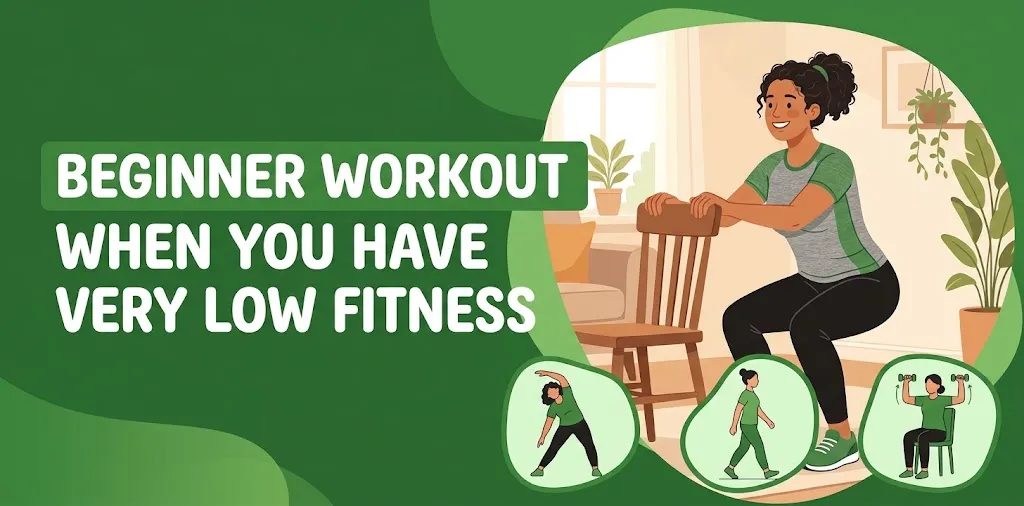
Sit in a sturdy chair with your feet on the floor. Stand up slowly, then sit back down with control.
Start with 5 repetitions.
If this is difficult, use your hands for support. If it becomes easy, gradually increase the repetitions.
Wall Push-Ups
Stand facing a wall and place your hands against it around chest height. Bend your elbows to bring your body toward the wall, then push yourself back.
Start with 5–8 repetitions.
Wall push-ups are usually easier than floor push-ups, making them useful for someone who is not ready for traditional push-ups.
Standing Knee Lifts
Hold the back of a sturdy chair if you need balance. Lift one knee a few inches, lower it, and repeat with the other leg.
Start with 5 repetitions on each side.
Move slowly rather than trying to lift your knees as high as possible.
Supported Calf Raises
Hold a sturdy chair or countertop. Slowly rise onto your toes, then lower your heels.
Start with 5–10 repetitions.
This simple movement can help you practice controlled lower-leg movement while using support for balance.
A Simple 4-Week Starting Plan
The first month should focus on consistency rather than intensity.
| Week | Cardio | Strength | Goal |
|---|---|---|---|
| 1 | 5–10 minutes, 3 days | 1 short session | Get used to moving |
| 2 | 10–15 minutes, 3 days | 2 short sessions | Build consistency |
| 3 | 15–20 minutes, 3–4 days | 2 sessions | Improve endurance |
| 4 | 20–25 minutes, 4 days | 2 sessions | Prepare for longer workouts |
These are starting examples, not requirements. If your body needs more time at one level, repeat that level before progressing.
Federal physical activity guidance for adults ultimately recommends working toward at least 150 minutes of moderate-intensity aerobic activity each week, along with muscle-strengthening activity on at least two days per week. However, someone with very low fitness does not need to reach that amount immediately. Activity should be increased gradually.
How Hard Should a Beginner Workout Feel?
When your fitness is very low, you do not need to chase a high heart rate.
A useful starting point is easy to somewhat challenging effort.
During easy exercise:
- You can speak comfortably.
- Your breathing is only slightly faster.
- You feel like you could continue for a while.
- You recover fairly quickly after stopping.
During moderate activity, your breathing becomes faster, but you can generally still talk. If you become very short of breath, feel pain, dizzy, nauseated, or unable to continue as planned, stop and recover rather than forcing yourself through the workout.
The right workout is not the one that leaves you completely exhausted. It is the one that helps you improve while allowing you to come back and exercise again.
How Often Should You Exercise?
If you are starting from almost no activity, three workout days per week can be a reasonable starting point.
For example:
- Monday: Walking + strength
- Tuesday: Rest or gentle movement
- Wednesday: Walking
- Thursday: Rest
- Friday: Walking + strength
- Saturday: Optional easy walk
- Sunday: Rest
You can also spread short walks throughout the day.
Recovery matters because doing too much too soon can lead to excessive soreness, injury, or burnout.
What to Do When a Workout Feels Too Hard
A difficult workout does not always mean you should quit exercising. It may mean the workout needs to be modified.
Try one of these changes:
- Reduce the workout time.
- Walk more slowly.
- Take longer rest periods.
- Do fewer repetitions.
- Use a chair or wall for support.
- Replace a harder movement with an easier version.
- Take an additional rest day.
For example, if 15 minutes of walking leaves you exhausted, return to 8–10 minutes rather than stopping your entire routine.
The goal is to find a level that challenges you without overwhelming you.
Common Mistakes When Starting With Very Low Fitness
Doing Too Much on Day One
Feeling motivated is great, but your current fitness level still matters. A long workout on the first day can leave you extremely sore and make it harder to exercise again.
Start with less than you think you can handle and build gradually.
Trying to Exercise Like Someone Who Is Already Fit
You may see people running, lifting heavy weights, or doing intense workout classes online. Their routine does not need to become your starting point.
Your workout should match your current ability, not someone else’s.
Believing Every Workout Must Be Intense
Harder is not automatically better.
For someone with very low fitness, simply developing the habit of walking regularly and performing basic strength movements can be a meaningful first step.
Ignoring Recovery
Your body needs time to adapt.
If your muscles are sore after a new workout, give yourself enough recovery before repeating hard movements.
Quitting Because Progress Seems Slow
Fitness does not improve at the same speed for everyone.
Your first signs of progress may be small. You might notice that walking feels easier, you need fewer breaks, or standing from a chair takes less effort.
Those changes matter.
How to Progress Without Overdoing It
Once your current workout feels comfortable, change one thing at a time.
You could:
- Add a few minutes to your walk.
- Add one or two repetitions to an exercise.
- Reduce your rest time slightly.
- Move from wall push-ups to a higher-angle incline push-up.
- Add another easy walking day.
Do not increase everything at once.
Starting slowly and progressing gradually gives your body time to adapt.
Two Realistic Beginner Examples
Example 1: Someone Who Gets Tired After Five Minutes
Imagine a person who has spent most of the last year sitting and becomes tired after a five-minute walk.
Their first workout might simply be:
- 5-minute easy walk
- 5 chair sit-to-stands
- 5 wall push-ups
- 2 minutes of gentle movement
That is enough for a starting session.
After several sessions, they could gradually extend the walk instead of immediately adding intense exercises.
Example 2: Someone Who Can Walk but Has Little Strength
Another person may be able to walk for 15 minutes but struggle with squats or push-ups.
Their starting routine could include:
- 10–15 minutes of easy walking
- 8 chair sit-to-stands
- 8 wall push-ups
- 5 supported calf raises
- Gentle cooldown
As these movements become easier, they can gradually increase repetitions or progress to harder variations.
When Should You Stop Exercising?
Do not try to push through warning signs.
Stop the workout and seek appropriate medical advice if you experience concerning symptoms such as significant pain, dizziness, nausea, or unusual shortness of breath.
If you have a medical condition, an injury, or other health concerns that may affect exercise, ask a health care professional how to begin safely.
Frequently Asked Questions
What is the best workout for someone with very low fitness?
Walking combined with simple strength exercises is a practical starting point for many beginners. Begin with short sessions at an easy intensity and gradually increase the duration and difficulty as your fitness improves.
How long should a beginner workout when they are very unfit?
There is no single starting time that works for everyone. If your fitness is very low, even a 5–10 minute session can be a reasonable place to start, and you can gradually add time as your body adapts.
Should I exercise every day if I am very out of shape?
You do not need hard workouts every day. Start with manageable sessions several days a week and use the other days for rest or gentle movement, then gradually increase your activity as your fitness improves.
Build Fitness One Small Workout at a Time
Having very low fitness does not mean you need to wait until you are “in shape” before exercising. Start where you are with a short walk, a few simple strength movements, and enough recovery.
Your first goal is not to finish a difficult workout. Your first goal is to make exercise something you can repeat.
Once 10 minutes becomes comfortable, work toward 15. Once basic movements become easier, add a few repetitions. Small improvements can eventually lead you toward the broader adult activity goal of 150 minutes of moderate activity per week and strength training on at least two days.
Start small, stay consistent, and let your fitness build over time.