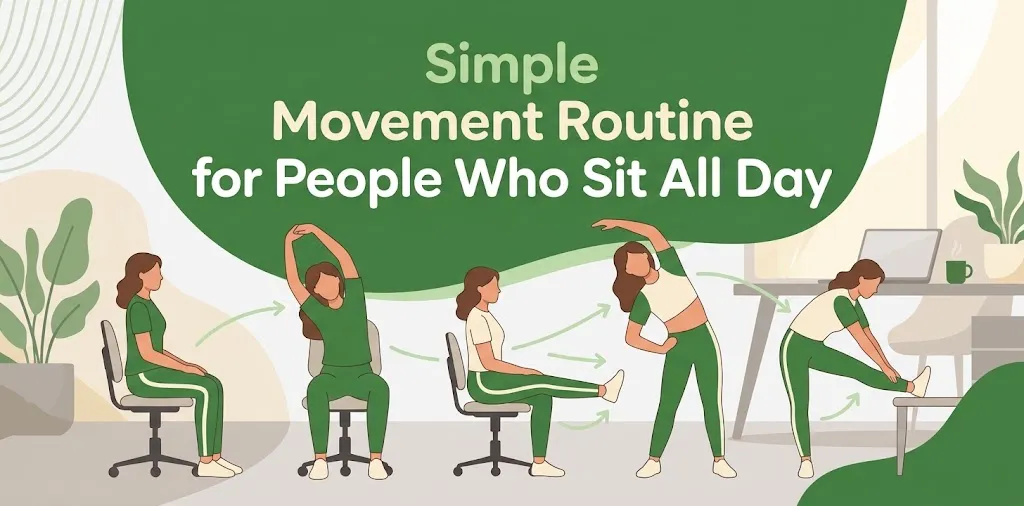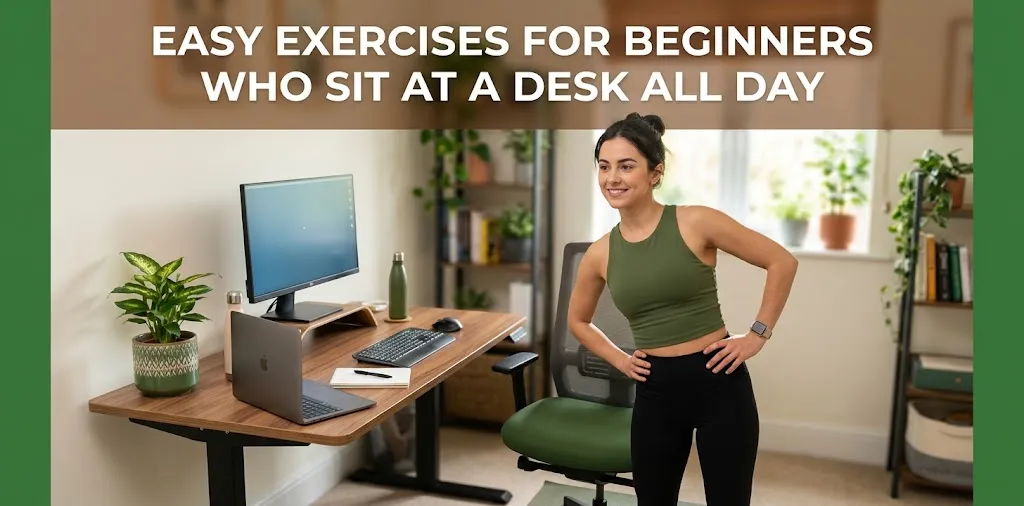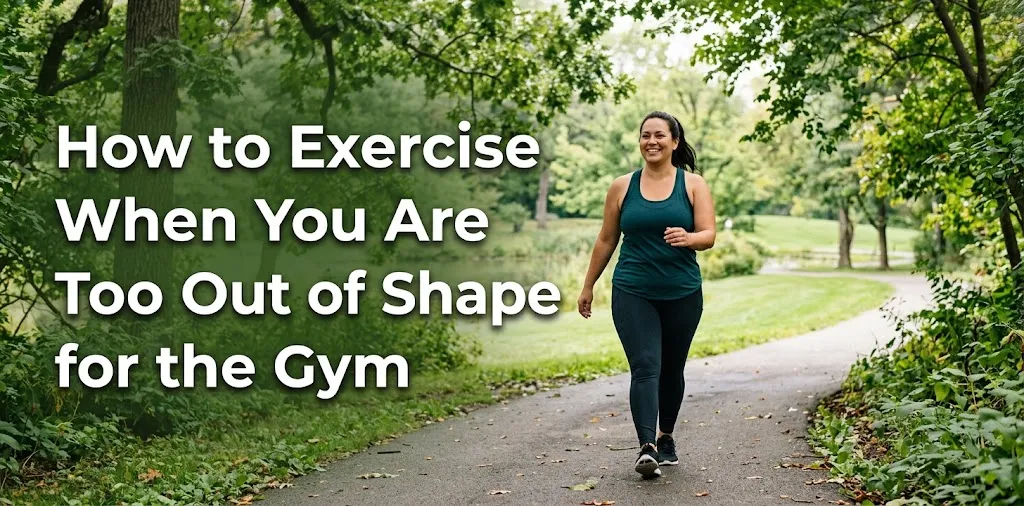
Feeling too out of shape for the gym can create a frustrating cycle: you want to get fitter, but you feel like you need to get fit before you can start. The good news is that you do not need to be gym-ready to begin exercising. You can start with short, low-impact workouts at home, build basic strength and endurance, and move toward a gym when you feel ready.
The goal at first is not to train hard. It is to make movement feel manageable enough that you can keep doing it.
You Do Not Need to Get Fit Before You Start Exercising
If you are very inactive, starting with a few minutes of movement is worthwhile. U.S. physical activity guidelines recommend eventually working toward 150–300 minutes of moderate aerobic activity each week plus muscle-strengthening activity on at least 2 days, but people who are starting from a low fitness level should build up gradually rather than trying to reach that target immediately.
Being out of shape is not a reason to wait. It is the reason to start at a level your current body can handle.
You also do not have to exercise in a gym. Walking, gentle cycling, chair exercises, bodyweight movements, and simple household activities can all be ways to become more active.
Start With Exercise That Feels Almost Too Easy
The biggest mistake many beginners make is choosing a workout based on where they want to be instead of where they are now.
If 30 minutes of exercise leaves you exhausted for the rest of the day, 5 or 10 minutes may be a better starting point. The key is to gradually increase your activity instead of trying to do too much at once.
A good starting workout might look like this:
- Walk slowly for 5–10 minutes.
- Rest if needed.
- Sit and stand from a sturdy chair 5 times.
- Do 5 wall push-ups.
- March slowly in place for 30 seconds.
- Finish with easy movement for another minute or two.
You do not need to complete every exercise. The right starting point is the one you can repeat without feeling defeated.
Use the Talk Test to Control Your Effort
You do not need to chase exhaustion to make progress.
During moderate activity, you should generally be able to talk but not sing comfortably. If you are struggling to speak or feel like you cannot catch your breath, slow down or take a break.
For a person who has been inactive for a long time, even light activity may feel challenging at first. Your starting intensity should be based on your current ability, not on what a workout video or another person is doing.
Build Fitness at Home Before You Consider the Gym
If the gym feels intimidating, make your first goal fitness without the gym.
You can improve basic endurance, leg strength, balance, and movement skills with little or no equipment.
| Activity | Starting Option | How to Progress |
|---|---|---|
| Walking | 5–10 minutes | Add a few minutes gradually |
| Chair sit-to-stands | 5 repetitions | Add repetitions slowly |
| Wall push-ups | 5 repetitions | Move closer to the floor over time |
| Marching in place | 30 seconds | Increase time gradually |
| Stationary cycling | 5–10 minutes | Add time or gentle resistance |
| Light mobility | 5 minutes | Increase range of motion gradually |
The point is not to perform a perfect workout. The point is to teach your body that regular movement is part of your routine.
A Simple 4-Week Plan for Someone Starting From Zero
You can adjust this plan based on your current fitness. If a week feels too difficult, repeat it instead of moving forward.
Week 1: Get Used to Moving
Aim for short sessions on most days.
- Walk for 5–10 minutes.
- Practice 5 chair sit-to-stands.
- Do 5–10 wall push-ups.
- Take breaks whenever necessary.
Your main goal is consistency.
Week 2: Add a Little More Time
If Week 1 felt manageable, increase your walking or other easy cardio by a few minutes.
For example:
- Walk for 10–15 minutes.
- Do 1–2 sets of chair sit-to-stands.
- Do 1–2 sets of wall push-ups.
- Add gentle marching or mobility work.
You should still finish feeling like you could have done a little more.
Week 3: Add Basic Strength Work
Now introduce a few simple movements for your major muscle groups.
A beginner session could include:
- Chair squats or sit-to-stands
- Wall push-ups
- Supported calf raises
- Standing marches
- A short walk
Performing strength exercises once a week at first can be a reasonable starting point for someone who is very inactive. Over time, strength work can be increased toward the general recommendation of at least two days per week.
Week 4: Build a Routine
By this point, the goal is not to suddenly start intense workouts.
Instead, create a simple weekly pattern:
- 3–5 days of walking or other easy aerobic activity
- 1–2 days of basic strength exercises
- Easy movement on the other days
If you feel good, slowly increase duration, repetitions, or resistance.
What If Walking Is Too Difficult?
Walking is a common starting exercise, but it is not the only option.
If walking causes too much discomfort or fatigue, try lower-impact movements such as:
- Seated marching
- Chair-based leg movements
- Gentle range-of-motion exercises
- Water exercise
- Recumbent cycling
- Very short periods of standing and moving around the house
You can also break activity into smaller sessions. For example, instead of trying to walk for 20 minutes, you might do four 5-minute periods throughout the day.
People with low fitness may need weeks or months to gradually build toward their activity goals.
How to Exercise When Your Body Weight Makes Movement Hard
If you are carrying extra weight, some exercises may place more stress on your joints and make movement uncomfortable.
That does not mean you cannot exercise.
Start with movements that feel stable and controlled. A chair, wall, or sturdy countertop can provide support during certain exercises. Low-impact activities such as water exercise or cycling may also be more comfortable than running or jumping.
You do not need to use exercise as punishment for your body.
A workout should help you become stronger and more capable, not leave you afraid to move again tomorrow.
If joint pain, mobility limitations, or another health concern makes exercise difficult, consider talking with a health professional about suitable activities before increasing your training.
You Do Not Have to Be Good at Exercise
A beginner workout may look very different from what you see online.
You might need to:
- Take several breaks.
- Use a chair for support.
- Perform fewer repetitions.
- Move slowly.
- Modify an exercise.
- Stop before you feel exhausted.
That is normal.
Your first month is about learning what your body can handle. You are building a foundation for future workouts rather than trying to prove how fit you are.
When Should You Try the Gym?
You can go to a gym at any fitness level. You do not need to reach a certain weight, walking speed, or strength level first.
However, waiting a few weeks may make the experience more comfortable if gym anxiety is your main concern.
You may feel more prepared when you can:
- Walk continuously for 15–30 minutes at an easy pace.
- Get up from a chair repeatedly without major difficulty.
- Perform basic bodyweight movements with control.
- Recover reasonably well after a light workout.
- Follow a simple exercise routine without feeling overwhelmed.
These are not requirements for joining a gym. They are simply signs that you may feel more comfortable once you get there.
Choose a Gym That Supports Beginners
When you are ready, look for a gym where beginners can modify exercises and work at their own pace.
You might prefer:
- A quieter gym.
- A YMCA or community recreation center.
- A beginner-focused fitness class.
- A gym with personal training.
- A facility with a pool.
- A gym that offers orientation for new members.
You do not have to start in the busiest part of the gym or use every machine.
For your first visit, simply walking on a treadmill, using a stationary bike, or learning how one or two machines work may be enough.
A Beginner Gym Workout That Does Not Require Being Fit
Once you feel ready for a gym, keep your first sessions simple.
- 5–10 minutes of easy cardio
Walk on a treadmill or use a stationary bike. - Sit-to-stand or a light leg machine
Perform a small number of controlled repetitions. - Chest press or wall push-ups
Choose a resistance that allows you to maintain control. - Seated row
Use a light resistance and focus on smooth movement. - Easy cardio for a few minutes
Finish with comfortable movement rather than an exhausting sprint.
You do not need to spend an hour at the gym.
A short session that you repeat consistently is more useful than an ambitious workout that makes you quit after a week.
What to Do If You Get Very Tired During Exercise
Some tiredness is normal when you are beginning. But there is a difference between normal exertion and a warning sign.
Slow down or stop if you experience concerning symptoms such as chest pain, fainting, severe shortness of breath, or unusual symptoms that do not feel like normal exercise fatigue. If symptoms are severe or urgent, seek appropriate medical care.
If you have a known medical condition, significant mobility limitations, or concerns about whether exercise is safe for you, talk with your health care professional before starting or substantially increasing activity.
The Biggest Beginner Mistakes to Avoid
Starting With Hard Workouts
A difficult workout may make you feel productive, but it can also leave you extremely sore or discouraged.
Start below your maximum ability and build gradually.
Trying to Exercise Every Day
You do not have to train hard every day.
Give your body time to adapt, especially when you are moving from very little activity to regular exercise.
Comparing Yourself With Fit People
A person who has trained for years should not be your benchmark.
Compare today’s ability with your own starting point.
Thinking Sweat Equals a Good Workout
Sweating is not the goal. Building strength, endurance, movement ability, and consistency matters more.
Quitting After Missing a Few Days
Missing a workout does not erase your progress.
If you skip Monday, simply return on Tuesday or whenever you are able. Avoid turning one missed session into several weeks away.
Two Realistic Ways to Start
Imagine someone who spends most of the day sitting and gets winded after a short walk. Starting with a 45-minute gym workout would probably feel overwhelming. A better first step might be a 5-minute walk after breakfast and another 5-minute walk later in the day.
Now imagine someone who can walk for 15 minutes but has very little strength. That person could start with walking plus a few sets of chair sit-to-stands and wall push-ups two or three times per week.
The correct starting point is different for everyone.
What matters is choosing an amount of activity that is challenging enough to practice but manageable enough to repeat.
How Long Does It Take to Get Into Better Shape?
There is no single timeline.
Your progress depends on your starting fitness, activity level, sleep, recovery, health, age, nutrition, and consistency. Someone who starts with five minutes of walking may progress differently from someone who can already exercise for 20 minutes.
Do not make dramatic changes just because you are not seeing fast results.
Instead of asking, “How fast can I get fit?” ask:
“What amount of exercise can I realistically keep doing next week?”
That question usually leads to a better plan.
How to Know When You Are Ready to Increase Your Workout
Increase your activity when your current routine begins to feel manageable.
You might:
- Add 2–5 minutes to a walk.
- Add a few repetitions to an exercise.
- Add another easy workout day.
- Increase resistance slightly.
- Move from wall push-ups to an easier incline push-up.
- Walk a little faster.
Change one thing at a time.
If the new level feels much harder than expected, return to the previous level and build more slowly.
Frequently Asked Questions
Am I really too out of shape to start exercising?
No. You can start at a level that matches your current ability, even if that means only a few minutes of movement. The key is to begin gradually instead of trying to exercise like someone who is already fit.
Should I lose weight before joining a gym?
No. You do not need to lose weight before exercising or joining a gym. If you want to use a gym, choose a beginner-friendly environment and start with exercises you can perform comfortably and safely.
What is the best exercise for someone who is very out of shape?
There is no single best exercise for everyone. Walking, seated exercises, cycling, water exercise, and simple strength movements can all work, so choose an activity that fits your ability, feels manageable, and is easy enough to do consistently.
Start Smaller Than You Think You Need To
You do not have to earn your way into exercise by becoming fit first.
If a gym feels like too much right now, start at home. Walk for five minutes. Do a few chair sit-to-stands. Try a few wall push-ups. Take a break and call it a workout.
Once those small sessions become easier, gradually do more.
Your first goal is not to become fit. Your first goal is to become someone who moves regularly. That small change can give you the foundation you need to eventually exercise longer, become stronger, and walk into a gym with much more confidence.