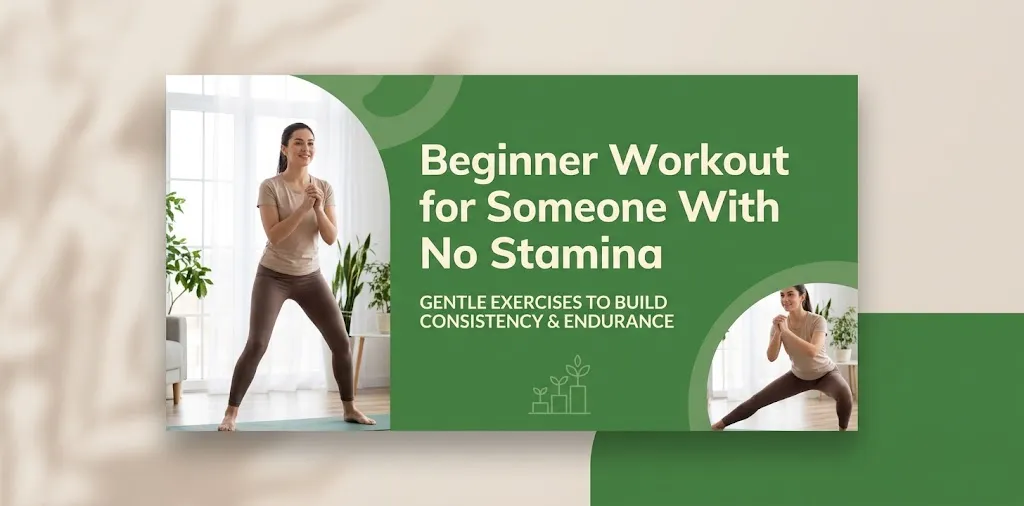
If you have very little stamina, the best workout is not the hardest one. It is a routine you can finish without feeling completely drained. Start with short periods of easy movement, add simple strength exercises, and slowly increase your time as your body adapts.
What Is the Best Beginner Workout for Someone With No Stamina?
A good beginner workout for someone with no stamina combines easy cardio, basic strength exercises, and enough recovery time. Walking is often a practical starting point because you can control the pace and stop when needed. Begin with about 5–15 minutes of comfortable movement two or three times a week, then gradually add time as your fitness improves.
The goal at first is consistency, not intensity. You should finish most workouts feeling like you could have done a little more.
Why You Should Start Slowly
When you have been inactive, your muscles, joints, heart, and lungs need time to adjust to exercise. Jumping directly into running, long cardio sessions, or difficult workouts creates a much larger increase in activity than your body may be ready to handle.
Starting slowly also makes exercise less intimidating. A 10-minute walk that you actually complete is more useful for building a routine than a 45-minute workout that leaves you exhausted and makes you want to quit.
A Simple 20-Minute Beginner Workout
You do not need a gym or complicated equipment for your first workouts. Try this routine two or three days per week, with rest or easy movement between workout days.
| Exercise | Starting Time or Reps | Main Goal |
|---|---|---|
| Easy walking | 5 minutes | Warm up and build endurance |
| Chair squats | 5–8 reps | Strengthen legs |
| Wall push-ups | 5–8 reps | Strengthen chest and arms |
| Standing knee raises | 5–8 per side | Improve movement and balance |
| Glute bridges | 5–8 reps | Strengthen hips and glutes |
| Easy walking | 3–5 minutes | Cool down |
Rest for about 30–60 seconds between strength exercises if you need it. If the complete routine feels too difficult, reduce the repetitions or do only one round.
1. Easy Walking
Walk at a comfortable pace for about five minutes.
You should be able to speak in short sentences without struggling for breath. If five minutes feels too long, start with two or three minutes.
As your stamina improves, gradually increase the walking time.
2. Chair Squats
Stand in front of a sturdy chair with your feet about shoulder-width apart. Push your hips back and slowly lower yourself toward the chair. Lightly touch the chair, then stand back up.
Start with five to eight repetitions.
If this is difficult, use your hands on the chair or choose a higher seat. The movement should be controlled rather than fast.
3. Wall Push-Ups
Stand facing a wall and place your hands against it around chest height. Bend your elbows to bring your body closer to the wall, then push yourself back.
Start with five to eight repetitions.
Wall push-ups are easier than floor push-ups, which makes them useful when upper-body strength is limited.
4. Standing Knee Raises
Stand tall while holding a stable surface if needed. Slowly raise one knee, lower it, and then raise the other.
Start with five to eight repetitions per side.
Keep the movement controlled. You do not need to lift your knees very high.
5. Glute Bridges
Lie on your back with your knees bent and your feet flat on the floor. Tighten your stomach gently and lift your hips a comfortable distance from the floor. Lower them slowly.
Start with five to eight repetitions.
If getting down on the floor is uncomfortable, skip this exercise and use another simple lower-body movement.
A 4-Week Plan to Build Stamina
You do not need to make your workouts harder every day. Give your body time to adapt.
Week 1: Get Used to Moving
Focus on making exercise feel normal.
Try:
- 5–10 minutes of easy walking
- 1 round of the strength exercises
- 2–3 workout days
- At least one rest day between harder sessions
Your main goal is simply to finish the workout.
Week 2: Add a Little More Time
If Week 1 felt manageable, increase your walking by a few minutes.
Try:
- 10–15 minutes of walking
- 1 round of strength exercises
- 3 workout days
- Easy movement such as casual walking on some other days
Do not increase everything at once.
Week 3: Build Your Work Capacity
Now you can begin making the workout slightly longer.
Try:
- 15–20 minutes of walking
- 1–2 rounds of strength exercises
- 3 workout days
- One additional easy walking session if you feel recovered
You should still avoid treating every workout like a test.
Week 4: Create a Regular Routine
If you are recovering well, aim for:
- 20–25 minutes of walking or other easy-to-moderate cardio
- 1–2 rounds of strength exercises
- 3–4 active days
- At least one or two easier recovery days
This is a foundation. You can continue increasing your activity gradually rather than rushing toward advanced workouts.
How Hard Should Exercise Feel When You Have No Stamina?
Use how you feel, rather than trying to match another person’s pace.
For easy exercise, your breathing should increase but remain manageable. Walking may feel easy for one person and surprisingly difficult for another because fitness levels differ.
A useful beginner rule is:
Finish the workout feeling tired but not destroyed.
If you need several hours to recover from a very easy beginner workout, the session may have been too demanding.
How to Increase Stamina Without Getting Overwhelmed
Improving stamina does not require pushing yourself to exhaustion.
Use a simple progression:
- Increase time first.
- Add another workout day when appropriate.
- Increase the pace later.
- Add more challenging exercises after your basic routine feels comfortable.
For example, if you currently walk for 10 minutes, you could work toward 12–15 minutes before worrying about walking much faster.
What If 10 Minutes Feels Too Hard?
Then make the workout smaller.
You could begin with:
- 2 minutes of easy walking
- 3 chair squats
- 3 wall push-ups
- 3 standing knee raises per side
- 2 more minutes of walking
That may look small, but it gives you a starting point.
You can also divide movement into short sessions. For example, take a short walk in the morning and another in the evening instead of trying to exercise for a long continuous period.
Should You Do Cardio or Strength Training First?
For someone with very low stamina, start with the type of exercise you can perform consistently.
Walking is a simple way to build aerobic capacity. Basic strength movements can help you become more comfortable with everyday physical tasks.
Over time, a well-rounded routine should include both aerobic activity and muscle-strengthening work. You do not need to reach a full weekly activity target during your first week.
Think of it as a longer-term target.
Beginner Workout Mistakes That Can Slow Your Progress
Starting With Running
Running can be useful later, but it may be unnecessarily demanding when you currently have very little stamina.
Start with walking or another low-impact activity and build your fitness first.
Trying to Exercise Every Day
More exercise is not automatically better.
Your body needs time to recover, especially when you are new to training. Start with a few manageable sessions rather than forcing yourself to work out hard every day.
Copying Advanced Workouts
A workout designed for a fit person may be far too difficult for someone starting from a low fitness level.
Your workout should match your current ability, not someone else’s.
Exercising Until You Are Exhausted
Feeling completely exhausted is not proof that a workout was successful.
A beginner routine should help you build the habit and gradually improve your ability to exercise.
Increasing Everything at Once
Do not increase duration, speed, repetitions, workout days, and exercise difficulty at the same time.
Change one or two things gradually and see how your body responds.
How Often Should a Beginner With No Stamina Work Out?
For many beginners, two or three structured workouts per week is a reasonable starting point. On other days, you can add comfortable movement such as short walks if you feel recovered.
As your fitness improves, you can gradually increase your weekly activity.
The long-term goal is to build regular aerobic and muscle-strengthening activity, but you do not have to reach that level immediately.
When Should You Make the Workout Harder?
Make the workout harder when the current routine feels comfortable for you.
Signs that you may be ready include:
- You finish without feeling completely exhausted.
- Your breathing returns to normal fairly quickly.
- The same walk feels easier than it did before.
- The exercises feel controlled.
- You recover well between workouts.
- You can complete your planned repetitions without losing good form.
When that happens, make a small change. Add a few minutes to your walk, a few repetitions to an exercise, or another easy workout day.
You do not need to make every workout harder.
Two Realistic Beginner Examples
Example 1: Someone Who Gets Tired After a Few Minutes
Suppose a person has spent most of the past year sitting and becomes tired after a short walk.
Instead of starting with a 30-minute workout, they could begin with five minutes of easy walking and a few chair squats and wall push-ups twice a week.
After the routine becomes comfortable, they could gradually extend the walking time.
Example 2: Someone Who Can Walk but Has Poor Overall Fitness
Another beginner may be able to walk for 15 minutes but struggle with strength exercises.
That person could keep the walking routine while using very small sets of chair squats, wall push-ups, and other beginner movements.
The goal is not to make both people follow the same workout. The goal is to give each person a manageable starting point.
When to Talk With a Health Professional
Moderate physical activity is safe for most people, but some people should get professional guidance before increasing their activity.
Talk with a health professional if you have a chronic health condition or disability and need help choosing the right type or amount of exercise. If you have been inactive and want to begin vigorous exercise, professional guidance may also be appropriate.
Stop exercising and seek appropriate medical attention if you experience concerning symptoms such as chest discomfort, fainting, severe dizziness, or unusual shortness of breath.
Frequently Asked Questions
What is the easiest workout for someone with no stamina?
Easy walking is one of the simplest ways to begin because you can control your speed and duration. Start with a few minutes if necessary and gradually increase your walking time as your fitness improves.
How long should a beginner with no stamina exercise?
There is no single starting time that works for everyone. A person with very low fitness may begin with just a few minutes and gradually build toward longer sessions.
How long does it take to build stamina from exercise?
Stamina improves at different rates depending on your starting fitness, consistency, recovery, health, and the type of exercise you do. Instead of expecting a specific timeline, track whether activities that once felt difficult are becoming easier over time.
Start Smaller Than You Think You Need To
If you have no stamina, your first workout does not need to look impressive. A short walk, a few chair squats, and a few wall push-ups can be enough to start building the habit.
The most useful progression is simple: start easy, repeat it consistently, recover, and increase the workload gradually.
Your next step is to choose two or three days this week and complete a workout that feels manageable. Once that becomes comfortable, add a little more time rather than trying to do everything at once.