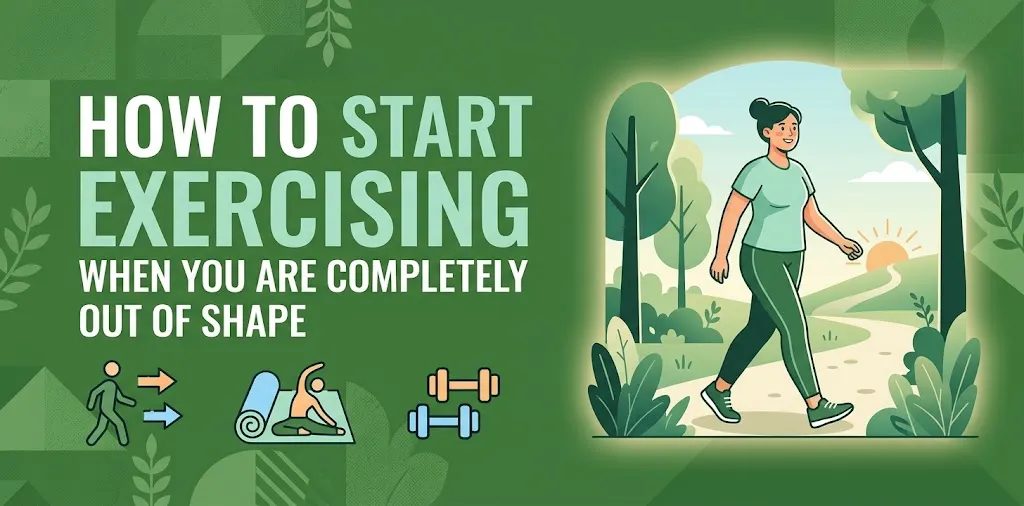
If you feel completely out of shape, the hardest part of exercise is often starting. You may get tired quickly, feel weak, worry about getting hurt, or simply not know what workout to do. The good news is that you do not need to be fit before you begin. You can start with a few minutes of easy movement and slowly build your stamina, strength, and confidence.
Start Smaller Than You Think
When you have not exercised for a long time, your first goal should not be to complete a hard workout. Your first goal is to teach your body to move regularly.
For most beginners, walking is a practical starting point because you can control the speed, distance, and duration. Even short periods of activity count, and you can gradually increase your activity as your fitness improves.
A good starting workout might look like this:
- Walk slowly for 3–5 minutes.
- Continue at a comfortable pace for another 5 minutes.
- Slow down for 2–3 minutes.
- Stop while you still feel like you could have done a little more.
That may seem too easy, but that is the point. A workout you can repeat is more useful than a workout that leaves you exhausted and sore for several days.
Your first goal is consistency
Do not worry about burning a certain number of calories, reaching 10,000 steps, or completing a long workout.
For the first few weeks, focus on showing up.
If five minutes is all you can comfortably manage, start with five minutes. As your body adapts, you can add a few minutes at a time. Mayo Clinic also recommends starting slowly and gradually increasing activity rather than trying to do too much at once.
Check Whether You Should Talk With a Health Professional First
Many generally healthy adults can begin with light activity, but some people should get medical guidance before starting or changing an exercise program.
Consider talking with a healthcare professional if you have a chronic health condition, a recent injury, significant joint or muscle problems, or other health concerns that could affect exercise. The CDC specifically recommends consulting a healthcare professional or physical activity specialist when chronic conditions or disabilities require help choosing appropriate activities and amounts.
You also should not try to push through warning signs during exercise.
Stop exercising and seek appropriate medical advice if you experience symptoms that concern you, such as unusual chest pain, severe shortness of breath, fainting, or other serious symptoms.
You do not need a complicated medical test just because you have been inactive. The right approach depends on your health history and current condition.
Use Walking as Your Fitness Foundation
Walking is one of the easiest ways to start exercising when you are completely out of shape.
You do not need a gym membership, complicated equipment, or advanced exercise skills. You can walk outside, around your neighborhood, at a mall, on a treadmill, or even in short periods throughout your day.
Walking can improve cardiovascular fitness, endurance, physical function, mood, sleep, and overall health. Mayo Clinic recommends starting slowly when you are new to exercise and gradually increasing how long and how often you walk.
A simple four-week walking plan
This is an example for a generally healthy beginner. Adjust the time and pace if needed.
| Week | Walking plan | Main goal |
|---|---|---|
| Week 1 | 5–10 minutes, 4 days | Build the habit |
| Week 2 | 10–15 minutes, 4–5 days | Increase comfortable movement |
| Week 3 | 15–20 minutes, 4–5 days | Build endurance |
| Week 4 | 20–30 minutes, 5 days | Create a regular routine |
You do not have to follow these exact numbers. If Week 1 feels difficult, repeat it. If 10 minutes feels easy, you can gradually add time.
The important part is avoiding the idea that you must progress every workout.
Break exercise into smaller sessions
You do not have to exercise for 30 minutes in one session.
For example, you could take:
- A 10-minute walk in the morning
- A 10-minute walk after lunch
- A 10-minute walk in the evening
Short periods of activity can be useful, especially when a longer workout feels overwhelming. Mayo Clinic notes that activity can be divided into shorter sessions during the day.
Add Basic Strength Training
Walking is a great starting point, but a balanced fitness routine eventually needs some form of strength training.
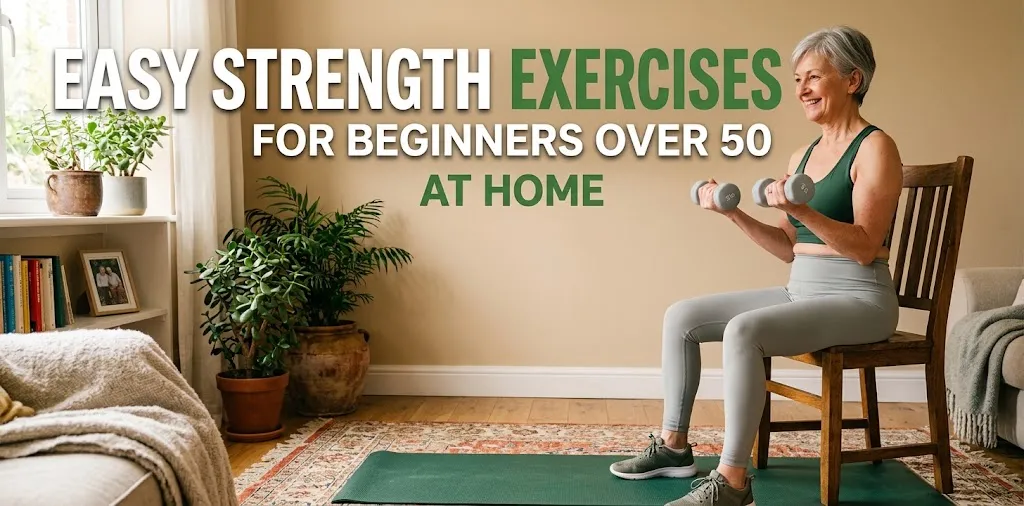
Strength exercises help you work the major muscle groups and can be done at home without a traditional gym. Bodyweight movements, resistance bands, light dumbbells, and machines are all possible options. Mayo Clinic recommends including strength training as part of a balanced fitness routine.
If you are very deconditioned, you do not need to begin with heavy weights.
Start with simple movements such as:
- Sitting down and standing up from a sturdy chair
- Wall push-ups
- Supported calf raises
- Light resistance-band rows
- Gentle step-ups using a stable, low step
- Light dumbbell exercises
Perform each movement slowly and with control.
A beginner strength workout
Try this simple routine once or twice a week, with rest between strength sessions:
- Chair sit-to-stands — 5–8 repetitions
- Wall push-ups — 5–8 repetitions
- Supported calf raises — 8–10 repetitions
- Resistance-band rows — 5–10 repetitions
- Gentle step-ups — 5 repetitions per leg
You do not need to complete several sets when you are starting. One easy set may be enough.
The goal is to practice the movements and gradually become stronger.
Do Not Start With Running
Running can be an excellent form of exercise, but it is not automatically the best first exercise for someone who is completely out of shape.
If walking for 10–20 minutes is already difficult, immediately starting a running program can put more stress on your muscles and joints than they are ready to handle.
A better progression may be:
Sitting more → moving more → easy walking → longer walking → brisk walking → walk-run intervals → running
There is no requirement to reach the running stage.
If your goal is eventually to run, build your walking endurance first. Then you can introduce short periods of easy jogging between walking intervals.
Learn How Hard You Should Exercise
One of the biggest beginner mistakes is assuming that a workout must leave you exhausted to be effective.
It does not.
When you are starting from a low fitness level, most of your early workouts should feel manageable. You should finish feeling that you worked, but not as though you have nothing left.
A simple way to judge intensity is the talk test.
- Easy: You can speak comfortably.
- Moderate: You can talk, but you are breathing faster.
- Hard: Talking becomes difficult because you are breathing heavily.
For someone starting from a very low fitness level, easy activity is often the right place to begin.
As your fitness improves, you can spend more time at moderate intensity.
Build Toward the Recommended Activity Level
The long-term U.S. guideline for adults is at least 150 minutes of moderate-intensity aerobic activity per week, or 75 minutes of vigorous activity, plus muscle-strengthening activity on at least two days per week.
But do not treat 150 minutes as a starting requirement if you currently do almost nothing.
The guidelines also recognize that some physical activity is better than none.
Think of 150 minutes as a destination rather than your first workout.
For example:
Month 1: Build a movement habit.
Month 2: Increase walking time and add basic strength training.
Month 3: Work toward longer moderate-intensity sessions.
Your actual timeline may be faster or slower. There is no prize for progressing quickly.
Create a Simple Weekly Routine
A beginner routine does not need to fill every day with workouts.
One practical starting schedule could look like this:
| Day | Activity |
|---|---|
| Monday | 10–15 minute walk |
| Tuesday | Rest or gentle movement |
| Wednesday | 10–15 minute walk + basic strength |
| Thursday | Rest or short easy walk |
| Friday | 15-minute walk |
| Saturday | Basic strength + short walk |
| Sunday | Rest or relaxed movement |
If this feels like too much, reduce the duration.
If it feels easy after several weeks, gradually increase the walking time or add a few repetitions to your strength exercises.
Focus on Movement Outside Your Workouts
Exercise does not have to happen only during a formal workout.
You can make your normal day more active by:
- Taking short walking breaks
- Parking farther from a store
- Taking stairs when appropriate
- Walking while talking on the phone
- Doing household chores
- Standing up regularly when you have been sitting for a long time
- Taking a short walk after a meal
Mayo Clinic notes that small activity breaks can help people build more movement into their day.
These small choices are especially useful when the idea of a full workout feels intimidating.
Make Your First Workouts Easy to Repeat
A good beginner workout has three qualities:
It is manageable. You can finish without feeling destroyed.
It is convenient. You can do it without major barriers.
It is repeatable. You can do something similar again in a day or two.
This is why a 10-minute walk may be a better choice than a 60-minute boot-camp class when you are starting from zero.
The best exercise is not necessarily the one that burns the most calories. It is the one you can perform safely and keep doing.
Choose Exercise You Do Not Hate
You do not have to use a treadmill or lift weights if you dislike both.
Other options include:
- Swimming
- Water aerobics
- Stationary cycling
- Dancing
- Beginner yoga
- Easy hiking
- Low-impact fitness classes
- Recreational sports
- Walking with a friend
Different activities can also reduce boredom and spread the physical demands across different muscles and joints. Mayo Clinic recommends variety and cross-training as part of a balanced fitness program.
Example: If you hate the gym
Imagine you work at a desk and have not exercised regularly for several years.
Instead of buying a gym membership and promising to work out six days a week, you could start with a 10-minute evening walk four days a week.
After a couple of weeks, you might increase the walk to 15 minutes. Then you could add two short home strength sessions each week.
That plan may look less impressive than an intense gym routine, but it has a much better chance of becoming a lasting habit if it fits your life.
Example: If walking hurts your joints
Suppose walking causes discomfort because of a joint problem or another health issue.
That does not mean you cannot become more active. Lower-impact options such as water exercise or stationary cycling may provide alternatives, but the right activity depends on the reason for your discomfort. If you have an injury or health condition, ask a healthcare professional about appropriate exercise options.
Avoid the Most Common Beginner Mistakes
Starting exercise is usually not the difficult part. Starting at the right level is.
Doing too much too soon
You may feel motivated on Day 1 and decide to exercise for an hour.
Then you become extremely sore, tired, or discouraged and stop.
Instead, finish your early workouts feeling capable of doing more.
Trying to make up for years of inactivity
You cannot erase years of inactivity with one hard workout.
Fitness develops over repeated sessions. Give your body time to adapt.
Exercising only for weight loss
Weight loss may be one reason to exercise, but it does not have to be the only reason.
You can also measure progress by:
- Walking farther
- Breathing more comfortably
- Getting stronger
- Sleeping better
- Having more energy
- Completing everyday tasks more easily
- Staying consistent
These changes can help you stay motivated when the scale does not change quickly.
Comparing yourself with fit people
A beginner’s workout may look very different from an experienced person’s workout.
That is normal.
Compare your current ability with where you started, not with someone who has been training for years.
Treating soreness as proof of a good workout
Being extremely sore does not mean you had a better workout.
Your goal is to challenge your body enough to adapt while giving it enough recovery time.
Mayo Clinic recommends allowing recovery between sessions and paying attention to symptoms such as pain, shortness of breath, dizziness, or nausea.
Know the Difference Between Effort and Pain
Exercise can feel challenging. Your breathing may become faster, your muscles may feel tired, and you may sweat.
Pain is different.
Do not assume that pain is something you must push through to become fit.
If a movement causes sharp, severe, or worsening pain, stop and reassess it. Persistent pain may require professional evaluation, especially if you have an existing injury or medical condition.
Track Progress Without Obsessing Over It
You do not need an expensive fitness tracker to see progress.
Write down:
- How many days you exercised
- How long you walked
- How difficult the session felt
- Which strength exercises you performed
- Any movements that caused discomfort
For example, your notes might show:
Week 1: 5-minute walks felt difficult.
Week 3: 10-minute walks felt manageable.
Week 6: 20-minute walks felt comfortable.
That is real progress, even if your weight has not changed.
Mayo Clinic recommends using baseline measurements and reassessing fitness over time rather than relying only on how you feel from one workout to the next.
What to Do When You Lose Motivation
Motivation is unreliable.
Instead of waiting to feel motivated, make exercise part of your routine.
Try:
- Exercising at the same time each day
- Putting your walking shoes somewhere visible
- Scheduling workouts on your calendar
- Asking a friend to walk with you
- Listening to music or a podcast while walking
- Keeping workouts short enough that they do not feel overwhelming
- Preparing your clothes the night before
If you miss a workout, do not turn one missed day into a missed month.
Simply return to your routine at the next opportunity.
What Equipment Do You Actually Need?
For the first stage, very little.
You may only need:
- Comfortable clothing
- Supportive shoes appropriate for your activity
- A safe place to walk
- A chair or wall for certain beginner exercises
Optional equipment can come later.
You do not need to buy a treadmill, expensive smartwatch, supplement, home gym, or complicated workout system before you start.
Start with what you already have.
How Long Does It Take to Get Back in Shape?
There is no single timeline.
Your progress depends on factors such as your starting fitness level, age, health, sleep, activity history, consistency, and the type of exercise you do.
You may notice small improvements in energy or endurance fairly early, while larger changes in strength and cardiovascular fitness generally require consistent training over time.
Do not judge your progress after one or two workouts.
Give your routine enough time to become a habit and your body enough time to adapt.
A Simple 30-Day Starting Plan
If you need something concrete, use this as a starting framework.
Days 1–7: Get moving
Walk for 5–10 minutes on four days.
Keep the pace comfortable. Your goal is simply to establish the habit.
Days 8–14: Add a little time
Walk for 10–15 minutes on four or five days.
Add one short strength session if you feel ready.
Days 15–21: Build endurance
Walk for 15–20 minutes on four or five days.
Complete two short strength sessions during the week.
Days 22–30: Build your routine
Work toward 20–30 minutes of walking on most active days if your body tolerates it.
Continue basic strength training twice during the week.
If any stage feels too difficult, repeat the previous stage instead of forcing progress.
The plan is meant to give you a direction, not create a deadline.
Frequently Asked Questions
Can I start exercising if I am extremely overweight and out of shape?
Yes, many people can begin with low-impact activities such as short walks or other comfortable movements, but the appropriate starting point depends on your health and physical limitations. If you have a medical condition, injury, or significant concerns about exercise, talk with a healthcare professional before starting.
How long should a completely out-of-shape person exercise?
Start with an amount you can manage consistently, even if that is only 5–10 minutes. Gradually increase your activity as your fitness improves rather than trying to reach the adult guideline of 150 minutes of moderate activity immediately.
Should I walk or lift weights first?
For someone starting from a very low fitness level, walking is often an easy way to build basic endurance and movement habits. You should also gradually add strength training because a balanced fitness routine includes both aerobic activity and muscle-strengthening work.
Start With the Easiest Version You Can Repeat
If you are completely out of shape, you do not need to prove anything with your first workout.
Put on comfortable shoes and take a short walk. If 10 minutes feels like too much, walk for five. If five minutes is difficult, start with less and build gradually.
Your first milestone is not running a mile or spending an hour at the gym. It is becoming someone who moves regularly.
Once that habit is established, you can slowly increase your walking time, add strength exercises, and work toward the U.S. physical activity guidelines. Start easy enough that you can come back and do it again.