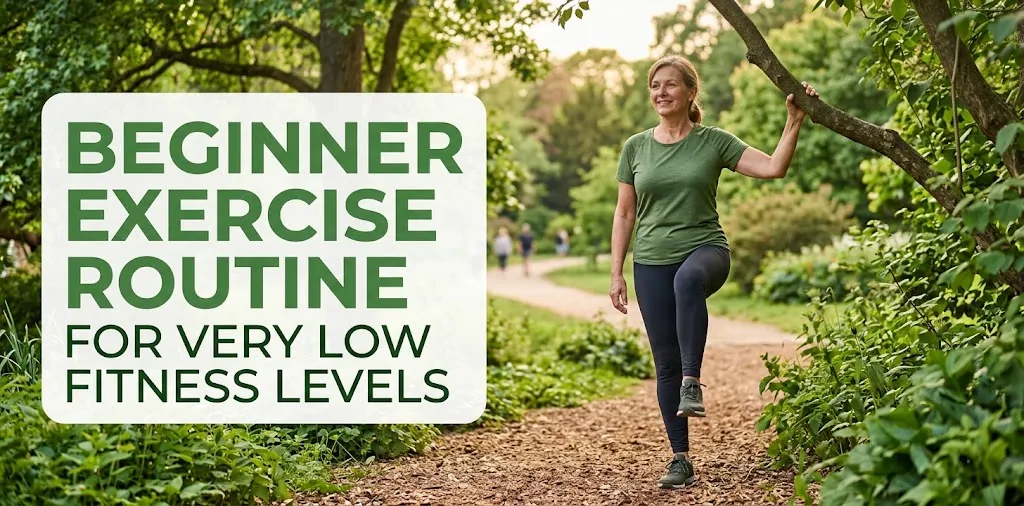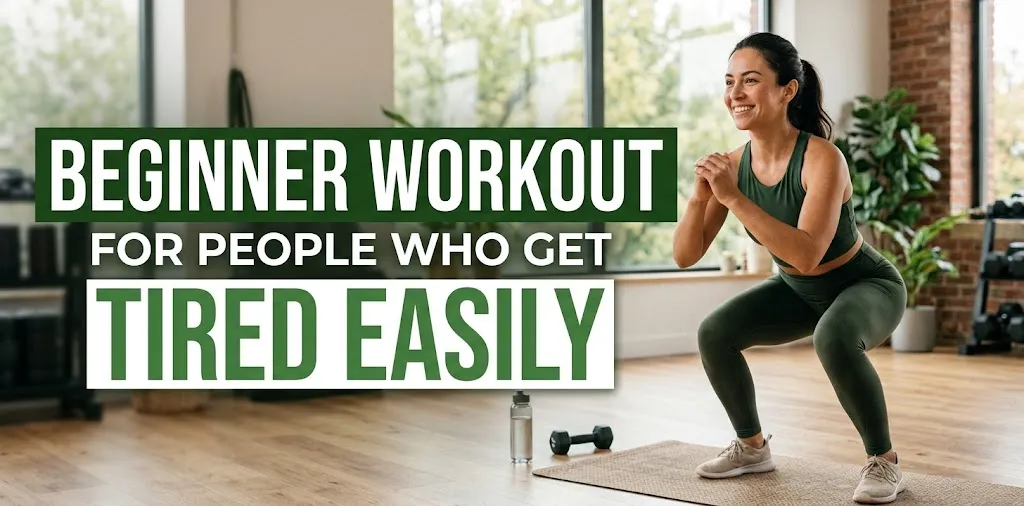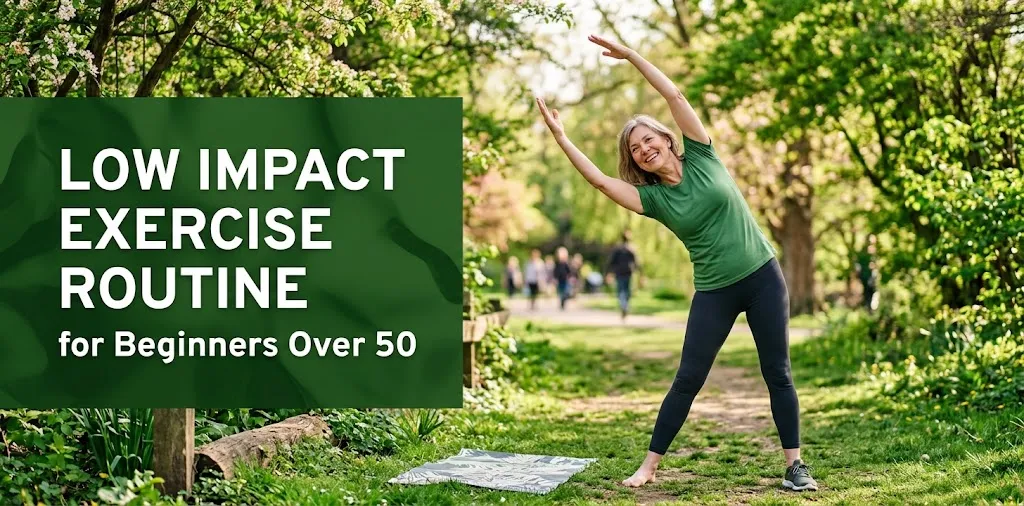
Starting exercise from zero can feel harder than it sounds. If you have been inactive for months or years, a full gym workout is usually not the best first step. A better approach is to begin with short, low-impact sessions that build movement, balance, strength, and confidence without leaving you exhausted.
The goal is not to get fit in one week. The goal is to make exercise feel manageable enough that you can keep doing it.
A Gentle Workout Plan for Starting From Zero
A gentle beginner workout can start with about 10–15 minutes of easy movement, three days per week. Begin with walking, simple bodyweight exercises, and light stretching. As your body adapts, slowly increase the time or number of exercises rather than trying to exercise hard right away.
For adults who are currently inactive, a good long-term goal is to gradually work toward 150–300 minutes of moderate aerobic activity each week, plus muscle-strengthening activity on at least 2 days per week. You do not need to reach that amount immediately. Start small and build gradually.
| Day | Activity | Time |
|---|---|---|
| Monday | Gentle full-body workout | 10–15 minutes |
| Tuesday | Rest or easy daily movement | — |
| Wednesday | Walking + simple strength | 10–15 minutes |
| Thursday | Rest | — |
| Friday | Gentle full-body workout | 10–15 minutes |
| Saturday | Optional easy walk | 10–20 minutes |
| Sunday | Rest | — |
You do not need to follow this schedule perfectly. If three workout days feel like too much, start with two.
The 10-Minute Beginner Workout
This routine is designed for someone who has very little exercise experience. You can do it at home without a gym or special equipment.
1. Easy marching in place — 2 minutes
Stand tall and slowly march in place.
Keep your steps comfortable. You do not need to lift your knees high.
If standing for two minutes is difficult, march for 30 seconds, rest, and repeat.
2. Chair sit-to-stands — 5 to 8 repetitions
Use a sturdy chair.
- Sit near the front of the chair.
- Place your feet about hip-width apart.
- Lean forward slightly.
- Stand up slowly.
- Sit back down with control.
This simple movement works your legs and hips while also practicing a movement you use in everyday life.
If standing without your hands is difficult, use the chair or another stable support for assistance.
3. Wall push-ups — 5 to 8 repetitions
Stand facing a wall with your hands against it.
Keep your body in a straight line as you slowly bend your elbows and bring your chest toward the wall. Then gently push yourself back.
Wall push-ups are an easier starting point than floor push-ups.
4. Heel raises — 8 to 10 repetitions
Hold a sturdy chair or countertop for balance.
Slowly lift your heels until you are standing on your toes. Pause briefly, then lower your heels.
Move slowly instead of bouncing.
5. Gentle side steps — 30 to 60 seconds
Step to one side, bring your other foot over, and continue moving from side to side.
Keep the steps small.
If balance is a concern, stay near a sturdy support.
6. Easy walking — 2 to 3 minutes
Finish with a slow walk around your home, outside, or on a treadmill.
The purpose is simply to keep moving and let your body gradually return to a resting state.
How Hard Should a Beginner Workout Feel?
When starting from zero, your workout should feel easy to somewhat challenging—not like a test of how much pain you can tolerate.
A useful rule is the talk test. During moderate activity, you should generally be able to talk but not sing comfortably. If you cannot say a short sentence without stopping for breath, slow down.
You also do not need to feel sore the next day for the workout to have been worthwhile.
For a beginner, success might simply mean:
- You completed the planned session.
- You moved a little more than usual.
- You finished without feeling completely drained.
- You can imagine doing the workout again in a few days.
That is a strong starting point.
A 4-Week Progression From Zero
The biggest mistake beginners make is increasing everything at once. Instead, give your body time to adjust to regular movement.
Week 1: Build the habit
Exercise for about 10–15 minutes, two or three days during the week.
Focus on learning the movements and finishing each session feeling capable of doing a little more.
Week 2: Add a little time
Increase your sessions to about 15–20 minutes if Week 1 felt comfortable.
You can add a few minutes of walking or repeat one or two of the strength exercises.
Week 3: Add another round
Keep the exercises easy, but consider doing two rounds of the basic movements.
For example:
- 2 minutes marching
- 6–10 chair sit-to-stands
- 6–10 wall push-ups
- 10 heel raises
- 1 minute side steps
- 3–5 minutes walking
Rest whenever needed.
Week 4: Build toward a regular routine
Aim for about 20–25 minutes per session on three days of the week.
You can also add more walking on your non-workout days.
At this point, the goal is not to make every workout harder. It is to create a routine you can maintain.
What to Do on Days You Do Not Work Out
Starting exercise does not mean every active moment needs to be a workout.
Your regular day can include simple movement such as:
- Walking around the house
- Taking a short walk after a meal
- Using stairs when comfortable
- Doing household chores
- Standing up regularly if you sit for long periods
- Walking while talking on the phone
- Parking farther away when practical
The goal is to move more throughout the day instead of spending most of the day sitting.
You Do Not Need a Gym to Start
A beginner can make meaningful progress without buying equipment.
A simple routine can use:
- A sturdy chair
- A wall
- Comfortable walking shoes
- A small open space
- Optional resistance bands later
You can add dumbbells or other equipment once basic movements become comfortable. There is no need to buy a complete home gym before you know what type of exercise you enjoy.
How to Know When You Are Ready to Progress
Do not increase the difficulty simply because you have completed a certain number of days.
Instead, look for signs that your current routine has become comfortable.
You may be ready to progress when:
- You finish the workout without feeling wiped out.
- Your movements feel more controlled.
- You recover normally between sessions.
- The same number of repetitions feels easier.
- You can walk longer without needing frequent breaks.
- You feel confident performing the exercises.
When that happens, change one thing at a time.
For example, you might add five minutes to a walk. Or you might add two repetitions to an exercise. You do not need to increase duration, repetitions, intensity, and frequency all at once.
What If You Cannot Do the Full Workout?
That is completely fine.
A 10-minute workout is not a failure because someone else exercised for 30 minutes.
If you are having a difficult day, use a smaller version:
2 minutes: Walk around the room.
5 minutes: March, do a few chair sit-to-stands, and walk.
10 minutes: Complete the full beginner routine.
Small amounts of activity are a reasonable starting point when you have been inactive.
This also helps prevent the all-or-nothing mindset that causes people to stop exercising.
Two Realistic Examples
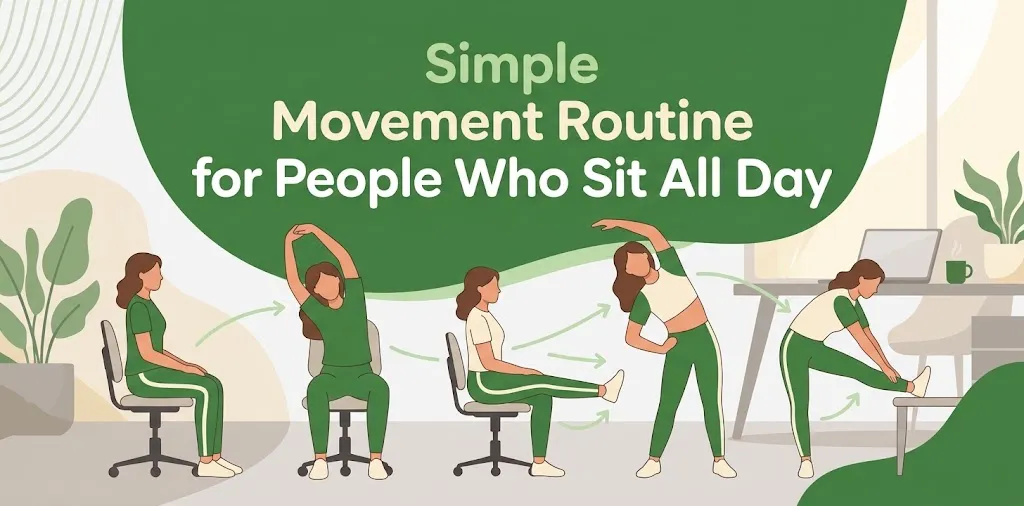
Example 1: Someone who sits at a desk all day
Imagine a person who works from home and spends most of the day sitting.
Instead of starting with a one-hour gym workout, they could begin with a 10-minute routine on Monday, Wednesday, and Friday. They could also take a five-minute walk during one or two breaks.
After several weeks, the person could gradually extend the walks and add another strength session.
The important change is that exercise becomes part of the person’s normal week instead of an occasional extreme effort.
Example 2: Someone who feels very out of shape
A person who gets tired quickly may start with just five minutes of easy movement.
They could walk slowly for two minutes, perform a few chair sit-to-stands, do several wall push-ups, and finish with another short walk.
If five minutes is manageable, they can gradually move toward 10 minutes. There is no requirement to start at the same level as someone who has been exercising for years.
Common Beginner Mistakes to Avoid
Starting too hard
A common mistake is trying to make the first workout prove something.
Hard workouts can leave a beginner extremely sore or exhausted and make the next workout feel unpleasant.
Start easier than you think you need to.
Trying to exercise every day
Daily movement can be helpful, but a person starting from zero does not need a demanding workout every day.
Recovery days give you time to adjust to a new routine.
Copying advanced workouts
A workout designed for an experienced lifter, runner, or athlete may be far too difficult for someone who has been inactive.
Choose exercises that match your current ability rather than someone else’s fitness level.
Ignoring pain
Mild muscle tiredness is different from sharp, severe, or unusual pain.
If an exercise causes pain, stop and reassess the movement rather than trying to push through it.
Focusing only on weight loss
Weight can be one reason to exercise, but it does not need to be your only measure of progress.
You may also notice that walking feels easier, daily tasks require less effort, or you have more confidence moving your body.
When Should You Talk With a Health Professional?
Many healthy adults can begin with light activity, but people with known medical conditions or symptoms should get appropriate medical guidance about the type and amount of exercise that is suitable for them.
If you experience chest discomfort, severe shortness of breath, fainting, or other serious symptoms during exercise, stop and seek appropriate medical attention.
If you have a significant heart condition, have recently had heart surgery, or are recovering from another serious medical issue, ask your healthcare professional whether you need a supervised exercise program.
How Long Until Exercise Starts Feeling Easier?
There is no exact timeline because people begin at different fitness levels.
Someone who starts with five minutes of walking may notice improvements at a different pace than someone who can already exercise for 20 minutes.
Instead of waiting for a dramatic change, watch for small signs:
- You recover faster after walking.
- You can stand up from a chair more easily.
- You need fewer breaks.
- Your walking pace naturally increases.
- You feel less nervous about exercising.
- Your workout feels more routine than intimidating.
These small changes are useful signs that your starting point is moving forward.
How to Make the Routine Easier to Stick With
The best workout is one you are willing to repeat.
Try attaching exercise to something already in your routine. For example, take a short walk after lunch or do your beginner routine after finishing work.
Keep your workout clothes and shoes easy to reach. Choose activities you do not hate. If you prefer walking to home workouts, walk. If you prefer exercising while watching TV, use that time for simple movements.
You also do not need to wait for motivation. Having a simple plan removes some of the daily decision-making.
A useful goal is:
“I will move for 10 minutes on Monday, Wednesday, and Friday.”
That is easier to act on than:
“I need to get in shape.”
What Should You Aim for Long Term?
The long-term target for most adults is at least 150 minutes of moderate-intensity aerobic activity each week, along with muscle-strengthening activity on at least two days per week.
A simple long-term week might eventually look like:
| Activity | Example |
|---|---|
| Walking or other aerobic activity | 20–30 minutes on several days |
| Strength training | 2 days per week |
| Light daily movement | Short walks, chores, stairs, standing breaks |
| Recovery | Easier days between harder sessions |
Your final routine does not need to look exactly like this. The best schedule depends on your health, fitness, preferences, and available time.
Frequently Asked Questions
What is the easiest workout to start with if I have never exercised?
Walking is one of the simplest choices because it requires little equipment and can be adjusted easily. You can also combine short walks with chair sit-to-stands, wall push-ups, and gentle mobility exercises.
How many days a week should a complete beginner work out?
Start with two or three planned workout days per week. If that feels manageable, gradually increase your activity while keeping some easier days for recovery.
Can I get fit with only 10 minutes of exercise a day?
Ten minutes is a useful starting point, especially if you are currently inactive. Over time, gradually increase your activity toward the recommended amount of weekly aerobic and strength activity.
Start Smaller Than You Think
If you are starting from zero, you do not need a perfect workout plan, expensive equipment, or a huge burst of motivation. Start with 10 minutes, two or three days a week, and choose movements that feel safe and manageable.
Your first goal is simply to become someone who exercises regularly. Once that habit is established, increasing your walking time, strength, and overall activity becomes much easier.
Start with the smallest routine you can realistically repeat this week, then build from there.