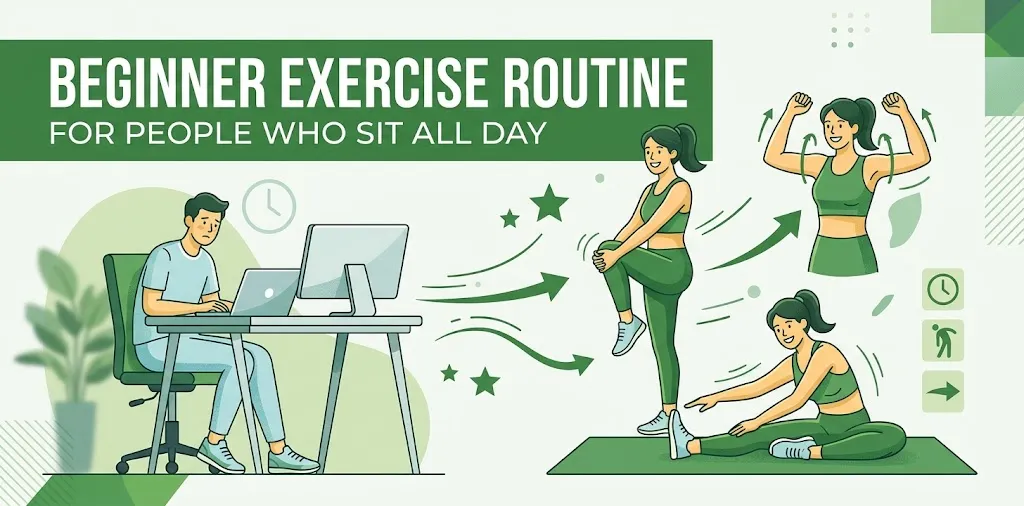
If you spend most of your workday sitting at a desk, driving, or working from home, starting an exercise routine does not have to mean joining a gym or doing hard workouts. The best beginner routine combines short movement breaks during the day with walking, basic strength exercises, and gentle mobility work. Start small, build gradually, and focus on making movement a regular part of your day.
Why Sitting All Day Changes How You Should Exercise
Long periods of sitting can leave your body feeling stiff, especially around the neck, shoulders, back, hips, and legs. Regular movement breaks can help reduce stiffness, while a consistent exercise routine can improve your overall fitness.
The key is not to try to undo an entire day of sitting with one exhausting workout. Think of your routine as having two parts:
- Move throughout the workday: Stand, walk, or stretch regularly.
- Exercise outside work: Build cardiovascular fitness and muscle strength with planned workouts.
This approach is usually easier for beginners to maintain than jumping straight into intense exercise.
A Simple Weekly Routine for Beginners
For most healthy adults, a long-term goal is at least 150 minutes of moderate-intensity aerobic activity each week plus muscle-strengthening activity on at least 2 days. You do not need to reach that amount immediately. Start slowly and build toward your goal.
| Day | Main Activity | Time |
|---|---|---|
| Monday | Easy walk + basic strength | 20–25 minutes |
| Tuesday | Easy walk + mobility | 15–25 minutes |
| Wednesday | Basic strength + short walk | 20–25 minutes |
| Thursday | Easy walk + mobility | 15–25 minutes |
| Friday | Easy walk + basic strength | 20–25 minutes |
| Saturday | Longer comfortable walk | 25–40 minutes |
| Sunday | Rest or gentle movement | 5–15 minutes |
If this feels like too much, cut the workout time in half. Consistency matters more than starting with a perfect schedule.
The 15-Minute Beginner Workout
You can do this routine at home with little or no equipment. Move slowly and concentrate on controlled movements rather than trying to finish as quickly as possible.
1. Chair Squats
Stand in front of a sturdy chair with your feet about shoulder-width apart. Push your hips back and lower yourself toward the chair, then stand again.
Start with 8–10 repetitions.
If a full squat feels difficult, lower only partway. As you get stronger, gradually increase your range of motion.
2. Wall Push-Ups
Place your hands on a wall around chest height. Step your feet back, bend your elbows, and bring your chest toward the wall. Push yourself back to the starting position.
Start with 8–12 repetitions.
Wall push-ups are a useful starting point if floor push-ups feel too difficult.
3. Glute Bridges
Lie on your back with your knees bent and feet flat on the floor. Tighten your abdominal muscles gently and lift your hips until your body forms a comfortable line from your shoulders toward your knees. Lower slowly.
Start with 8–12 repetitions.
4. Standing Calf Raises
Hold the back of a sturdy chair for balance. Slowly raise your heels, pause briefly, and lower them back down.
Start with 10–15 repetitions.
5. Bird Dog
Start on your hands and knees. Slowly extend one arm and the opposite leg while keeping your torso steady. Return to the starting position and switch sides.
Start with 6–8 repetitions per side.
If getting onto the floor is uncomfortable, skip this exercise and use a standing balance exercise instead.
6. Marching in Place
Stand tall and gently march in place. Swing your arms naturally and keep the pace comfortable.
Continue for 1–2 minutes.
This gives you a simple way to raise your heart rate without needing a treadmill, bike, or other equipment.
How to Add Movement During a Workday
A workout cannot replace every hour of sitting. Build small movement opportunities into your normal day instead.
Try these simple habits:
- Stand while talking on the phone.
- Walk around during a short break.
- Take the stairs when practical.
- Walk to get water instead of keeping a bottle within arm’s reach.
- Do a few shoulder rolls after a long period at your computer.
- Walk during a meeting when the situation allows.
- Park farther away when it is safe and practical.
- Take a short walk after lunch.
- Set a computer or phone reminder to change position.
- Stretch gently while waiting for a meeting or call to begin.
You do not need every break to become an exercise session. The goal is simply to spend less time sitting continuously.
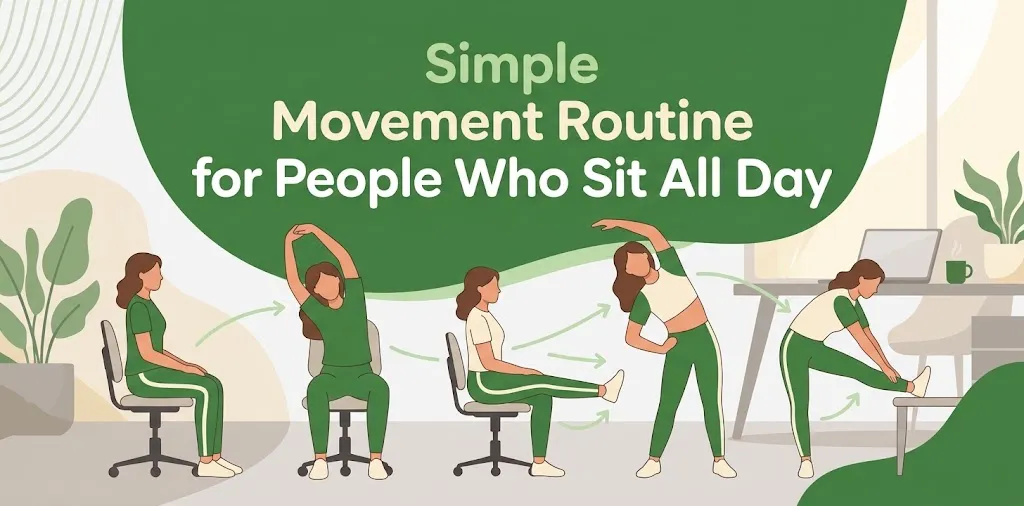
A 5-Minute Desk Movement Break
When you have been sitting for a long time, try this short sequence:
- Stand and walk: 1 minute
- Shoulder rolls: 10 slow repetitions
- Chest-opening movement: 20–30 seconds
- Gentle standing side stretch: 20 seconds per side
- Calf raises: 10–15 repetitions
- Walk again: 1 minute
Keep the movements comfortable. You should not force a stretch or bounce into a position.
How Much Walking Should a Beginner Do?
Walking is one of the easiest ways to build an exercise habit because you can adjust the pace and duration to your current fitness level.
If you have been mostly inactive, begin with 10–15 minutes of comfortable walking on most days. After a week or two, if that feels easy, add a few minutes or slightly increase your pace.
For example:
- Week 1: 10–15 minutes, 4 days
- Week 2: 15–20 minutes, 4–5 days
- Week 3: 20–25 minutes, 5 days
- Week 4: 25–30 minutes, 5 days
You do not have to follow these exact numbers. Your starting point should depend on your fitness, comfort, schedule, and health.
Short bouts count too. You can divide weekly activity into smaller periods rather than completing it in one long workout.
How Hard Should Exercise Feel?
A common beginner mistake is assuming every workout needs to leave you exhausted.
For moderate-intensity activity, you should be breathing harder but still able to speak. If a comfortable walk already feels challenging, there is no need to force yourself into a faster pace.
Use effort as a guide:
| Effort | What It May Feel Like |
|---|---|
| Easy | Comfortable breathing and conversation |
| Moderate | Breathing faster but still able to talk |
| Hard | Talking becomes difficult |
| Very hard | You need to stop or slow down quickly |
Your fitness level matters. The same walking speed can feel easy for one person and challenging for another.
How to Progress Without Getting Hurt
Once your routine starts feeling easier, increase the challenge gradually.
Do not increase everything at once. You can progress by:
- Walking for 5 more minutes.
- Adding another workout day.
- Increasing your walking pace slightly.
- Adding a few repetitions.
- Moving from wall push-ups to countertop push-ups.
- Using a resistance band.
- Adding light weights.
- Performing another set of an exercise.
For strength training, work the major muscle groups and use body weight, resistance bands, weights, or other forms of resistance.
A useful rule is to change one thing at a time. If you suddenly increase workout duration, intensity, and resistance together, it becomes harder to know what caused excessive soreness or discomfort.
What to Do If Your Hips, Back, or Shoulders Feel Tight
People who sit for long periods often notice stiffness when they first start moving again. That does not mean you need an aggressive stretching routine.
Start with gentle movement:
- Walk for a few minutes.
- Roll your shoulders slowly.
- Stand and change positions regularly.
- Perform gentle hip movements.
- Stretch your calves.
- Open your chest with a comfortable stretch.
- Take short movement breaks during work.
Avoid forcing a tight area into a deep stretch. The purpose of these movements is to help you move comfortably, not to push through pain.
If pain is persistent, severe, worsening, or interfering with normal activity, speak with a qualified healthcare professional rather than trying to exercise through it.
What Beginners Should Avoid
You do not need to start with running, high-intensity intervals, heavy weights, or long gym sessions.
Avoid these common mistakes:
Starting Too Hard
Going from almost no exercise to intense daily workouts can leave you extremely sore and make it difficult to continue.
Treating Soreness as the Goal
A workout does not need to make you sore to be useful. Progress should be based on improved strength, endurance, movement, and consistency.
Ignoring Workday Sitting
A 30-minute workout is useful, but spending the other 10 hours sitting without breaks still leaves you with a very sedentary day. Add movement throughout the day as well.
Chasing Perfect Numbers
You do not need exactly 10,000 steps, exactly 30 minutes, or a specific workout every day. Start with an amount you can repeat and build from there.
Using Pain as a Training Signal
Muscle effort can be normal. Sharp, severe, or unusual pain is a reason to stop and reassess the exercise.
A Realistic Office-Worker Example
Imagine someone who works from home and spends most of the day at a computer.
Instead of trying to complete a difficult one-hour workout after work, they could begin with a 15-minute walk before work, take several short movement breaks during the day, and complete the beginner strength routine three times per week.
After several weeks, they might gradually increase their walks and strength sessions.
The important change is not one dramatic workout. It is turning movement into part of the daily schedule.
A Realistic Long-Commute Example
Someone who drives to work may have little control over how long they sit during the commute.
They could focus on the parts of the day they can control:
- Walk for 10 minutes before leaving home.
- Take a short walking break at work.
- Use stairs when practical.
- Walk for 10–20 minutes after dinner.
- Complete two short strength sessions during the week.
This approach can make exercise feel much more manageable than trying to find one large block of free time.
When to Talk With a Healthcare Professional
Physical activity is beneficial for most people, but your starting plan should account for your health and abilities.
If you have a chronic health condition or disability and need guidance about the right type and amount of activity, talk with a healthcare professional. If you have been inactive and plan to begin vigorous exercise, you may also want to discuss your plan with a doctor.
Stop exercising and seek appropriate medical guidance if you experience concerning symptoms such as chest discomfort, severe shortness of breath, dizziness, or unusual pain.
If you are unsure about an exercise, start with an easier version or ask a qualified professional to help you modify it.
Frequently Asked Questions
Is 20 minutes of exercise enough for someone who sits all day?
Twenty minutes is a useful starting point, especially if you are currently inactive. Over time, work toward 150 minutes of moderate activity per week and at least two days of muscle-strengthening activity, while also reducing long periods of sitting.
What is the best exercise for people who sit at a desk all day?
Walking is a simple starting choice because it requires little equipment and can be adjusted to your fitness level. Combine walking with basic strength exercises and regular movement breaks so your routine is not limited to one type of activity.
Should I exercise before or after work if I sit all day?
Either can work. Choose the time you are most likely to maintain, then add short movement breaks during the workday so you are not sitting continuously until your main workout.
Make Movement Part of Your Normal Day
The best beginner exercise routine for someone who sits all day is not the hardest workout you can tolerate. It is a routine you can repeat.
Start with short walks, two or three simple strength sessions each week, and regular breaks from sitting. As your body becomes more comfortable with movement, slowly increase your time or intensity.
One practical tip: put your movement breaks on your calendar just like meetings. When exercise and short walks become scheduled parts of your day, you are less likely to rely on motivation alone.