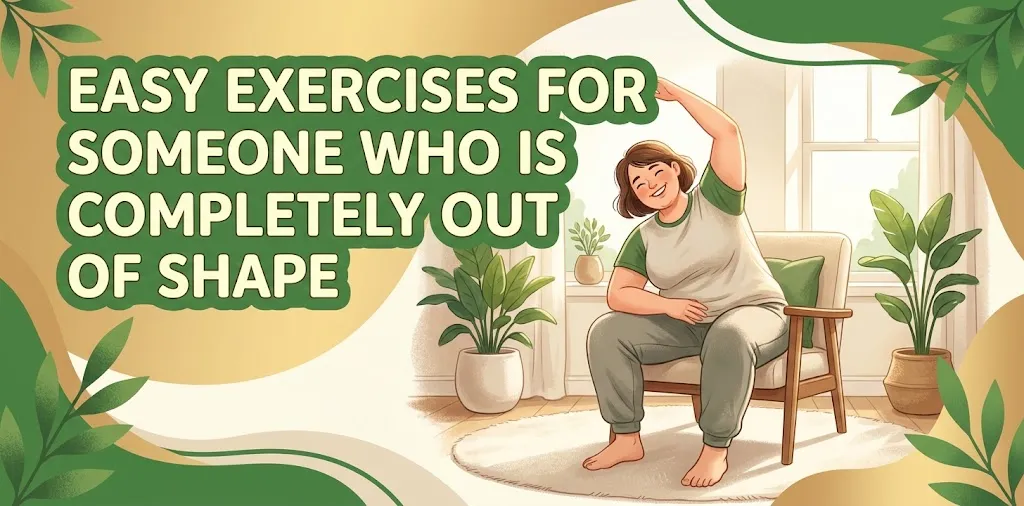
Starting exercise when your fitness level is very low can feel harder than it sounds. You may get tired quickly, feel unsure about what exercises to choose, or worry that a normal beginner workout is still too difficult.
The good news is that you do not need to start with long workouts, running, heavy weights, or intense classes. A better approach is to begin with small amounts of easy movement and slowly build your walking, strength, balance, and endurance over time.
What Is a Good Beginner Exercise Routine for Very Low Fitness Levels?
A good beginner exercise routine for very low fitness levels should use short, low-impact sessions that are easy to repeat. Start with about 5–10 minutes of comfortable movement, add simple strength exercises one or two days per week, and increase time or difficulty gradually as your body adapts.
The goal at first is not to get exhausted. The goal is to make exercise feel manageable enough that you can come back and do it again.
Before You Start
If you have been inactive for a long time, it is reasonable to begin cautiously rather than trying to match the workouts of people who already exercise regularly.
Healthy adults without chronic conditions or concerning symptoms can generally begin gradual physical activity without first seeing a health care provider. However, people with known medical conditions, significant movement limitations, or symptoms such as chest pain, dizziness, or unusual joint pain should talk with a health care professional about appropriate activity.
If you are unsure about your starting point, a doctor, physical therapist, or qualified exercise professional can help you choose appropriate exercises.
Your First 4 Weeks of Exercise
This plan is designed for someone who is currently doing very little structured exercise. You can stay at a particular week longer if the next level feels too difficult.
| Week | Cardio | Strength | Main Goal |
|---|---|---|---|
| Week 1 | 5–10 minutes, 4 days | Optional 1 day | Get used to moving |
| Week 2 | 10–15 minutes, 4–5 days | 1–2 days | Build consistency |
| Week 3 | 15–20 minutes, 4–5 days | 2 days | Improve endurance |
| Week 4 | 20–25 minutes, 4–5 days | 2 days | Build a steady routine |
You do not have to complete the entire session at once. If 10 minutes feels like too much, split it into two 5-minute sessions.
Week 1: Just Get Moving
Your first week should feel almost too easy.
Try:
- 5–10 minutes of comfortable walking
- Easy marching in place
- Gentle movement around your home
- Light household activity
- One short strength session if you feel ready
For walking, choose a pace that lets you breathe comfortably. You should finish thinking, “I could have done a little more.”
Do not worry about speed or distance.
If five minutes is your current limit, five minutes is enough to begin.
Week 2: Add a Little More Time
If Week 1 went well, increase your walking or other easy cardio sessions to about 10–15 minutes.
You can use this simple pattern:
- Walk slowly for 3 minutes.
- Walk at a comfortable pace for 5–8 minutes.
- Slow down for the final 2–3 minutes.
If you become unusually tired, shorten the session. Progress does not have to happen every workout.
Week 3: Build Endurance
By Week 3, aim for roughly 15–20 minutes of easy-to-moderate activity on most workout days.
You can still use short sessions if needed.
For example:
- 10 minutes in the morning
- 5–10 minutes after dinner
This approach can be especially useful if you spend much of the day sitting.
Week 4: Create a Routine You Can Keep
Once 20 minutes feels manageable, you can gradually work toward 20–25 minutes of activity on several days of the week.
At this point, the most important improvement is not necessarily exercising harder. It is becoming more consistent.
The long-term goal for adults is to work toward regular aerobic activity along with muscle-strengthening exercise. Someone starting from a very low fitness level does not need to reach that amount immediately. Build toward it gradually.
A Simple Low-Fitness Strength Routine
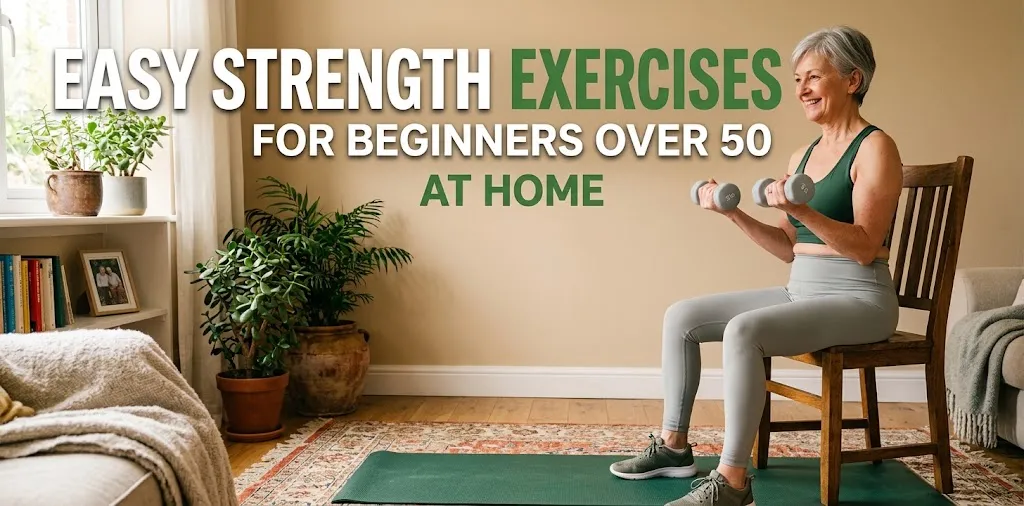
Strength training does not require a gym or heavy weights.
Start with movements that help you practice basic patterns such as sitting down, standing up, pushing, and supporting your body.
Try this routine once or twice per week:
| Exercise | Starting Amount | Easier Version |
|---|---|---|
| Chair sit-to-stand | 5–8 reps | Use your hands for support |
| Wall push-up | 5–8 reps | Stand closer to the wall |
| Standing calf raise | 5–10 reps | Hold a sturdy surface |
| Supported leg lift | 5–8 each side | Smaller movement |
| Seated knee lift | 5–10 each side | Slow the movement |
Rest between exercises whenever you need to.
Chair Sit-to-Stand
Sit in a sturdy chair and stand up slowly. Then sit back down with control.
This simple movement trains your legs and helps build strength for everyday tasks such as getting out of a chair or climbing stairs.
If standing is difficult, use your hands on the chair or another stable support.
Wall Push-Ups
Stand facing a wall with your hands against it. Bend your elbows to bring your chest closer to the wall, then push yourself back.
Wall push-ups are much easier than floor push-ups, making them useful when upper-body strength is limited.
Standing Calf Raises
Hold a sturdy chair, counter, or other stable surface. Slowly raise your heels, then lower them.
Keep the movement controlled rather than bouncing.
Supported Leg Lifts
Hold a stable surface and slowly move one leg backward or slightly to the side. Return it to the starting position and switch sides.
Use a small range of motion if needed.
The purpose is controlled movement, not how high you can lift your leg.
How Hard Should Exercise Feel?
For someone with very low fitness, intensity matters more than trying to complete a certain number of calories, steps, or miles.
A simple rule is:
Finish feeling like you worked, but not like you were pushed to your limit.
During easy cardio, you should generally be able to speak comfortably. If you are struggling to breathe or cannot comfortably talk, slow down or take a break.
You do not need to chase soreness. Being extremely sore after every workout is not a sign that the routine is working better.
What to Do If 10 Minutes Feels Too Hard
Reduce the workout instead of quitting completely.
Try one of these options:
- Walk for 3–5 minutes.
- Exercise while seated.
- March slowly in place for 1–2 minutes.
- Take a short movement break several times during the day.
- Do one or two strength exercises instead of a full routine.
- Rest and try again later.
Short periods of light or moderate activity can be a useful starting point for people who are inactive. Small increases in activity are still meaningful compared with doing nothing.
How to Progress Without Doing Too Much
A common mistake is increasing workout time, speed, frequency, and exercise difficulty at the same time.
Instead, change one thing at a time.
For example:
First: Increase a walk from 10 to 15 minutes.
Next: Keep the 15-minute walk but make a small increase in pace.
Later: Add another walking day or a second strength session.
This gradual approach gives your muscles, joints, and cardiovascular system time to adjust.
A Practical Weekly Schedule
A simple schedule may look like this:
| Day | Activity |
|---|---|
| Monday | 10–15 minute easy walk |
| Tuesday | 10 minute walk + simple strength |
| Wednesday | Rest or gentle movement |
| Thursday | 10–15 minute easy walk |
| Friday | Simple strength + short walk |
| Saturday | 10–20 minute comfortable walk |
| Sunday | Rest or gentle movement |
This is only a starting framework. If four exercise days are too many, start with three.
The best routine is one you can repeat.
Two Examples of How to Make the Routine Easier
Example 1: Someone Who Gets Tired Quickly
Imagine a person who spends most of the day sitting and becomes tired after a five-minute walk.
Instead of trying to walk for 30 minutes, they could walk for five minutes four days a week.
After that feels comfortable, they could increase the walks to six or seven minutes.
The goal is gradual progress, not a dramatic first workout.
Example 2: Someone Who Has Trouble With Floor Exercises
A person with very low strength may struggle with squats, lunges, planks, or floor push-ups.
They can begin with:
- Chair sit-to-stands
- Wall push-ups
- Seated knee lifts
- Supported calf raises
- Short walks
As strength improves, these movements can gradually become more challenging.
You do not need to perform advanced exercises to become more active.
Common Mistakes When Starting From a Very Low Fitness Level
Starting With a Normal Beginner Workout
Many workouts labeled “beginner” are still too demanding for someone who has done almost no exercise.
If the workout leaves you exhausted for several days, it may not be the right starting point.
Choose exercises based on your current ability, not the label on the workout.
Trying to Reach 10,000 Steps Immediately
A large step goal can be discouraging when your current activity level is very low.
Instead, first establish a walking habit. Your daily movement can increase naturally as your fitness improves.
Exercising Hard Every Day
Your body needs time to adapt.
More exercise is not automatically better, especially when you are starting from a low fitness level.
Alternate activity with easier days or rest when necessary.
Comparing Yourself With Other People
Someone else may be able to walk for an hour, perform 20 push-ups, or complete a hard workout.
That does not make their starting point your starting point.
Your useful comparison is with your own previous week.
Ignoring Pain
Normal effort can include breathing harder and feeling your muscles work.
Sharp, severe, or unusual pain is different.
Stop an exercise that causes significant pain rather than trying to push through it.
When to Make the Routine Harder
You are ready for a small increase when your current routine feels comfortable and recovery is going well.
Signs may include:
- Your normal walk feels easier.
- You can exercise longer without becoming exhausted.
- You recover well between sessions.
- The exercises feel controlled.
- You are able to complete your routine consistently.
When that happens, add a small amount of time, another repetition, or a slightly harder variation.
You do not need to increase everything at once.
When to Slow Down or Get Medical Advice
Exercise should challenge you, but you should not ignore warning signs.
If you experience symptoms such as chest pain or pressure, dizziness, or unusual joint pain, stop and seek appropriate medical guidance. If new symptoms develop as you increase your activity, contact a health care professional.
People with chronic health conditions, significant mobility limitations, or other health concerns may benefit from personalized advice before increasing exercise.
How to Make Exercise Easier to Stick With
Motivation can disappear quickly when every workout feels like a test.
Make the routine easy to repeat.
Try:
- Exercising at the same time each day.
- Keeping walking shoes somewhere visible.
- Listening to music or a podcast while walking.
- Asking a friend or family member to walk with you.
- Tracking completed workouts instead of calories burned.
- Setting a small weekly goal.
- Choosing activities you actually enjoy.
A five-minute workout that you repeat is more useful for building a habit than a difficult workout you avoid.
What to Do After the First Month
After four weeks, do not automatically jump into intense workouts.
Instead, review what you can comfortably do now.
If you can walk for 20–25 minutes without major difficulty, continue building toward longer sessions. If your strength exercises feel easy, add a few repetitions or move to a slightly harder variation.
Over time, aim to build toward regular aerobic activity and muscle-strengthening exercise. Treat those longer-term targets as a destination rather than a requirement for your first week.
Frequently Asked Questions
What is the best exercise for someone with very low fitness?
Walking is often a practical starting option because it requires little equipment and can be adjusted easily by changing the pace or duration. Simple strength exercises such as chair sit-to-stands and wall push-ups can be added as your ability improves.
How long should a beginner with low fitness exercise each day?
There is no single starting time that works for everyone. If you are very inactive, even 5–10 minutes can be a reasonable starting point, and you can gradually increase the duration as your fitness improves.
Should I exercise every day if I am very out of shape?
You do not need a hard workout every day. A better approach is to spread easy movement throughout the week and include rest or lighter days when needed, while gradually increasing your total activity over time.
Start Smaller Than You Think You Need
When your fitness level is very low, the first goal is not to transform your body in a few weeks. It is to create a routine that your current body can handle.
Start with a short walk, add a few simple strength movements, and increase the workload slowly. If five minutes is all you can comfortably manage today, start there. Once that becomes easier, you have a clear place to build from.
The most useful workout at this stage is the one that leaves you ready to move again tomorrow.