If you get tired quickly, the idea of working out for 30 minutes can feel overwhelming. The good news is that you do not need long or intense workouts to get started. A short, low-impact routine can help you build stamina while giving your body time to adjust.
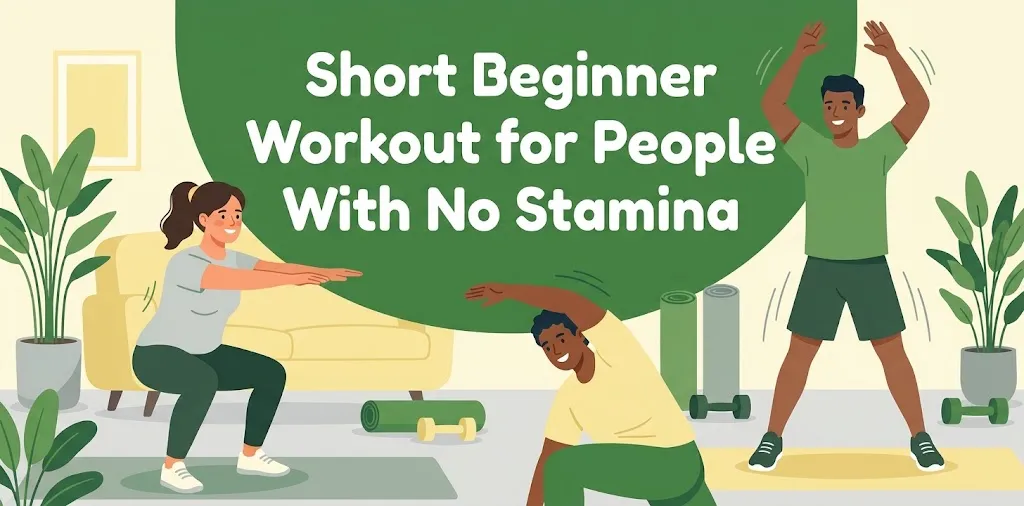
A Short Beginner Workout for People With No Stamina
If you have very little stamina, start with a 10-minute workout that uses easy movements and short work periods. Try 1 minute of marching in place, 1 minute of easy walking, 30 seconds of chair squats, 30 seconds of wall push-ups, and 1 minute of rest. Repeat the sequence as your fitness improves. The goal is to finish feeling challenged but still able to recover comfortably.
Your 10-Minute No-Stamina Beginner Workout
You do not need a gym, weights, or special equipment for this routine. A sturdy chair and a little floor space are enough.
| Time | Exercise | Effort |
|---|---|---|
| 1 minute | Easy marching in place | Very easy |
| 1 minute | Slow walking around the room | Easy |
| 30 seconds | Chair squats | Easy |
| 30 seconds | Rest | Very easy |
| 30 seconds | Wall push-ups | Easy |
| 30 seconds | Rest | Very easy |
| 1 minute | Step-touch from side to side | Easy |
| 1 minute | Slow marching | Easy |
| 1 minute | Rest or very slow walking | Very easy |
| 2 minutes | Easy walking and breathing | Very easy |
You can stop early if 10 minutes feels like too much. Starting with 5 minutes is completely reasonable.
1. Easy Marching in Place
Stand tall and slowly lift one foot, then the other. Move your arms naturally if that feels comfortable.
Keep your steps small. You should not feel like you are racing.
Make it easier: Hold the back of a sturdy chair if you need extra support.
2. Slow Walking
Walk around your room, hallway, backyard, or another safe area.
You do not need to walk fast. At this stage, the purpose is simply to get your body moving and practice staying active for a little longer.
3. Chair Squats
Stand in front of a sturdy chair with your feet about hip-width apart.
Push your hips back and slowly lower yourself toward the chair. Lightly touch the seat, then stand back up.
If this feels difficult, use your hands for support or reduce how far you lower your body.
4. Wall Push-Ups
Stand facing a wall and place your hands against it around chest height.
Bend your elbows to bring your body toward the wall, then gently push yourself back.
Wall push-ups are much easier than floor push-ups, making them a useful starting point for beginners.
5. Step-Touches
Step one foot to the side and bring the other foot toward it. Then switch sides.
Keep the movement slow and controlled. This exercise adds gentle movement without requiring jumping or running.
How Hard Should a Beginner Workout Feel?
When you have no stamina, your workout should feel manageable rather than exhausting.
A useful rule is that you should be able to speak in short sentences while exercising. If you are struggling to catch your breath, slow down or take a break.
For a beginner, these are good signs:
- Your breathing becomes faster but remains controlled.
- You can continue moving without feeling overwhelmed.
- Your muscles feel like they are working.
- You recover after a short rest.
- You finish with enough energy to continue your day.
You do not need to feel completely exhausted for a workout to be useful.
What If 10 Minutes Is Too Much?
Reduce the workout.
If you can only exercise for 3 to 5 minutes before becoming very tired, start there. For example, walk slowly for 2 minutes, do 5 chair squats, perform 5 wall push-ups, and finish with 1 minute of easy walking.
Think of your first goal as building the habit, not reaching a certain workout length.
A Simple 4-Week Plan to Build Stamina
Once the 10-minute workout feels comfortable, increase the amount gradually rather than suddenly doubling your workout.
| Week | Workout Goal | Suggested Schedule |
|---|---|---|
| Week 1 | 5–10 minutes | 3 days |
| Week 2 | 10–12 minutes | 3 days |
| Week 3 | 12–15 minutes | 3–4 days |
| Week 4 | 15–20 minutes | 3–4 days |
These are starting points, not strict requirements. If a week feels too difficult, repeat it before moving forward.
How to Make the Workout Easier
There is no benefit in making a beginner workout harder than necessary.
Try these adjustments if you get tired quickly:
- Slow the movement down.
- Take longer rest periods.
- Do fewer repetitions.
- Use a chair or wall for support.
- Remove exercises that cause discomfort.
- Split the workout into two short sessions.
- Choose walking instead of jogging.
- Keep jumping and running out of the routine at first.
For example, instead of doing 10 chair squats, start with 4 or 5. Instead of marching for 2 minutes, march for 30 seconds and rest.
You can build from there.
How Often Should You Do a Beginner Workout?
Three short workouts per week are a reasonable starting point for someone who is currently very inactive.
You can also add easy walking on other days. The important thing is to avoid turning every day into a hard workout.
As your stamina improves, gradually increase your total activity. Adults can eventually work toward 150 minutes of moderate-intensity aerobic activity each week, along with muscle-strengthening activity on at least 2 days per week. You do not need to reach that amount immediately.
A beginner might progress like this:
Monday: 10-minute workout
Tuesday: Easy walking
Wednesday: Rest
Thursday: 10-minute workout
Friday: Easy walking
Saturday: 10-minute workout
Sunday: Rest
What to Do When You Get Tired During Exercise
Getting tired during a beginner workout is normal. The key is learning the difference between normal exercise fatigue and warning signs.
If you are simply breathing harder and your muscles feel tired, slow down and rest. You can resume when you feel ready.
Stop exercising if you experience concerning symptoms such as chest pain or pressure, fainting, severe dizziness, or unusual shortness of breath. If these symptoms occur, seek appropriate medical attention.
If you have a chronic condition or another health concern, talk with your health care professional about what type and amount of activity is appropriate for you.
Common Mistakes When Starting With Low Stamina
Starting Too Hard
Trying to run, do burpees, or complete a difficult fitness class on your first day can leave you exhausted and sore.
Start with movements you can control.
Trying to Match Someone Else
A beginner workout should match your current ability. Your friend may be able to walk for an hour while five minutes feels difficult for you.
That does not mean you are failing.
Skipping Rest
Rest is part of the workout when you are building stamina. Short breaks can help you keep your effort controlled.
Increasing Everything at Once
Do not suddenly increase workout time, speed, repetitions, and frequency together.
Change one thing at a time.
Thinking Short Workouts Do Not Count
A five- or 10-minute workout is still movement. The goal is to build consistency and gradually increase what your body can handle.
Two Simple Examples for Real Beginners
Example 1: Someone Who Gets Winded Easily
Suppose a person spends most of the day sitting and feels tired after walking for several minutes.
Instead of starting with a 30-minute workout, they could begin with 5 minutes of easy walking three times per week. After that becomes comfortable, they could add chair squats and wall push-ups.
The first goal is consistency.
Example 2: Someone Returning After a Long Break
Suppose someone used to exercise regularly but stopped for several months. They may remember what they could do before and try to return at the same level immediately.
A better approach is to restart below their previous fitness level. A 10- to 15-minute easy workout can help them rebuild a routine before adding more time or intensity.
When Should You Make the Workout Harder?
Increase the workout when the current version feels consistently manageable.
For example, if 10 minutes of easy movement feels comfortable for several sessions, add 2 to 5 minutes. Later, you might increase the pace slightly or add another round of an exercise.
A simple progression is:
First: Increase time
Next: Increase frequency
Then: Add a little more intensity
Frequently Asked Questions
Can I build stamina with a 10-minute workout?
Yes. A short workout can be a useful starting point when you have very low fitness. The goal is to build regular activity and gradually increase the amount you can comfortably do.
What is the best exercise for someone with no stamina?
Easy walking is one of the simplest choices because you can control the speed and duration. Chair squats, wall push-ups, marching, and step-touches are also useful beginner movements.
Should I exercise if I get tired very quickly?
If normal activity causes unusual or severe tiredness, do not assume it is simply poor fitness. Stop if you develop concerning symptoms such as chest pain, fainting, severe dizziness, or unusual shortness of breath, and seek appropriate medical advice.
Start Smaller Than You Think
If you have no stamina, your first workout does not need to look impressive. Five or 10 minutes of controlled movement is a better starting point than a hard workout that leaves you exhausted and makes you want to quit.
Start with easy walking, chair squats, wall push-ups, and simple marching. Rest when needed, repeat the routine consistently, and increase your activity slowly. Your practical next step is simple: choose one day this week and complete just 5–10 minutes of easy movement.