If your workday keeps you in a chair for 8 or more hours, you may finish work feeling stiff, tired, or unmotivated to exercise. The good news is that you do not need a long or intense workout to get moving again. A short walk, a few mobility exercises, and simple strength work can make exercise easier to fit into a busy workday.
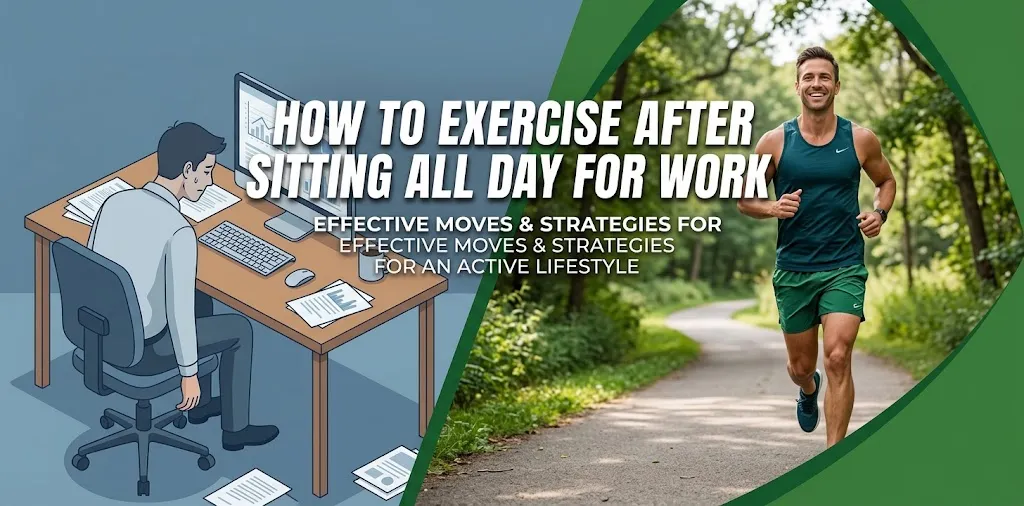
How to Exercise After Sitting All Day for Work
After sitting all day, start with 5–10 minutes of easy movement before doing harder exercise. Walk around, loosen your hips and shoulders, and then choose a simple workout that combines walking or other cardio with strength exercises. Also try to break up long periods of sitting during the workday instead of relying only on an evening workout. U.S. physical activity guidelines recommend moving more and sitting less, with adults working toward 150–300 minutes of moderate aerobic activity each week plus muscle-strengthening activity at least 2 days a week.
Why exercise feels different after a long day of sitting
A desk job does not necessarily make you unfit by itself, but spending many hours in the same position can leave your body feeling stiff and your muscles less ready for movement.
You may notice:
- Tight hips after standing up
- Stiffness in your lower back
- Tight shoulders and chest
- Tired legs
- Reduced energy
- A strong urge to stay on the couch after work
The answer is not to punish your body with a hard workout. It is usually better to give your body a gradual transition from sitting to moving.
Start With a Short Transition After Work
One of the easiest mistakes is going directly from your desk chair to an intense workout.
Instead, use the first few minutes to wake your body up.
Try this simple transition:
- Stand up and walk around for 2–3 minutes.
- Take a few slow, deep breaths.
- Roll your shoulders gently.
- Walk at an easy pace for another 3–5 minutes.
- Start your workout only when your body feels warmer and more comfortable.
This approach is especially useful if you have spent most of the day sitting and are new to regular exercise.
You do not have to complete a traditional warmup that takes 20 minutes. A few minutes of easy movement can help you transition into your workout without making the start feel overwhelming.
A Simple 20-Minute Workout After a Desk Job
If you want a practical routine after work, try this beginner-friendly sequence.
| Exercise | Starting amount | Main focus |
|---|---|---|
| Easy walk | 5 minutes | Cardio and general movement |
| Bodyweight squat | 8–12 reps | Legs and hips |
| Glute bridge | 10–15 reps | Glutes and hamstrings |
| Wall push-up | 8–12 reps | Chest, shoulders, and arms |
| Bird dog | 6–10 each side | Core and stability |
| Standing hip stretch | 20–30 seconds each side | Hip mobility |
| Easy walk | 3–5 minutes | Cooldown |
Rest when needed. If the full routine feels too difficult, do one round instead of trying to complete several rounds.
The goal at first is consistency, not exhaustion.
1. Walk for 5 minutes
Walking is one of the easiest ways to transition from a sedentary workday into exercise.
Start at a comfortable pace. After a few minutes, gradually increase your speed if you feel good.
A brisk walk can count as moderate-intensity activity. One simple way to judge intensity is the talk test: during moderate activity, you can talk but generally cannot sing comfortably.
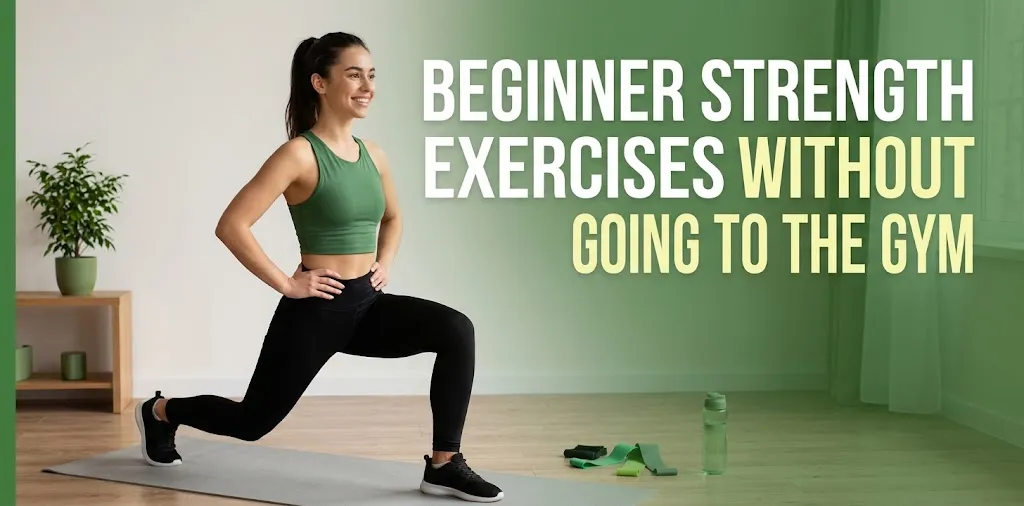
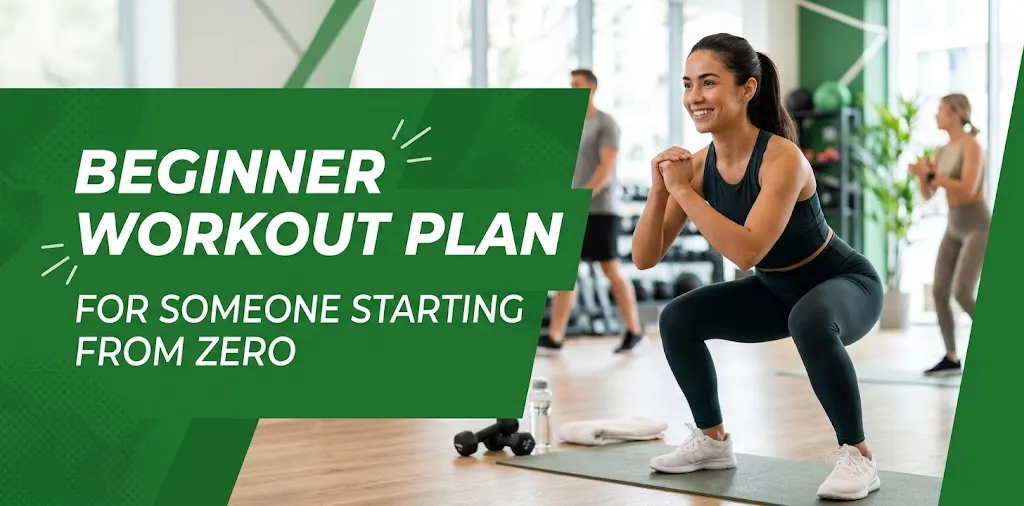
2. Bodyweight squats
Stand with your feet about shoulder-width apart. Push your hips back and bend your knees as if you are sitting into a chair. Stand back up while keeping your feet planted.
Start with 8–12 controlled repetitions.
If regular squats feel uncomfortable, use a chair behind you as a target. Lower only as far as you can while maintaining control.
3. Glute bridges
Lie on your back with your knees bent and feet flat on the floor.
Press through your feet and gently lift your hips. Pause briefly at the top, then lower slowly.
Glute bridges are useful for strengthening the glutes and hamstrings without requiring heavy equipment.
4. Wall push-ups
Place your hands against a wall at about chest height. Step your feet back, bend your elbows, and slowly bring your chest toward the wall. Push yourself back to the starting position.
Wall push-ups are a good starting point if floor push-ups are too difficult after a long sedentary day.
5. Bird dogs
Start on your hands and knees. Slowly extend one arm and the opposite leg while keeping your torso steady. Return to the starting position and switch sides.
Move slowly rather than trying to complete the repetitions quickly.
This exercise adds controlled core and balance work without requiring weights.
6. Finish with gentle mobility
After the strength exercises, spend a few minutes moving through comfortable stretches.
Good areas to focus on after desk work include:
- Hip flexors
- Hamstrings
- Chest
- Shoulders
- Upper back
- Calves
Do not force a stretch or bounce through it. The goal is comfortable movement, not pain.
How to Exercise When You Are Extremely Tired After Work
Sometimes the biggest problem is not knowing what exercise to do. It is finding enough energy to start.
On those days, lower the goal.
Instead of telling yourself, “I need to work out for an hour,” try:
“I will move for 10 minutes.”
Take a short walk. Do a few squats. Stretch your hips and shoulders. If you feel better afterward, continue. If you still feel exhausted, stopping after 10 minutes is reasonable.
This approach can make exercise easier to repeat because you are not turning every workout into a major event.
You Do Not Have to Wait Until After Work to Move
An evening workout can help, but it should not be your only movement.
If possible, add short periods of activity throughout the workday.
Try:
- Walking during a lunch break
- Taking the stairs when practical
- Walking while making a phone call
- Standing during part of a meeting when appropriate
- Walking to speak with a nearby coworker
- Getting up regularly to refill your water
- Taking a short walk before returning to your desk
The goal is to interrupt long stretches of sitting.
There is no need to follow one exact schedule for breaking up sitting. The bigger goal is to move more and spend less time sitting whenever practical.
What to Do During a 9-to-5 Desk Job
A simple workday movement plan might look like this:
| Time | Movement idea |
|---|---|
| Morning | 5–10 minute walk before work |
| Mid-morning | Stand and walk for a few minutes |
| Lunch | 10–20 minute walk |
| Afternoon | Brief movement break |
| After work | 20–30 minute workout or walk |
| Evening | Light stretching or normal household activity |
You do not need to follow this exact schedule. The useful part is spreading movement throughout the day instead of sitting continuously and trying to compensate with one workout at night.
How Much Exercise Should You Aim For?
For most adults, a useful long-term goal is 150–300 minutes of moderate-intensity aerobic activity per week, or 75–150 minutes of vigorous activity, or an equivalent combination. Adults should also perform muscle-strengthening activities involving the major muscle groups on at least 2 days each week.
That does not mean you need to start at 150 minutes immediately.
If you currently do very little exercise, begin with a manageable amount and gradually build toward the guideline.
For example:
| Starting point | Possible goal |
|---|---|
| Almost no exercise | 5–10 minutes of walking most days |
| Some regular walking | 15–20 minutes most days |
| Comfortable with regular activity | 20–30 minutes most days |
| More experienced | Add strength training 2+ days per week |
These are examples, not requirements. Your fitness level, age, health, schedule, and preferences should influence your routine.
Two Practical Ways to Fit Exercise Into a Busy Workday
Example 1: The office worker with little evening energy
Imagine someone who works from 8:30 a.m. to 5:00 p.m. and spends most of that time at a computer.
Instead of planning a 60-minute gym session after work, they could take a 10-minute walk at lunch and complete a 20-minute bodyweight workout after getting home.
That is easier to start and still provides meaningful physical activity.
Example 2: The remote worker
Someone working from home may have more flexibility but can still spend most of the day sitting.
They could take a short walk before opening their laptop, stand and move between meetings, walk during lunch, and complete a short strength routine at the end of the workday.
The advantage is that exercise becomes part of the workday rather than one large task that must happen after everything else is finished.
Should You Stretch or Exercise First?
If you have been sitting for many hours, start with movement rather than immediately holding long stretches.
A short walk or gentle mobility sequence is a good first step. Then perform strength or cardio work if you feel ready.
Afterward, gentle stretching can be useful if it feels comfortable.
The main point is that stretching should not replace regular physical activity. A combination of aerobic movement, strength training, and general movement throughout the day is more useful than relying on stretching alone.
What Exercises Are Best After Sitting All Day?
There is no single exercise that fixes the effects of sitting.
A balanced routine is more useful.
Consider combining:
- Walking or cycling for aerobic activity
- Squats for the lower body
- Glute bridges for the hips and posterior muscles
- Rows or resistance-band pulls for the upper back
- Push-ups or wall push-ups for the upper body
- Core exercises such as bird dogs or dead bugs
- Mobility exercises for areas that feel stiff
Common Mistakes to Avoid
Going from zero activity to a hard workout
If your body is used to sitting all day, suddenly doing a very intense workout can make the routine unnecessarily difficult.
Start at a level you can control and increase the challenge over time.
Thinking one workout cancels out sitting all day
Exercise is valuable, but it should not be treated as permission to remain seated for the rest of the day.
Try to add movement during work as well as after work.
Focusing only on stretching
Stretching may feel good when you are stiff, but strength and aerobic activity are also important parts of a balanced fitness routine.
Making every workout exhausting
A workout does not have to leave you completely worn out to be useful.
If intense workouts make you skip the next several days, a shorter and more manageable routine may be a better choice.
Waiting for motivation
After a long workday, motivation can be unpredictable.
A fixed routine can help. For example, change into workout clothes immediately after work and walk for 10 minutes before deciding whether to continue.
When to Modify or Stop Exercise
Mild muscle fatigue is different from sharp, severe, or worsening pain.
Stop an exercise if it causes significant pain, dizziness, unusual shortness of breath, chest pain, or another concerning symptom. If you have a chronic medical condition, an injury, or you are unsure what type of exercise is appropriate for you, talk with a qualified healthcare professional before starting or changing your routine.
You can also modify exercises to match your current ability. For example, use a wall instead of the floor for push-ups or use a chair for support during squats.
The goal is to make exercise sustainable and appropriate for your current fitness level.
A Simple Weekly Plan for People Who Sit All Day
You do not need a complicated fitness schedule.
One possible beginner plan is:
| Day | Activity |
|---|---|
| Monday | 20-minute walk + short strength routine |
| Tuesday | 20–30-minute walk |
| Wednesday | Short strength routine + easy walk |
| Thursday | 20–30-minute walk |
| Friday | Short strength routine + easy walk |
| Saturday | Longer enjoyable activity |
| Sunday | Easy walk or rest |
As your fitness improves, you can gradually increase duration, intensity, or resistance.
Frequently Asked Questions
Is it good to exercise after sitting all day?
Yes. Exercise is a useful way to add physical activity after a sedentary workday, especially when combined with more movement during the day. Moving more and sitting less is a helpful approach for overall physical activity.
How long should I exercise after sitting all day?
There is no single required workout length. Start with an amount you can maintain, such as 10–20 minutes, and gradually build toward 150–300 minutes of moderate aerobic activity per week along with strength training on at least 2 days per week.
What is the best exercise after sitting at a desk?
Walking is an easy starting choice because it requires little equipment and can be adjusted to your fitness level. A well-rounded routine can also include squats, glute bridges, upper-body exercises, core work, and comfortable mobility exercises.
Make Movement the Part of Your Workday That You Do Not Have to Think About
If you sit all day for work, you do not need to wait until you have a perfect schedule before becoming more active. Start by walking for a few minutes, add simple strength exercises, and break up long periods of sitting whenever you can.
A practical goal is to make movement a normal part of your day rather than treating exercise as a punishment for sitting. Start small enough that you can repeat it, then gradually increase your activity as your fitness improves.