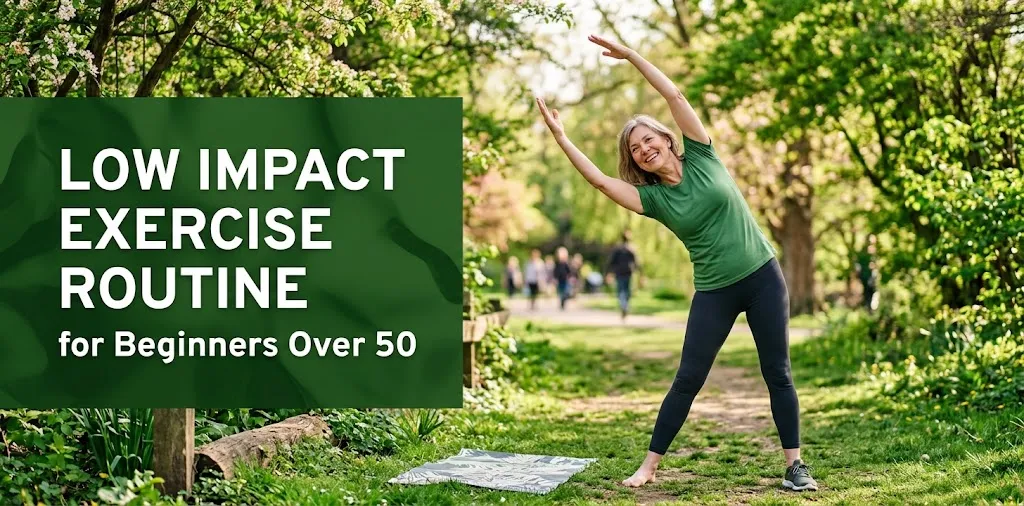
If you are over 50 and getting back into exercise, you do not need hard workouts, jumping, or long gym sessions. A low-impact routine can help you build endurance, strength, balance, and mobility while giving your body time to adjust. The key is to start at a level you can handle and increase activity gradually.
What Is a Low Impact Exercise Routine for Beginners Over 50?
A low-impact exercise routine uses controlled movements that put less stress on your joints than activities such as running or jumping. For beginners over 50, a good routine can combine walking, chair exercises, light resistance training, balance work, and gentle mobility exercises.
Low impact does not mean ineffective. Walking, cycling, swimming, water exercise, tai chi, and strength exercises can all provide useful physical activity without requiring high-impact movements.
A Simple 20-Minute Beginner Routine
You can do this routine at home with a sturdy chair nearby. If 20 minutes feels like too much at first, start with 10 minutes and build from there.
| Part | Time | Exercise |
|---|---|---|
| Warm-up | 3 minutes | Easy marching, shoulder rolls, gentle arm movements |
| Cardio | 5 minutes | Easy walking or marching in place |
| Strength | 6 minutes | Chair squats, wall push-ups, heel raises |
| Balance | 3 minutes | Supported single-leg stands and heel-to-toe walking |
| Cool-down | 3 minutes | Slow walking and gentle stretches |
Move slowly enough to maintain good control. You should not feel that you have to finish every exercise without resting.
1. Warm Up for 3 Minutes
Start by getting your body moving gently.
Try:
- Marching slowly in place
- Rolling your shoulders forward and backward
- Moving your arms comfortably from side to side
- Taking slow steps around the room
- Gently bending and straightening your knees
The goal is simply to prepare your body for movement. You do not need an intense warm-up.
2. Add 5 Minutes of Easy Cardio
Walking is one of the simplest choices for a beginner. Walk around your home, outside, at a mall, or on a treadmill.
If walking is uncomfortable, try marching in place while holding a sturdy surface for support.
Another option is a stationary bike or water exercise if those activities feel more comfortable for your joints.
As your fitness improves, gradually increase the amount of time you spend doing aerobic activity.
3. Build Strength Without Heavy Weights
Strength training deserves a place in a beginner routine after 50. Maintaining muscle strength can support mobility and everyday activities.
Start with these three movements.
Chair squats: Stand in front of a sturdy chair with your feet about hip-width apart. Slowly bend your knees and hips as if you are going to sit, then stand back up. Use your hands for support if necessary.
Wall push-ups: Stand facing a wall with your hands against it. Bend your elbows to bring your chest toward the wall, then gently push yourself back.
Heel raises: Hold the back of a sturdy chair and slowly rise onto your toes. Lower your heels with control.
Start with about 6 to 10 comfortable repetitions of each exercise. If that is difficult, do fewer. The goal is controlled movement, not exhausting yourself.
4. Practice Balance for 3 Minutes
Balance becomes an important part of exercise as we get older.
Try:
- Standing behind a sturdy chair and briefly lifting one foot
- Walking slowly heel-to-toe along a clear path
- Shifting your weight gently from one foot to the other
Always keep something stable nearby when practicing balance. If standing on one leg feels unsafe, keep one hand on a chair.
5. Finish With Gentle Movement
Slow your pace for the final few minutes.
Walk slowly, take comfortable breaths, and gently stretch areas that feel tight. Do not force a stretch or bounce while stretching.
A Beginner Weekly Schedule
You do not need to exercise hard every day. A simple weekly schedule can make it easier to build a habit.
| Day | Activity |
|---|---|
| Monday | 20-minute low-impact routine |
| Tuesday | 10–20-minute easy walk |
| Wednesday | Strength and balance routine |
| Thursday | Easy walking or gentle mobility |
| Friday | 20-minute low-impact routine |
| Saturday | Optional walk, swimming, cycling, or tai chi |
| Sunday | Rest or gentle movement |
This is a starting schedule, not a requirement. Your current fitness level should determine how much you do.
Over time, a common goal for adults is to work toward at least 150 minutes of moderate-intensity aerobic activity each week, along with muscle-strengthening activity on at least 2 days. Older adults can also benefit from regular balance activities.
If you cannot reach those amounts yet, doing what you can is still worthwhile.
How Hard Should Exercise Feel After 50?
One of the easiest ways to judge moderate effort is the talk test. At moderate intensity, you should generally be able to talk but not sing comfortably.
For a beginner, however, even moderate exercise may feel challenging at first. Start below your maximum effort and allow your fitness to improve gradually.
A useful progression is:
- Start with short sessions.
- Exercise at an easy pace.
- Add a few minutes when the current routine feels comfortable.
- Add resistance gradually.
- Keep some recovery time between harder sessions.
- Focus on consistency rather than trying to exercise as hard as possible.
You do not have to reach 150 minutes immediately.
The Best Low Impact Exercises for Beginners Over 50
Different exercises work well for different abilities and preferences.
| Exercise | Main focus | Good starting option |
|---|---|---|
| Walking | Aerobic fitness | Start with 5–15 minutes |
| Stationary cycling | Cardio and leg endurance | Use an easy resistance |
| Water exercise | Cardio and movement | Useful for people who prefer exercising in water |
| Chair exercises | Strength and mobility | Helpful when standing is difficult |
| Wall push-ups | Upper-body strength | Easier than floor push-ups |
| Chair squats | Leg strength | Use a chair for support |
| Heel raises | Lower-leg strength | Hold a sturdy chair |
| Tai chi | Balance and controlled movement | Start with beginner instruction |
| Resistance bands | Full-body strength | Begin with light resistance |
The best choice is often the exercise you can perform comfortably and continue doing. Exercise does not have to happen in a gym. Walking, gardening, dancing, and other everyday activities can contribute to an active lifestyle.
How to Progress Without Overdoing It
A common beginner mistake is increasing exercise too quickly because the first few sessions feel manageable.
Instead, change only one thing at a time.
For example, if you currently walk for 10 minutes three times a week, you might first increase one or two walks by a few minutes. Once that feels comfortable, you can gradually increase another session.
The same idea applies to strength exercises. Begin with a small number of controlled repetitions. Later, you can add repetitions, another set, or light resistance.
Your routine should become more challenging gradually, not suddenly.
Two Realistic Ways to Start
Example 1: You have been inactive for several years.
Start with 10 minutes of movement three or four days a week. This might include five minutes of walking, a few chair squats and wall push-ups, and gentle mobility work. After a couple of weeks, increase the duration if your body is responding well.
Example 2: You already walk occasionally but lack strength.
Keep your regular walks and add two short strength sessions each week. Chair squats, wall push-ups, heel raises, and light resistance-band exercises can make your routine more balanced.
These are examples, not personalized medical exercise prescriptions.
When a Chair Workout May Be Better
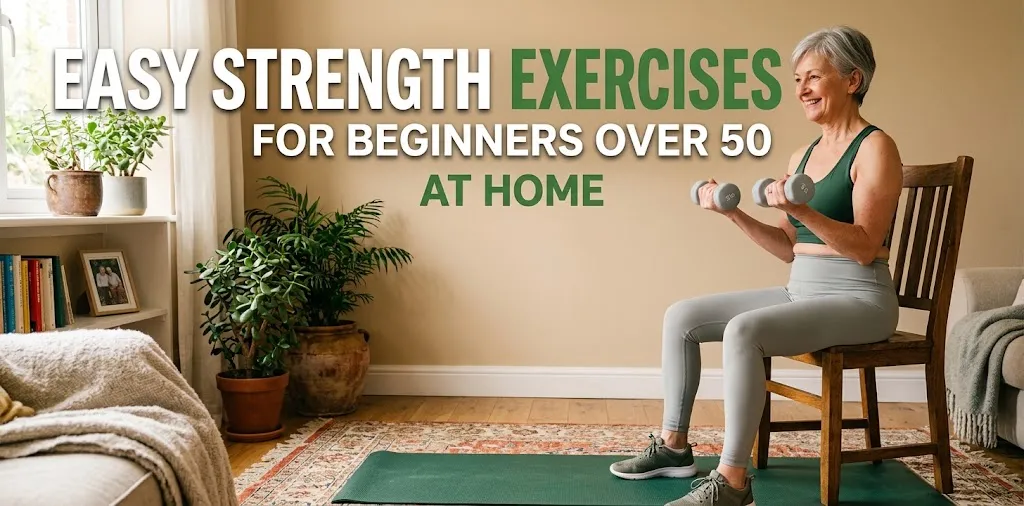
A chair-based routine can be useful if standing for long periods is difficult or you are not comfortable exercising on the floor.
You can perform movements such as:
- Seated marching
- Seated leg extensions
- Seated arm raises
- Seated heel and toe movements
- Seated resistance-band exercises
You can also use a chair while standing for support. A chair does not mean the workout is too easy. It can simply make certain movements more accessible.
What to Do If You Have Joint Pain or a Health Condition
Low-impact exercise can be a useful option for many people, but your personal health situation matters.
If you have a chronic health condition, recent surgery, significant joint problems, balance problems, or other concerns about exercising, talk with your health care professional about what types and levels of activity are appropriate for you.
You should also stop an exercise if it causes significant pain, dizziness, unusual shortness of breath, or another concerning symptom and seek appropriate medical advice.
Do not assume that an exercise is safe simply because it is described as “low impact.”
Common Beginner Mistakes to Avoid
Starting With Too Much
You do not need a 60-minute workout on your first day. Starting with a manageable amount makes it easier to recover and return for the next session.
Skipping Strength Training
Walking is excellent, but a well-rounded routine should not focus only on cardio. Strength work is important for maintaining physical function as you age.
Ignoring Balance
Balance exercises can be easy to overlook because they do not always feel like a traditional workout. They are still an important part of physical activity for older adults.
Trying to Exercise Through Pain
Muscle effort can be normal when you are learning a new movement. Sharp, severe, or unusual pain is different. Modify the exercise or stop and get professional guidance when appropriate.
Comparing Yourself With Younger Exercisers
Your goal is not to match someone else’s workout. The right starting point depends on your current fitness, mobility, experience, and health.
How to Make Exercise Easier to Stick With
The best routine is one you will actually repeat.
Try attaching exercise to something you already do. For example, take a short walk after breakfast or do a few strength exercises after lunch.
You can also make exercise social. Walk with a friend, join a community class, or exercise with a family member. Enjoyment matters because a routine that feels manageable is easier to maintain.
How Much Exercise Do You Need?
The long-term goal for adults, including older adults, is 150 to 300 minutes of moderate-intensity aerobic activity per week, plus muscle-strengthening activity on at least 2 days per week. Older adults should also include balance activities as part of a varied routine.
But that target is not a pass-or-fail test.
If you currently do very little activity, start with what you can handle. Even small amounts of physical activity can be useful when you are getting started.
Frequently Asked Questions
What is the best low-impact exercise for someone over 50 who is just starting?
Walking is one of the simplest choices because you can control the pace and duration. Other options include stationary cycling, water exercise, chair workouts, and gentle strength exercises.
Can you get fit after 50 with low-impact exercise?
Yes. Low-impact exercise can help improve aerobic fitness, strength, balance, mobility, and physical function when performed consistently. You can gradually increase duration or resistance as your fitness improves.
How many days a week should a beginner over 50 exercise?
Start with a manageable schedule, such as three or four days of planned movement, and increase gradually. Over time, work toward regular aerobic activity, muscle-strengthening sessions, and balance exercises.
Start Smaller Than You Think
A good low-impact exercise routine after 50 does not need to be complicated. Begin with walking, simple strength exercises, balance work, and gentle mobility. Keep the effort manageable, give yourself time to adapt, and build gradually.
Your first goal does not need to be 150 minutes a week. Your first goal can simply be showing up for your next 10-minute session. Once that becomes a habit, adding more activity becomes much easier.