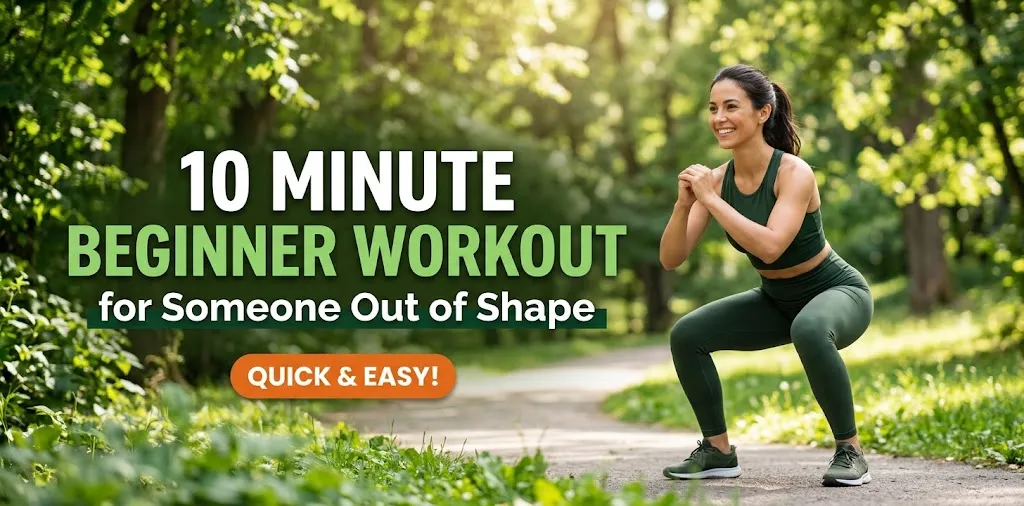
If you are out of shape, you do not need a long or intense workout to get started. A simple 10-minute session can help you build the habit of moving again without making the first day feel overwhelming. The key is to keep the movements simple, use a comfortable pace, and increase the challenge slowly as your fitness improves.
The 10-Minute Beginner Workout
This workout is designed for someone who has been inactive, feels easily tired, or is not comfortable with traditional gym exercises. You only need a little open space and a sturdy chair.
| Time | Exercise | Effort |
|---|---|---|
| 0:00–1:00 | Easy march in place | Very easy |
| 1:00–2:00 | Step-touch | Easy |
| 2:00–3:00 | Chair squats | Easy |
| 3:00–4:00 | Wall push-ups | Easy |
| 4:00–5:00 | March with arm movements | Easy to moderate |
| 5:00–6:00 | Standing knee lifts | Easy |
| 6:00–7:00 | Chair-assisted sit-to-stand | Easy to moderate |
| 7:00–8:00 | Wall push-ups or standing punches | Easy |
| 8:00–9:00 | Slow side steps | Easy |
| 9:00–10:00 | Slow march and cool down | Very easy |
You do not need to move quickly. If 60 seconds feels too long, work for 20–30 seconds and rest before continuing.
1. March in Place
Stand tall with your feet about hip-width apart. Slowly lift one foot, then the other, as if you are walking without moving forward.
Keep your steps small and comfortable. Let your arms move naturally.
Make it easier: Hold the back of a sturdy chair if you need extra balance.
2. Step-Touch
Step your right foot to the side, bring your left foot toward it, then switch sides.
Keep your knees slightly relaxed and move your arms naturally. This is a simple way to get your body moving without jumping.
Make it harder: Take slightly larger steps or move your arms more actively.
3. Chair Squats
Stand in front of a sturdy chair with your feet about shoulder-width apart. Push your hips back and slowly lower yourself toward the chair. Lightly touch the chair, then stand back up.
You do not have to sit all the way down if that feels uncomfortable.
Focus on: Keeping your chest lifted and pushing through your feet as you stand.
4. Wall Push-Ups
Place your hands on a wall at about chest height. Walk your feet back slightly. Bend your elbows and bring your chest toward the wall, then push yourself back.
Keep your body in a straight line from your head to your feet.
Make it easier: Stand closer to the wall.
Make it harder: Move your feet farther away.
5. March With Arm Movements
Continue marching in place while gently moving your arms forward and backward.
This raises the challenge without requiring jumping or running.
Keep your breathing steady. You should not feel like you have to race through the movement.
6. Standing Knee Lifts
Stand tall and slowly lift one knee toward your waist. Lower it and switch sides.
You do not need to lift your knees high. A small movement is enough when you are starting.
For balance: Hold a sturdy chair with one hand.
7. Chair-Assisted Sit-to-Stand
Sit near the front of a sturdy chair with your feet flat on the floor. Lean forward slightly and stand up. Slowly sit back down.
This movement works several large muscles in your legs and hips while also practicing a movement you use in everyday life.
If standing from the chair is difficult, use your hands for support.
8. Wall Push-Ups or Standing Punches
If wall push-ups feel good, repeat them. If you want a change, stand with your feet comfortably apart and gently punch one arm forward at a time.
Keep the punches controlled rather than fast.
Avoid locking your elbows.
9. Slow Side Steps
Take a few steps to the right, then return to the left.
Keep the movement controlled and stay close to a wall or sturdy chair if you need help with balance.
This is a good time to let your breathing settle before the final minute.
10. Slow March and Cool Down
Finish with a very easy march or walk around the room.
Gradually slow your pace during the final 30 seconds. Take relaxed breaths and let your body settle naturally.
How Hard Should a 10-Minute Workout Feel?
When you are completely out of shape, the goal is not to finish exhausted. Aim for an effort that feels manageable while still making you breathe a little harder.
A useful beginner rule is the talk test: you should generally be able to speak in short sentences during an easy-to-moderate workout. If you cannot catch your breath or feel like you have to stop every few seconds, reduce the pace or take a break.
Your first workout may feel harder than expected. That does not mean you are failing. Your current fitness level determines how challenging even basic movements can feel.
What If 10 Minutes Feels Too Hard?
You can make the workout shorter.
Try this easier version:
- 1 minute of easy walking or marching
- 30 seconds of chair squats
- 30 seconds of rest
- 30 seconds of wall push-ups
- 30 seconds of rest
- 1 minute of easy marching
- 30 seconds of knee lifts
- 30 seconds of rest
- 1 minute of side steps
- 1 minute of easy walking
Even a few minutes of physical activity can be a useful starting point when you have been inactive.
The goal at first is not to prove how much you can tolerate. It is to create a routine you can repeat.
How Often Should You Do This Workout?
For someone who has been inactive, start with 3 days per week if that feels comfortable. You can add easy walking or other light movement on the days between workouts.
For example:
| Day | Activity |
|---|---|
| Monday | 10-minute beginner workout |
| Tuesday | Easy walking or normal daily movement |
| Wednesday | 10-minute beginner workout |
| Thursday | Rest or easy movement |
| Friday | 10-minute beginner workout |
| Saturday | Optional easy walk |
| Sunday | Rest |
You do not need to reach a full weekly exercise routine immediately. Start with small amounts and gradually increase your activity as your body adapts.
Think of 10 minutes as a starting point, not the final destination.
How to Progress After the First Few Weeks
Once 10 minutes feels comfortable, change only one thing at a time.
You could:
- Increase the workout from 10 to 12 minutes.
- Add a few minutes of walking.
- Perform each movement for slightly longer.
- Reduce your rest periods.
- Use a slightly deeper squat.
- Move from wall push-ups to an elevated push-up using a sturdy surface.
- Add another workout day if your body is recovering well.
Do not increase everything at once.
A gradual approach makes it easier to build fitness while avoiding the common mistake of doing too much too soon.
Two Realistic Ways to Use This Workout
If You Sit at a Desk All Day
Suppose you work from home and spend most of the day sitting. You could do this 10-minute routine before work or during a lunch break.
You do not need to change clothes, drive to a gym, or use equipment. The main goal is simply to create a repeatable exercise habit.
If You Get Tired Easily
Suppose you have not exercised in months and your legs feel tired after a few minutes of movement. Start with the easier versions of the exercises.
For example, use a chair for balance, perform shallow squats, use wall push-ups, and take short breaks. After several sessions, you may find that the same 10 minutes feels more manageable.
That is a better sign of progress than trying to make every workout extremely difficult.
Common Mistakes Beginners Should Avoid
Starting Too Fast
A common mistake is trying to turn a beginner workout into a hard cardio session. Jumping, sprinting, burpees, and fast intervals are not necessary for your first workout.
Start at a pace you can control.
Trying to Exercise Through Pain
Normal effort can include tired muscles and heavier breathing. Sharp, severe, or unusual pain is different.
Stop an exercise if something feels wrong instead of trying to push through it.
Worrying About Calories Burned
A 10-minute workout is not supposed to be a magic calorie-burning solution. Its biggest early value is helping you become more active and establish a routine.
As your fitness improves, you can gradually increase the amount and intensity of activity.
Comparing Yourself With Fit People
Your starting point is your starting point.
Someone who exercises regularly may find this workout easy, while someone who has been inactive may find it challenging. Neither experience means the workout is right or wrong for them.
When to Stop Exercising
Stop exercising if you experience concerning symptoms such as chest pressure or pain, severe or unusual shortness of breath, dizziness, fainting, confusion, or a fast or irregular heartbeat.
If you have a medical condition, a recent injury, significant mobility limitations, or concerns about whether exercise is appropriate for you, talk with your health care professional before starting a new routine.
Can a 10-Minute Workout Really Help You Get Fit?
Yes, it can be a useful starting point, especially if you are currently inactive. Ten minutes will not replace a larger weekly exercise routine, but it can help you begin moving and build toward more activity over time.
The most useful workout is often the one you can actually repeat.
Frequently Asked Questions
Is a 10-minute workout enough for someone who is out of shape?
It can be enough to get started. If you are inactive, beginning with 10 minutes can be more realistic than immediately trying to exercise for 30 or 60 minutes. Over time, gradually increase your activity as your fitness improves.
Should I exercise every day if I am a beginner?
You can move every day, but you do not need to perform a challenging workout every day. Start with a few short workouts each week and use easy walking or normal daily activities on other days.
What is the best exercise for someone who is completely out of shape?
Walking, marching, chair squats, wall push-ups, step-touch movements, and other low-impact exercises are good starting options for many beginners. The best choice is one you can perform safely and repeat consistently without excessive fatigue or pain.
Your Next Step
Do not wait until you feel fit enough to exercise. Start with the easiest version of this 10-minute workout and focus on completing it comfortably.
For your first week, consistency matters more than intensity. Once 10 minutes starts to feel easier, add a little more time or movement rather than suddenly making the workout much harder. A gradual approach can help turn a short beginner workout into a lasting exercise habit.